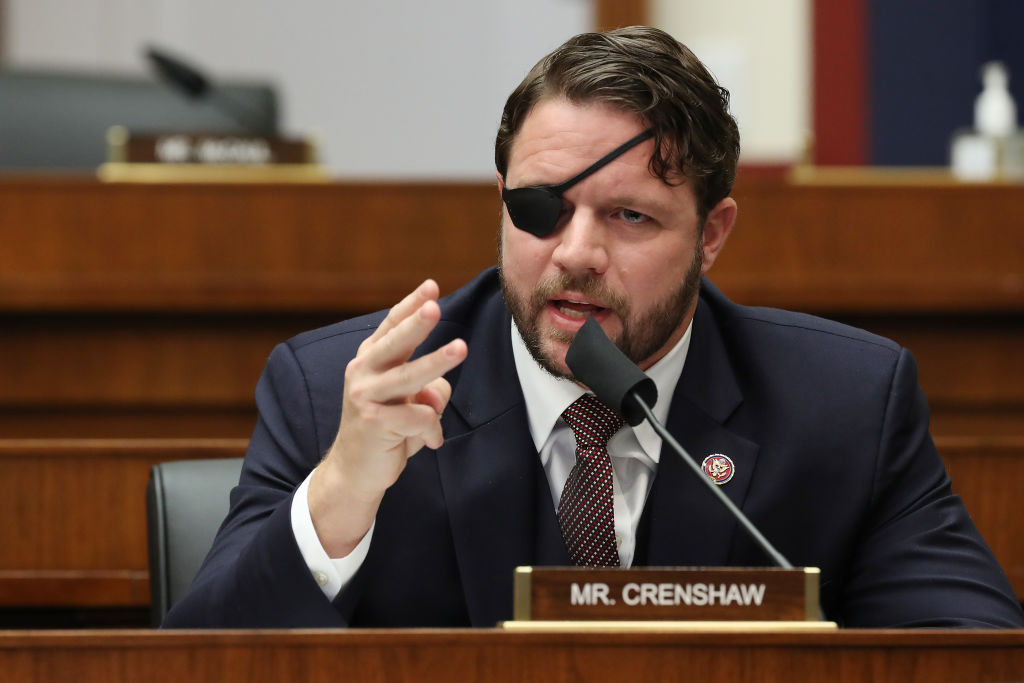



The scene was Capitol Hill as the House Energy and Commerce Committee held a hearing on Big Tech.
But as Republican Rep. Dan Crenshaw of Texas spoke about the core challenge being imposed by technology that could not have been imagined in the days of the Founding Fathers, the spirit of the freedom-loving Americans who drafted the First Amendment gusted through the hearing room.
The hearing on Wednesday was nominally called to discuss Section 230 of the Communications Decency Act, which protects tech companies from liability. After hearing from witnesses, Crenshaw spoke his mind about the battle between freedom and censorship that is taking place.
Crenshaw said he was concerned that the âadvocates of censorship ⊠tend to want to censor in only one direction. They donât want to be neutral in their application of community standards.â
He noted that when real people engage in democracy, the process is not for the faint of heart.
đș Embedded media â coming soon
âWhose fault is it that human beings are horrible to one another? Whose fault is it that a bad person spreads lies or hate? Is it the medium of communication or is it the person spreading it?â he said.
âThis is a very fundamental question because free speech is very messy. Our founders knew that when they wrote the First Amendment.â
Crenshaw said the downside of democracy beats the upside of censorship.
âIt can result in all sorts of chaos and pain and hurt feelings because the human race is indeed what it is,â he said. âBut letâs be clear that itâs a heck of a lot better than the alternative.â
Crenshaw noted that having a group of so-called experts decide who should read what is totally wrong.
âThis independent oversight committee being discussed with an elite, unaccountable few regulating what we see and what we donât. I donât want us to go down that path,â he said.
Crenshaw noted that while Republicans want to unshackle free speech, thatâs not the desire of Congressional Democrats.
âI want to be clear about something else. Republicans and Democrats do not agree on this issue,â he said.
âIâve observed a clever strategy by the media and some of my colleagues implying that we all agree, that weâre all moving in the right direction towards the same thing: Weâre all mad at Big Tech. This is not really true; we have very different views of the problem.â
Crenshaw said that in any contest of what is most important to this nation, the freedom of every American to speak his or her mind must win out.
âOne of the bills being considered today puts companies on the hook for any content that causes severe emotional injury, which remains undefined and open to interpretation,â he said.
âItâs fundamentally un-American that your hurt feelings should dictate my free speech,â he said.
Crenshaw said there is an unholy partnership between Big Tech and Democrats.
âI think the Democrat Party want to censor based on vague interpretations of harmful speech and misinformation, which invariably means things they just disagree with. They canât legally infringe on the First Amendment, so bully Big Tech into doing it for you,â he said.
âWe canât go down this path.â
This article appeared originally on The Western Journal.