



Drone Footage Helps Scientists Study Acrobatic Ballet Of Whales Feeding
The gray whale at the top of the image performs a headstand while feeding off the coast of Oregon. GEMM LAB/OREGON STATE UNIVERSITY VIA SWNS. “> Researchers have captured the acrobatics of gray whales as they feed. New…
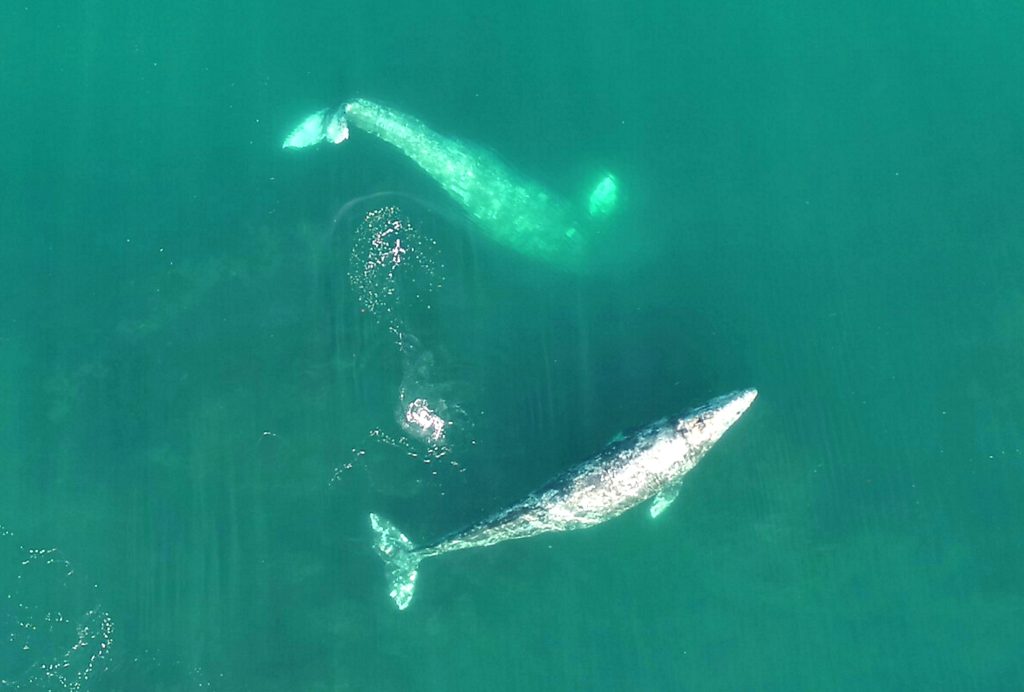

The gray whale at the top of the image performs a headstand while feeding off the coast of Oregon. GEMM LAB/OREGON STATE UNIVERSITY VIA SWNS.
“>
Researchers have captured the acrobatics of gray whales as they feed.
New insight into their movements observed them doing headstands and using “bubble blasts” to catch food.
Oregon State University’s Marine Mammal Institute captured drone footage of the whales foraging in waters off the state’s coast.
The whales’ movements, including forward and side-swimming, change as the whales grow, said Clara Bird, a researcher in the Marine Mammal Institute’s Geospatial Ecology of Marine Megafauna Laboratory.
Using drone footage captured over seven years, Bird quantified the gray whales’ behavior and their individual size and body condition. She found that the probability of whales using these behaviors changes with age.

Younger, smaller whales are more apt to use forward swimming while foraging. Older, larger whales are more likely to headstand, a head-down position in which the whale pushes its mouth into the ocean floor. The probability of whales using these behaviors changes with age.
Clara Bird said: “Our findings suggest that this headstanding behavior requires strength and coordination. For example, we often see whales sculling much like synchronized swimmers do while they are head standing.
“It is likely this behavior is learned by the whales as they mature. We have footage of whale calves trying to copy this behavior, but they’re not able to do it successfully.”