



Duck! Study Shows Mallards Struggle To Avoid Cars And Planes
Results showed that mallards demonstrated a reduced likelihood of attempting escape when faced with simulated night-time vehicle approaches. JOERG HARTMANN VIA PEXELS. “> New research warns that mallards are a danger to…
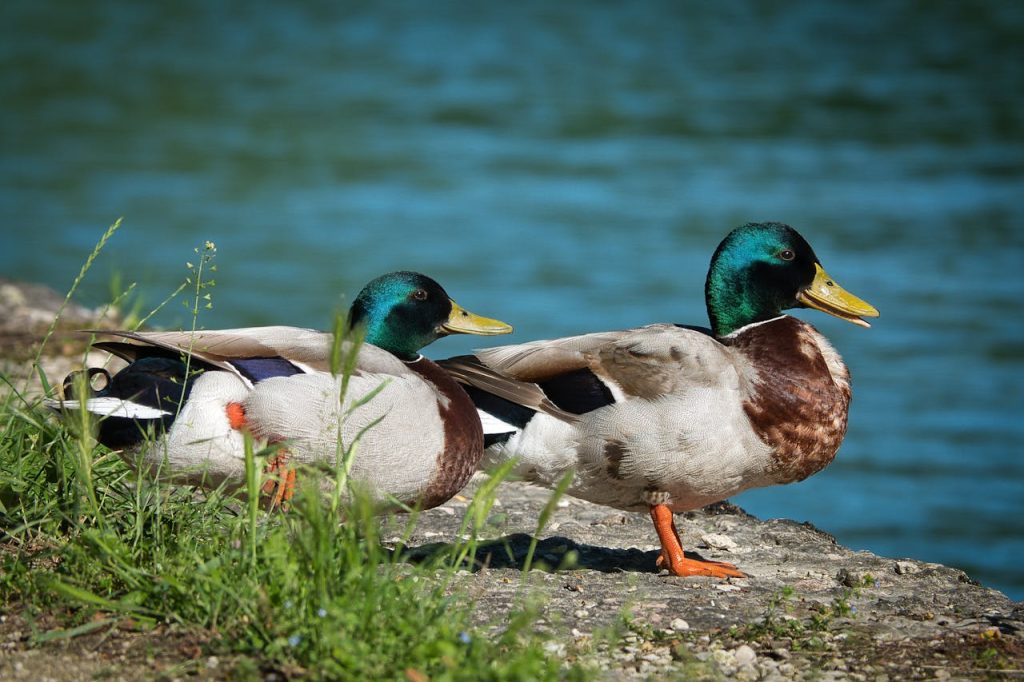

Results showed that mallards demonstrated a reduced likelihood of attempting escape when faced with simulated night-time vehicle approaches. JOERG HARTMANN VIA PEXELS.
“>
New research warns that mallards are a danger to themselves and people because they are ill-equipped to avoid collisions with cars and aircraft.
There is an urgent need for improved methods to reduce dangerous and costly bird-vehicle collisions, say scientists.
Researchers used state-of-the-art technology to assess the common breed of duck’s response to approaching vehicles.
The findings, published in the journal PeerJ Life & Environment, showed that mallards are “poorly equipped” to avoid collisions, particularly at high speeds.
The research team says the study, which used both simulated and real-world vehicle approaches, highlights the “urgent” need for improved methods to reduce bird-vehicle collisions – incidents that are not only financially costly but also dangerous to both humans and wildlife.
The study focused on mallards’ behavior when exposed to vehicles approaching at different speeds and under varying light conditions.
Results showed that mallards demonstrated a “reduced likelihood” of attempting escape when faced with simulated night-time vehicle approaches.
However, when they did attempt to flee, they did so with more time to spare compared to daytime scenarios.
Lead researcher Shane Geunin said, “Our findings suggest that the looming headlights of vehicles at night may not be perceived as a significant threat by mallards.
“The lights visible at night are a more abstract stimulus than a predator or the body of a vehicle visible during the day and may not provoke the same level of threat response needed to adequately respond.

