



EV ‘Suddenly Accelerates’ Into Ferry Ramp, Breaks in Two – All Passengers Taken to Hospital
Canadian police are investigating an accident involving a Tesla that suddenly accelerated and crashed into a ramp at a ferry terminal in West Vancouver, British Columbia, on Saturday. The car’s two occupants were taken…
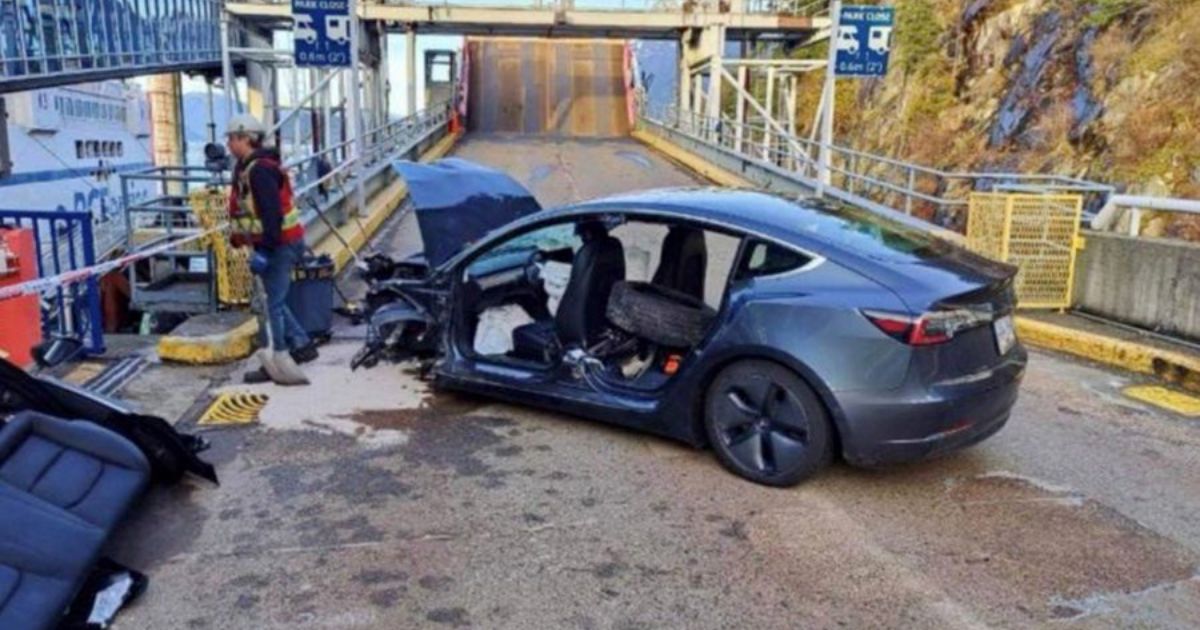
Canadian police are investigating an accident involving a Tesla that suddenly accelerated and crashed into a ramp at a ferry terminal in West Vancouver, British Columbia, on Saturday.
The car’s two occupants were taken to a hospital for “non-life threatening injuries,” according to North Shore News, which said the crash caused the car “to break in two.”
A photo reportedly taken at the scene showed the Tesla Model 3 on a car ramp at the ferry terminal, with much of the front end of the vehicle apparently ripped off and both front airbags deployed.
“We don’t know what caused it to happen,” Sgt. Mark McLean of the West Vancouver Police Department told the news outlet.
“It looks like it was trying to board a ferry and suddenly accelerated into the gate, basically destroying the Tesla,” he said.
However, Deborah Marshall of BC Ferries disputed that theory in an email to CTV News.
“There was no vessel in the berth at the time of the incident,” she said. “The vehicle was not attempting to board a ferry.”