EVAN SWARZTRAUBER: Congress Can Hold App Stores Accountable
A mother confiscated her 14-year-old daughter’s iPhone after discovering older men soliciting her daughter for sex through an app that Apple deemed appropriate for children. A 15-year old boy became violent and…
A mother confiscated her 14-year-old daughter’s iPhone after discovering older men soliciting her daughter for sex through an app that Apple deemed appropriate for children. A 15-year old boy became violent and homicidal after using an AI chatbot marketed to children. A 14-year old girl developed an eating disorder using a gaming app whose main character focused on losing weight.
These are just a handful of examples of children being harmed by apps that were rated “safe” for teenagers in the Apple and Google app stores. For years, the two tech giants that control over 99% of American smartphones havefailed to adequately protect children from harmful apps in their app stores, exposing kids to sexual exploitation, obscenity, and abuse of personal data.
While Apple and Google tout rigorous app store reviews and parental controls, those tools don’t do nearly enough to address the challenges facing families today. Legislation is needed, and Congress can help make the mobile ecosystem safer nationwide by passing the App Store Accountability Act (ASAA).
Sponsored
Sponsored
EVAN SWARZTRAUBER: Congress Can Hold App Stores Accountable — IJR
The legislation’s requirements are simple. App stores would be required to verify the ages of their users before they can download and use apps. Every child’s account would need to be linked to a verified parent or guardian, and Apple and Google would have to rate apps based on their actual content rather than the mere assertions of app developers.
ASAA also closes a glaring loophole. The Child Online Privacy Protection Act (COPPA) should, in theory, help to protect children online and is triggered when developers have “actual knowledge” that a user is under 13. But developers have long skirted compliance by simply not checking, and therefore not knowing, if users are children.
ASAA would create actual knowledge that cannot be denied as app stores would be required to tell developers how old users are, triggering automatic application of COPPA. This would also give federal enforcers the information they need to hold violators accountable.
Apple and Google claim the legislation risks endangering adults’ privacy and security online, but these claims don’t hold up to scrutiny. These companies already know the ages of their users, so consumers likely wouldn’t need to provide any additional data to these platforms. The bill merely asks app stores to send a signal to developers when they suspect a child is using their app or service. No additional personal data are required.
Further, advancements in age verification technology over the past two decades provide a range of options for app stores to send that signal to app developers in privacy-preserving ways. ASAA gives flexibility for Apple and Google to use any reasonable method for age verification, leaving room to adopt new standards in the future that may provide even greater security or usability.
In response to the momentum for ASAA at both the state and federal levels, Google and others are promoting a different approach in the Parents over Platforms Act (POPA). While at first glance the bill appears to address app store harms, it actually absolves Apple and Google of liability.
POPA allows app stores to rely on self-declarations for age verification, which is exactly what has made COPPA ineffective for decades. By absolving app stores for liability if they make an undefined “good-faith effort” to verify age and allowing a check-the-box exercise to be that effort, the bill won’t do much good at all. POPA’s standard for developers is also weak, absolving them of liability as long as they don’t “willfully disregard” age information, which would again risk too many developers continuing to ignore COPPA.
In reality, POPA does the opposite of what its name suggests—it puts platforms over parents.
Supporters of POPA tout its coverage of only specific apps as a strength, but that provision is actually one of the bill’s greatest flaws. As the House sponsor Republican Rep. John James of Michigan explains, ASAA covers all apps because no childshould be entering into contracts with developers without parental consent. It doesn’t matter if an app appears to be benign and unworthy of age verification—even a Bible app can inappropriately collect and sell data on minors without proper protections in place. Moreover, requiring age verification for all apps is a content-neutral approach more likely to sustain constitutional scrutiny than content-specific age verification measures.
The question before Congress is simple: should the companies that control access to every app on nearly every American child’s phone bear any responsibility for what those apps do to kids? The App Store Accountability Act says yes. It’s a reasonable, technologically feasible answer to an urgent crisis—and the 88% of parents who support it are waiting for action. Congress should pass the bill.
Evan Swarztrauber is a senior fellow at the Foundation for American Innovation and a former policy advisor at the Federal Communications Commission.
The views and opinions expressed in this commentary are those of the author and do not reflect the official position of the 🏢Daily Caller News Foundation.
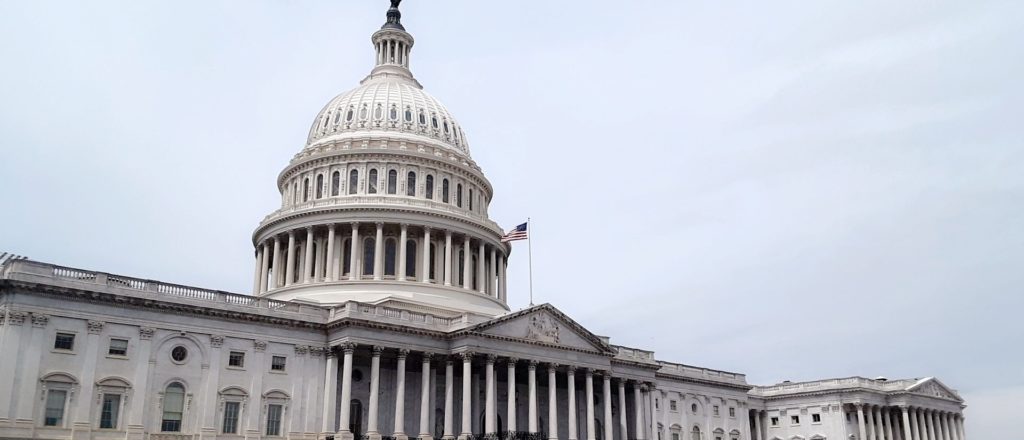
(Featured Image Media Credit: Jessica Rodriguez Rivas/Wikimedia Commons)
All content created by the 🏢Daily Caller News Foundation, an independent and nonpartisan newswire service, is available without charge to any legitimate news publisher that can provide a large audience. All republished articles must include our logo, our reporter’s byline and their DCNF affiliation. For any questions about our guidelines or partnering with us, please contact [email protected].