




EXCLUSIVE: Feds Paid Top ‘Anti-Racism’ Activist To Speak With Bureaucrats Then Deleted The Recording
The National Institutes of Health (NIH) deleted a recording of talk given to its staffers by leading “anti-racism” scholar Ibram X. Kendi in 2022, according to internal documents obtained by the Daily Caller News…
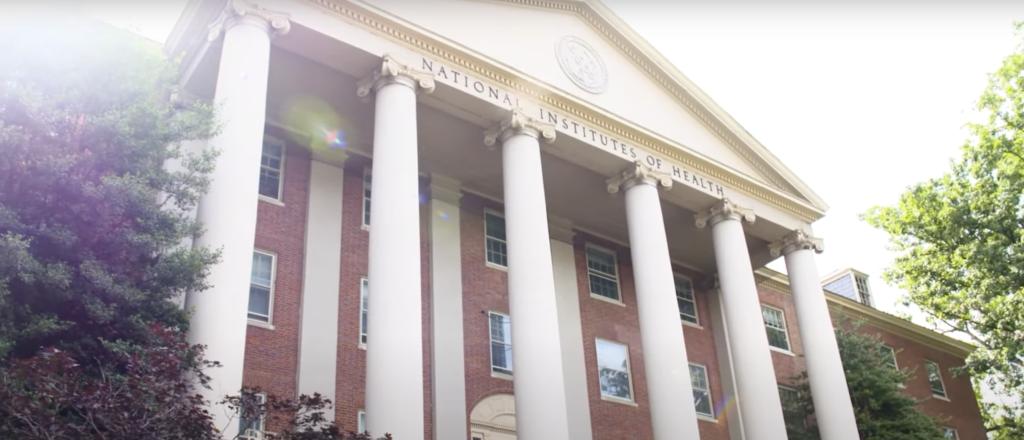

The National Institutes of Health (NIH) deleted a recording of talk given to its staffers by leading “anti-racism” scholar Ibram X. Kendi in 2022, according to internal documents obtained by the Daily Caller News Foundation.
Kendi spoke at the 2022 iteration of NIH’s “Big Read” event to discuss his best-selling book “How to Be an Antiracist,” according to an NIH webpage. His speaking arrangement came with conditions, however, as documentsobtained by Open The Books and provided to the DCNF show that Kendi’s publisher mandated that the recording of the event be deleted after 30 days and that precautions be taken to avoid the recording from being copied or downloaded.
“NIH has neither produced a copy of the video nor a clear understanding of whether it’s been retained for the public record,” Open The Books spokesperson Christopher Neefus told the DCNF. “We’re left only to draw inferences from the contract addendum, which instructs the agency to encrypt the video to prevent copying and then ‘remove’ it after 30 days.”
The NIH published a blog post following the talk, giving some clues into what was discussed.
“Looking at racism through a historical lens, Pérez-Stable and Kendi discussed the interweaving of the science on race, class, and racism; social and cultural beliefs; and the policies that bind them,” the post reads. “In this respect, Pérez-Stable introduced the research NIH is undertaking to better understand the impact of racism on health conditions, as well as the myriad social constructs that contribute to racial and ethnic health disparities. Kendi emphasized that to eliminate these disparities and to create a healthier society, we need to shift the focus of research from culture and/or the behavior of certain racial groups to investigating ‘policies and practices and conditions that are actually causing…racial health disparities.’”
Kendi’s book was responsible for popularizing the idea that all actions are either racist or “anti-racist” and that indifference to what he identified as racist policies was itself a form of racism. Following the death of George Floyd in 2020, liberal donors poured tens of millions of dollars Kendi’s Center for Antiracist Research at Boston University, which sought to “create novel and practical ways to understand, explain, and solve seemingly intractable problems of racial inequity and injustice” in the United States.
Despite tens of millions in funding, Kendi’s center produced relatively little research, with one of the few academic papers linked to it theorizing ideas of “white masculinity” causes “unconscious distress” in white men which then makes them racist toward black people.
Kendi’s ideas were valuable enough in the eyes of the NIH that it agreed to pay his publisher $5,000 for an hour of his time, according to internal documents. He spoke to between 800 and 1,300 researchers, clinicians, fellows and support staff working for the NIH.
Kendi told NIH staffers that they should work to “figure out ways—whether it’s through focus groups or extended interviews—to really understand how people are being treated or how they’re feeling see what impact the interventions are having.”
The recording of the talk, which Kendi’s contract stipulated would only be accessible to NIH employees who had a password to view it, was to be encrypted and deleted after 30 days. This arrangement isn’t typical of NIH speaking arrangements as recordings of the other Big Read talks are still available online. The recording of NIH Big Read 2017 is still up, albeit only accessible by NIH employees, while the Big Read talks from 2018 and 2019 are both viewable by the general public.
Staffers who worked at Kendi’s Center for Antiracist Research told the New York Times that the academic’s “paranoid behavior” made it difficult to work with him and that his “security protocols” were overbearing.
The NIH and Kendi did not immediately respond to the DCNF’s requests for comment.
All content created by the Daily Caller News Foundation, an independent and nonpartisan newswire service, is available without charge to any legitimate news publisher that can provide a large audience. All republished articles must include our logo, our reporter’s byline and their DCNF affiliation. For any questions about our guidelines or partnering with US, please contact [email protected].