Expert Who Predicted Lehman Collapse: Fed Reserve Is Carrying Out Financial ‘Arson’ During Banking Crisis
The Federal Reserve is desperately hiking interest rates to stave off further financial collapse even as President Joe Biden’s government continues to throw obscene amounts of money into bailouts all of which is putting…
The 🏦Federal Reserve is desperately hiking interest rates to stave off further financial collapse even as President 👤Joe Biden’s government continues to throw obscene amounts of money into bailouts all of which is putting a huge strain on the banking system. And the result is that the banks are lighting the financial fires while at the same time pretending to be the firefighters putting it out.
As in past financial crises, such as the 2008 financial crisis, these banks are engaging in risky financial dealings and then being rewarded by massive government bailouts, a cycle that tends to defeat any chances that these banks are going to learn any lessons.
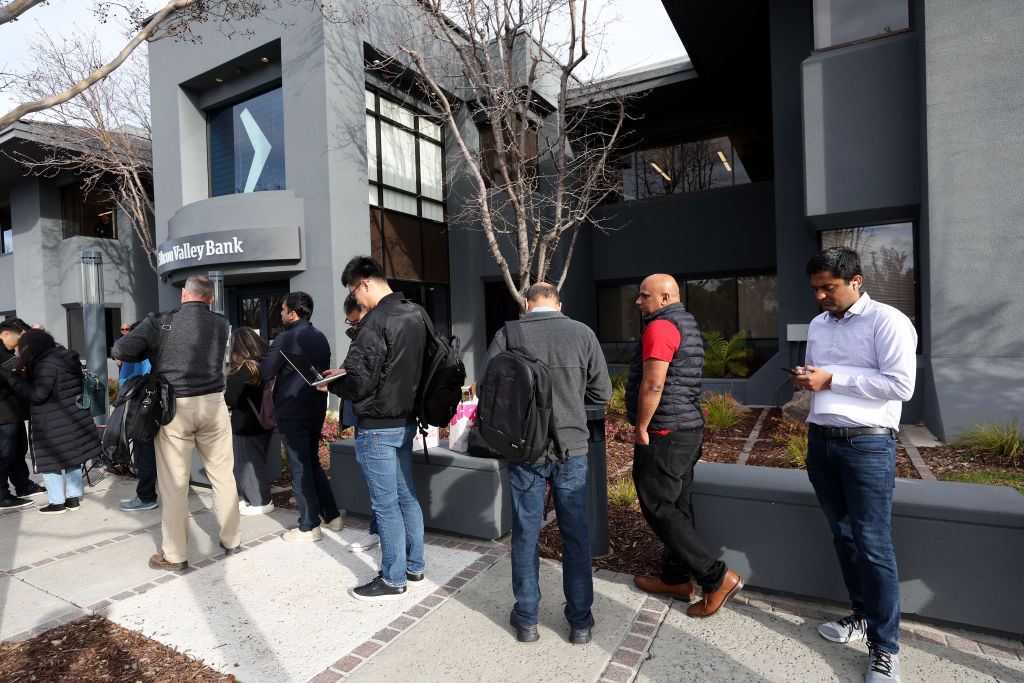
At least one analyst — who correctly warned about Silicon Vally Bank’s vulnerability — is now warning that another major bank is on the edge of failure.
Expert Who Predicted Lehman Collapse: Fed Reserve Is Carrying Out Financial ‘Arson’ During Banking Crisis — IJR
Shares of that bank, Credit Suisse, fell 5 percent to an all-time low in Europe as trading opened on Tuesday after the bank admitted to losing $8 billion in 2022, according to The Daily Mail.
The stock tumble occurred mere hours after analyst and investor Robert Kiyosaki warned of the weakness of Credit Suisse in a Fox Business Network interview. Trading had already been halted in the U.S. on a long list of banks to stem a panic.
Kiyosaki, a metals investor and author of “Rich Dad, Poor Dad” who accurately predicted the fall of Lehman Brothers five months ahead of the 2007-2008 worldwide financial panic, said that Credit Suisse was the most vulnerable even though it was the eighth largest bank in the world.
“My prediction, I called Lehman Brothers years ago, and I think the next bank to go is Credit Suisse because the bond market is crashing. The bond market is much bigger than the stock market. The Fed is up and they’re the firemen and the arson,” Kiyosaki told FBN, according to the Mail.
Kiyosaki, who with Donald Trump co-wrote the 2006 book, “Why We Want You to Be Rich,” and the 2011 book “Midas Touch,” also pointed out that this mess could not be coming at a worse time as record numbers of American Baby Boomers are looking to retire and may find their retirement funds adversely affected in this “perfect storm” financial crisis. And he said Biden’s plan to “print more fake money” is not going to solve anything.
“Like I said, again, I think the Fed and the FDIC signaled they’re going to print again, which makes stocks good. But this little silver coin here is still the best, it’s 35 bucks, so I reckon anybody can afford $35, and I’m concerned about Credit Suisse,” he told FBN.
Many of these banks have been spending more money and attention on woke policy goals than they have in minding their financial responsibilities.
Kiyosaki, who is a big advocate in bypassing college and instead going right into the workforce after high school, has also posted his warnings about Biden and the Democrats failed response to the crisis on his Twitter account, in one saying, “Biden says bailout of SVB Silicon Valley Bank will not costs taxpayers anything. What is he smoking?”
And in another tweet, he blasted the coming bailouts, writing, “BAIL OUTS begin. More fake money to invade sick economy. Still recommend same response. Buy more G, S, BC. Take care. Crash landing ahead.”
USA Today recently posted an article entitled, “Silicon Valley Bank collapse explained in graphics,” that gives a useful explanation of the bank collapse, noting that one major reason for the failure was the bank’s huge investment in long-term bonds when rates were near zero. But when interest rates rose, the bond prices fell, cratering their investments and causing a $1.8 billion loss.
If Kiyosaki is right, and his track record suggests he knows what he is talking about, things are about to get far worse. So, buckle up, America.