



Fauci Invokes His Fifth Amendment Right Before Senate
Dr. Anthony Fauci invoked his Fifth Amendment right against self-incrimination during a Senate hearing on Wednesday, declining to answer questions about the federal government’s response to the COVID-19 pandemic in what quickly became a tense exchange with Sen. Rand Paul, R-Ky. Fauci appeared before the Senate Homeland Security and Governmental Affairs Committee, chaired by Paul, […]
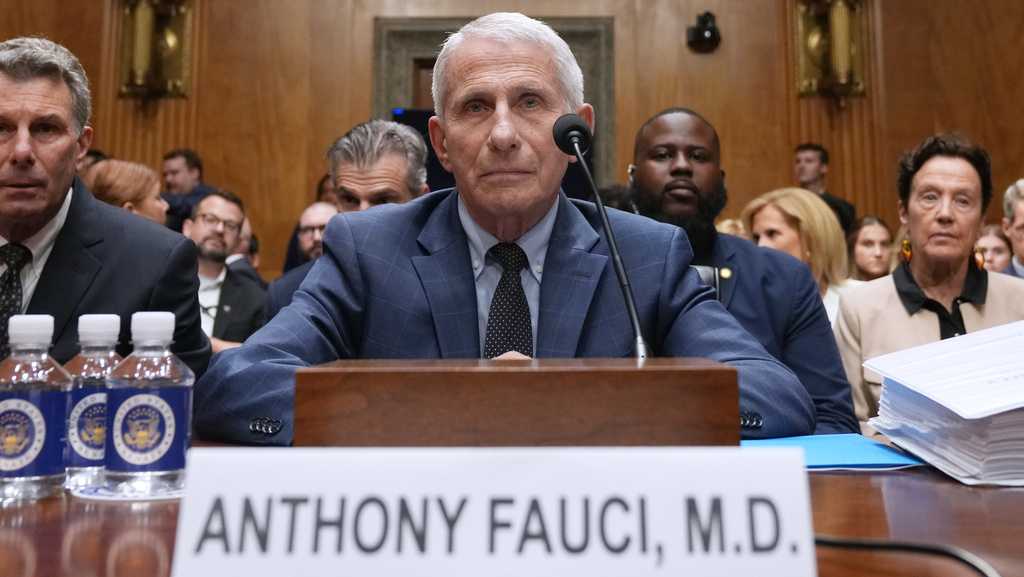
Dr. Anthony Fauci invoked his Fifth Amendment right against self-incrimination during a Senate hearing on Wednesday, declining to answer questions about the federal government’s response to the COVID-19 pandemic in what quickly became a tense exchange with Sen. Rand Paul, R-Ky.
Fauci appeared before the Senate Homeland Security and Governmental Affairs Committee, chaired by Paul, who has spent years questioning the former director of the National Institute of Allergy and Infectious Diseases about the origins of COVID-19, federal funding of coronavirus research, and statements Fauci made while serving as the nation’s leading infectious disease official.
Before questioning began, Fauci explained that he would not answer substantive questions, citing legal advice from his attorneys.
“Under the advice of my attorneys, I will invoke my right under the 5th Amendment of the Constitution to refrain from answering your questions,” Fauci said in his opening statement.
He argued that the hearing was driven by Paul’s longstanding criticism of him rather than an effort to gather information.
“Given Senator Paul’s obvious obsession with calling for my prosecution, his repeated slanderous comments about me, and recently his publicly releasing my unredacted personal diary aimed at embarrassing and intimidating me,” Fauci said, “the only conclusion I can reach is that the sole reason he is calling me before this Committee is to get me to say something that could vindicate his repeated public pledges that I end up, in his words, ‘behind bars.'”
Paul has repeatedly accused Fauci of providing misleading testimony to Congress regarding federal funding connected to coronavirus research and has called for criminal investigations into the former health official. Fauci has consistently denied those allegations, maintaining that his testimony was truthful and that he acted appropriately throughout the pandemic.
The hearing marked another chapter in a years-long public dispute between the two men. During previous congressional appearances, Fauci denied under oath that he sought to obscure the origins of the coronavirus or mislead lawmakers about research involving the Wuhan Institute of Virology.