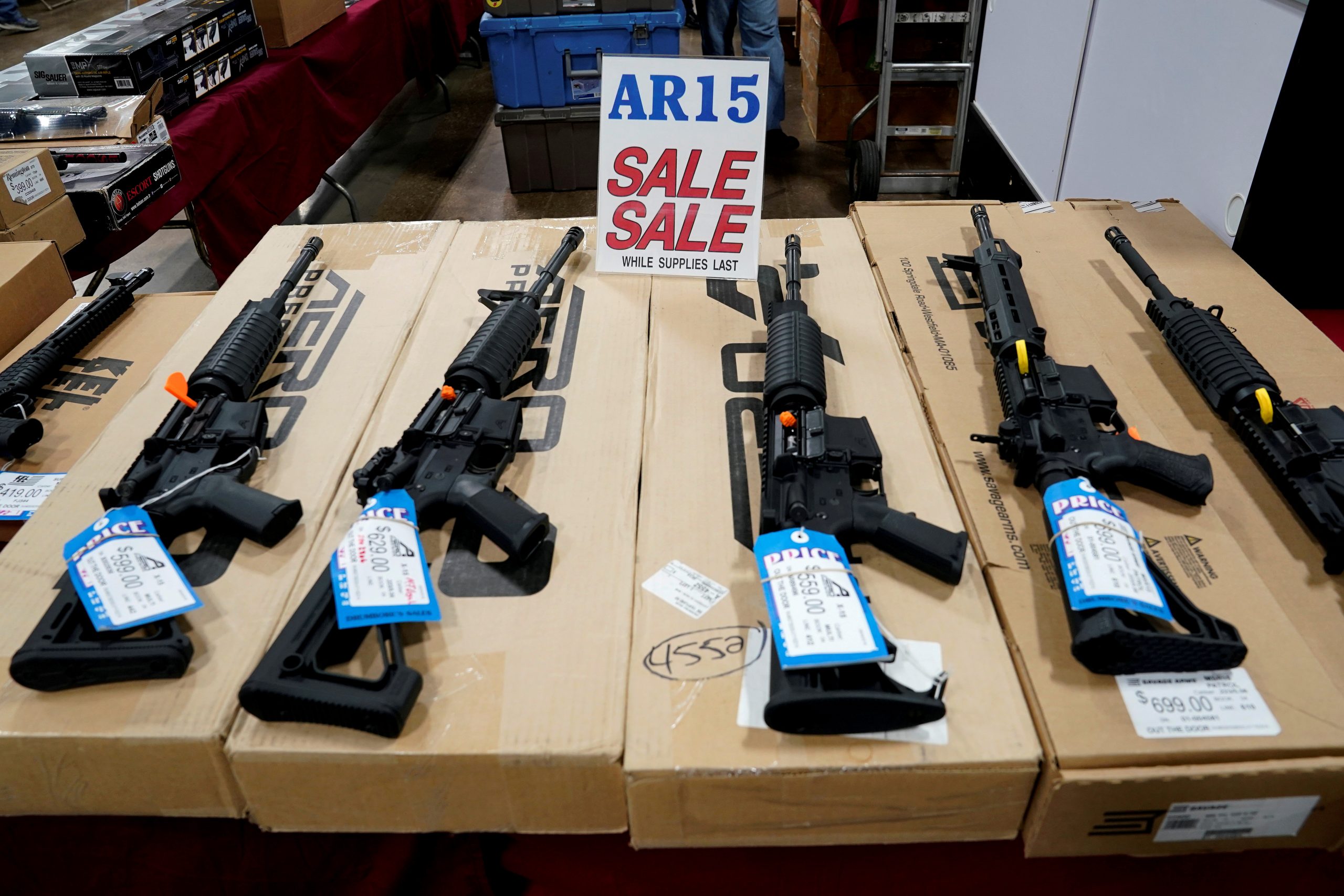
Commentary: Feinstein Comes Back with New 'Assault Weapons' Bill, Bans 205 Guns by Name
“Assault weapon” is a dangerous, menacing two-word construct that sounds like something the government should step in and immediately ban. Unfortunately, it means nothing. If you go to your local gun shop, they won’t be…
“Assault weapon” is a dangerous, menacing two-word construct that sounds like something the government should step in and immediately ban. Unfortunately, it means nothing.
If you go to your local gun shop, they won’t be selling any “assault weapons.” And it’s not like they’ll be advertising them under a friendlier name — “extra-strength firearms” or what-have-you — because the category doesn’t actually exist. An “assault weapon” is essentially what liberals want to call an assault weapon, usually because it’s a rifle and it looks scary.
And, it seems, Sen. 👤Dianne Feinstein has found an awful lot of weapons that look scary — 205, to be exact.
On Thursday, the California Democrat introduced a promised piece of legislation that would ban “military-style assault weapons and high-capacity ammunition magazines,” a media release from her office stated. It comes on the heels of the House of Representatives passing bills that would establish a nationwide background check program. Both of these are agenda items on President Joe Biden’s proposed suite of gun-control measures, along with stripping gun manufacturers from immunity from lawsuits over legally manufactured and sold firearms.
“It’s been 17 years since the original Assault Weapons Ban expired, and the plague of gun violence continues to grow in this country,” Feinstein’s media release stated.
“To be clear, this bill saves lives. When it was in place from 1994-2004, gun massacres declined by 37 percent compared with the decade before. After the ban expired, the number of massacres rose by 183 percent. We’re now seeing a rise in domestic terrorism, and military-style assault weapons are increasingly becoming the guns of choice for these dangerous groups.”
Sponsored
Sponsored
Commentary: Feinstein Comes Back with New 'Assault Weapons' Bill, Bans 205 Guns by Name — IJR
Pretty much none of this is true. While supporters of the original 1994 bill (authored by Feinstein, because of course) claim a reduction in deaths and massacres while it was in force, even reliably liberal PolitiFact notes “he ban’s impact remains unclear,” the data can be interpreted in a number of ways and no direct causal effect between the ban and lower rates of gun violence or “massacres” can be drawn.
Nevertheless, Feinstein’s pushing forward with a bill similar to her 1994 legislation, one that specifically targets weapons by their marketing names.
As Jacob Sullum notes at Reason, the legislation only requires one “military-style” characteristic for the weapon to be banned; in 1994, you needed two to ban the gun. Feinstein’s legislation also takes an expansive view of what constitutes a “military-style” characteristic, including a “forward grip,” “pistol grip,” “threaded barrel,” “barrel shroud” and (yes) “grenade launcher.”
While widespread use of grenade launchers is generally confined to Xbox games, a barrel shroud — a covering that prevents a gun user from accidentally touching a hot barrel — is hardly a “military-style” gun characteristic.
While there are tweaks, additions and omissions from the original 1994 legislation and Feinstein’s other attempts at similar legislation — the most recent was 2019 — the biggest issue is that it’s much stricter on how many “military-style” characteristics you’re allowed. Namely, none. “High-capacity ammunition magazines” would also be capped at 10 rounds.
However, the bill would grandfather in weapons and magazines that have already been purchased, something Sullum pointed out indicated Feinstein didn’t believe her own language.
“Like the 1994 law, it does not prohibit possession of ‘assault weapons,’ meaning that millions of ‘these deadly weapons’ will remain in circulation even if compliance is perfect,” Sullum wrote.
“That grandfather clause makes no sense if Feinstein really believes what she says. Her bill ‘exempts by name more than 2,200 guns for hunting, household defense or recreational purposes’ — a completely gratuitous list that is supposed to show us how moderate and generous she is. But according to Feinstein, the guns she wants to ban are good for nothing but mass murder. The millions of Americans who own them for lawful purposes probably will disagree.”
And that presents another issue: The Supreme Court’s ruling in District of Columbia v. Heller, which stated firearms in “common use for lawful purposes like self-defense” could not be banned under the Second Amendment. These are some of the most commonly owned weapons in the United States. You might even have one (or several) in your gun safe.
“The legislation would still make the most commonly-sold centerfire rifles in the United States off-limits to future buyers, as well as imposing a ban on the most commonly-owned ammunition magazines in the country as well,” Cam Edwards wrote at Bearing Arms.
“That clearly contradicts what the Supreme Court has said in the past; arms that are in common use for a variety of lawful purposes are protected by the Second Amendment.”
This, of course, assumes Feinstein’s bill has any chance of passing. Unless the Democrats nuke the filibuster and getting all 50 senators in their conference on board with this, it’s dead on arrival. Of course, if they decide this is the moment they’re going to ditch the filibuster, we’re going to have bigger problems than barrel shrouds and pistol grips.
It’s telling, however, that this meaningless piece of legislation — which arbitrarily redefines what weapons we can buy based on things that look scary as opposed to conferring any practical advantage to a mass shooter or “domestic terrorist” — has appeared so quickly in the Biden administration.
If this kind of empty symbolism is how the Democrats plan to govern, expect our Second Amendment rights to be under unceasing attack for the foreseeable future.