‘Flagrantly Unlawful Action’: Universities Sue Trump’s Energy Department Over Latest Funding Cuts
Several universities and higher education associations filed a lawsuit Monday against the Department of Energy (DOE) over a new policy capping indirect research funding cost rates at 15%. The DOE announced April 11 it…
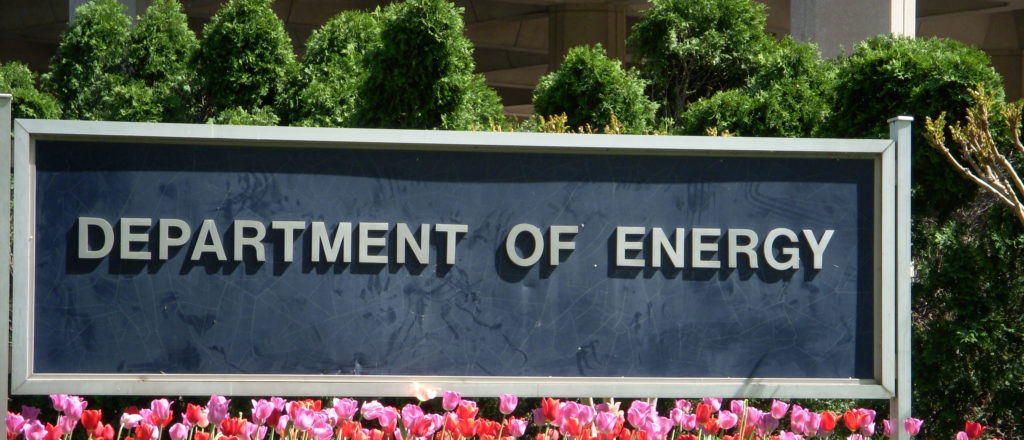

Several universities and higher Education associations filed a lawsuit Monday against the Department of Energy (DOE) over a new policy capping indirect research funding cost rates at 15%.
The DOE announced April 11 it would limit support for indirect costs, or money that is used for administrative and other non-research related expenses, to 15% for all research funding. The Association of American Universities (AAU), American Council on Education (ACE) and schools such as Cornell, Brown and the University of Michigan claim in the suit that the department’s decision is “flagrantly unlawful” and “will devastate scientific research,” according to the lawsuit.
“f DOE’s policy is allowed to stand, it will devastate scientific research at America’s universities and badly undermine our Nation’s enviable status as a global leader in scientific research and innovation,” the lawsuit argues.
The lawsuit alleges several vital projects, such as “the development of advanced nuclear and cybersecurity technologies, arms control verification mechanisms designed to reduce the risk of nuclear war, novel radioactive drugs to diagnose and treat cancer, and upgrades for the electrical grids that keep the lights on in rural communities,” would be impacted by the cuts.
“These actions are part of a continuing and dangerous effort to erode federal support for university-based research,” AAU, ACE and the Association of Public and Land-grant Universities (APLU) said in a joint statement announcing the lawsuit. “The proposed DOE cap would have an immediate and damaging impact on critical energy, physical sciences, and engineering research at more than 300 colleges and universities nationwide.”
ACE and APLU did not immediately respond to the DCNF’s request for comment. AAU referred the DCNF to the group’s public statement.
The DOE’s move aimed to save taxpayers $405 million annually, the agency said in its announcement of the decision, stating “The purpose of Department of Energy funding to colleges and universities is to support scientific research – not foot the bill for administrative costs and facility upgrades.” The cut did not apply to direct research funding.
A spokesman for the DOE told the Daily Caller News Foundation it “does not comment on ongoing litigation.”
The indirect costs typically go towards expenses such as “facility costs,” which include “depreciation on buildings, equipment and capital improvements, and operations and maintenance expenses,” and “general administration and general expenses,” which includes funding for “the director’s office, accounting, personnel,” according to the DOE.
Some universities, such as the University of Illinois, a plaintiff listed in the lawsuit, receive as much as 58.6% in indirect funding, the suit says. The Massachusetts Institute of Technology (MIT), another plaintiff, estimates it would lose as much as $16 million in funding if the DOE cut is allowed to take effect.
Neither university immediately responded to the DCNF’s request for comment.
The National Institutes of Health (NIH) in February was also met with backlash after it similarly capped indirect research funding costs at 15%. Many universities have also negotiated their funding rates with NIH previously, with Harvard receiving upwards of 69% in indirect funding.
A federal judge has since permanently blocked NIH’s cut due to improper procedure in initiating the cuts.
The Trump administration pulled a similar move in 2017, proposing a rule capping NIH indirect grant costs at 10%.
Cornell, Brown and the University of Michigan did not immediately respond to the DCNF’s request for comment.
All content created by the Daily Caller News Foundation, an independent and nonpartisan newswire service, is available without charge to any legitimate news publisher that can provide a large audience. All republished articles must include our logo, our reporter’s byline and their DCNF affiliation. For any questions about our guidelines or partnering with us, please contact [email protected].