Ford Adding Thousands Of U.S. Jobs
Ford is expanding production of Lincoln vehicles in the United States, a move the company says will create thousands of direct and indirect American jobs while reducing its reliance on vehicles imported from China. The automaker announced the expansion as part of a broader effort to increase domestic manufacturing and strengthen its U.S. production base. […]
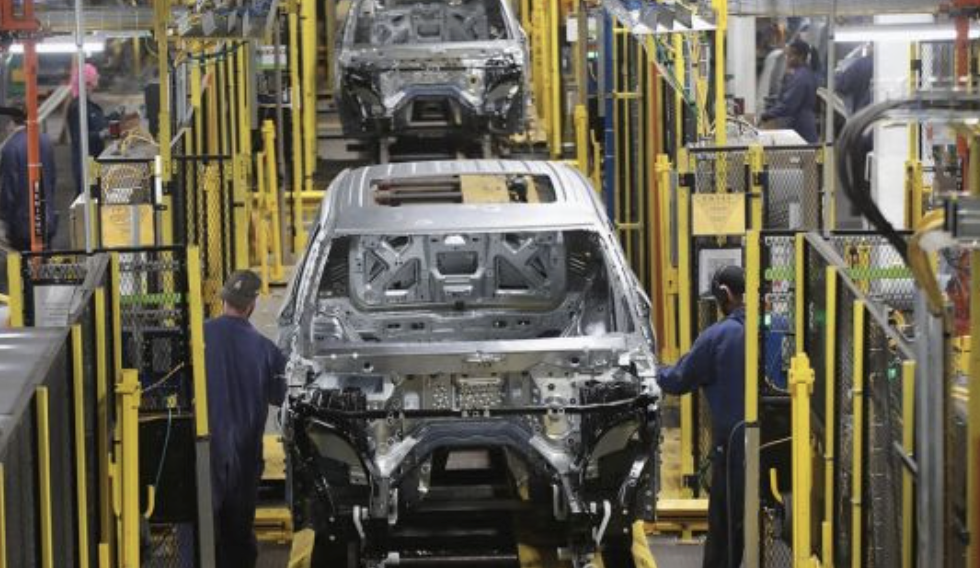
Ford is expanding production of Lincoln vehicles in the United States, a move the company says will create thousands of direct and indirect American jobs while reducing its reliance on vehicles imported from China.
The automaker announced the expansion as part of a broader effort to increase domestic manufacturing and strengthen its U.S. production base. Ford said the move would further reinforce its position as the country’s leading auto producer.
“Lincoln is a quintessentially American brand, and Ford is America’s automaker,” Ford CEO Jim Farley said in a statement.
Farley acknowledged that bringing more production back to the United States was not necessarily the simplest or least expensive option.
“This wasn’t necessarily the easiest path,” he said. “In fact, it’s a path most of our competitors aren’t choosing to take. But Ford builds in America because we believe in America, and we’re betting on that belief again.”
Ford already builds some Lincoln models domestically. The Lincoln Navigator is assembled in Louisville, Kentucky, while the Aviator is produced in Chicago. Some of those vehicles are then exported to markets including Canada, Mexico, and countries in the Middle East.
The company’s latest move represents a shift from an earlier strategy involving more production overseas. In 2023, Ford announced that the Lincoln Nautilus would become the first Lincoln vehicle imported to the United States from China.
Now, the company is moving in the opposite direction.
The change comes as automakers continue adjusting to U.S. trade policy, including tariffs imposed on foreign-made vehicles and automotive products under the Trump administration. Those policies were designed in part to encourage companies to manufacture more vehicles and components inside the United States rather than depending heavily on overseas plants.
Commerce Secretary Howard Lutnick praised Ford’s decision during an interview with Fox Business, describing it as an example of manufacturing returning to the country.
“They’re bringing their manufacturing home,” Lutnick said.
He predicted the expansion would result in significant job growth, saying Ford’s investment would produce “thousands and thousands of jobs” in the United States.
The effects could extend beyond workers employed directly at Ford plants. Auto manufacturing supports a large network of suppliers, logistics companies, parts manufacturers, maintenance operations, and other businesses. An increase in domestic vehicle production can therefore create employment well outside the factory where the final vehicle is assembled.
The Ford announcement also highlights another issue facing American manufacturing: the need for workers with modern technical skills.
Lutnick said the United States will have to invest more heavily in preparing younger workers for increasingly advanced manufacturing jobs.
“We’re gonna have to train young people for these high-tech jobs,” he said. “We are going high-tech in America.”
That point is especially relevant as modern auto plants become more dependent on robotics, computer-controlled machinery, advanced electronics, battery systems, and other technologies that require specialized training.
Manufacturing today looks very different from the assembly lines of previous generations. While companies may bring production back to American factories, filling those factories with qualified workers presents its own challenge.
Lutnick said the administration wants to make advanced domestic manufacturing a central part of its economic strategy.
“We are going to build these factories here in America, and that’s the key,” he said.
For Ford, the decision to expand Lincoln production domestically carries both economic and symbolic significance. Lincoln is one of the oldest American luxury automobile brands, and producing more of its vehicles in the United States fits neatly with Ford’s effort to emphasize its domestic identity.
The long-term effects will depend on how quickly Ford expands production, where the additional manufacturing capacity is located, and how many jobs ultimately result. Tariffs can also raise costs in parts of the supply chain, so the full economic impact will take time to measure.