Gun-Control Organization Uses Questionable Data To Single Out Major Firearms Outlet
A gun-control organization is taking aim at a major firearms dealer in California, seeking a probe over firearms traces that purport to show firearms it sells end up in criminal hands, using data that law enforcement…
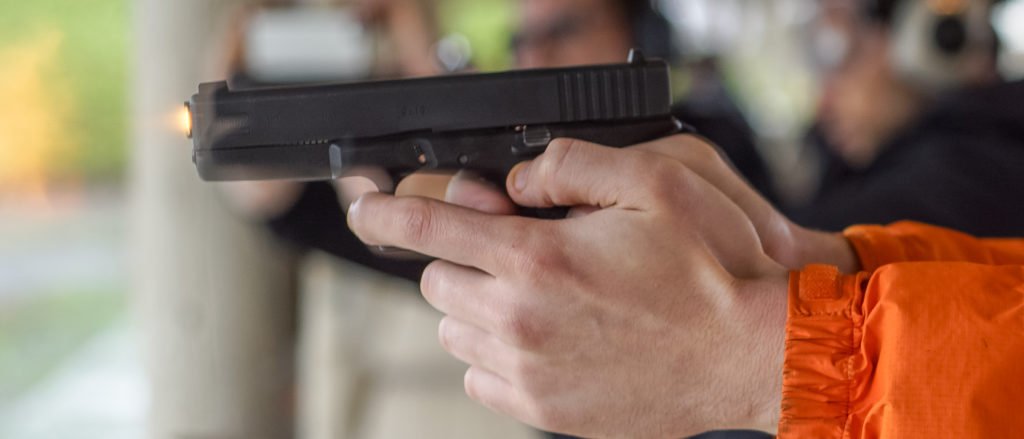

A gun-control organization is taking aim at a major firearms dealer in California, seeking a probe over firearms traces that purport to show firearms it sells end up in criminal hands, using data that law enforcement officials have said does not provide a complete picture.
On June 4, Brady United sent a letter to Los Angeles District Attorney Nathan Hochman, demanding he investigate Turner’s Outdoorsman over the fact that 22.48% of guns recovered at crime scenes are traced back to the chain’s stores. Turner’s Outdoorsman is a chain of stores that sells, among other products, firearms.
“In 2024, more than one in five guns recovered from crimes statewide (22.48%) that were traced to a California dealer (829) came from a Turner’s,” the gun control organization claimed. “In fact, the top eight California crime gun dealers that year were all Turner’s stores. This is not simply a symptom of a high-volume dealer.”
Turner’s accounts for roughly 20% of the firearms sales in California across its 36 locations in the state, according to The Trace, a media outlet bankrolled by anti-Second Amendment billionaire Michael Bloomberg. In its reporting, the outlet noted that Turner’s had a policy to not transfer firearms when background checks were “undetermined” and that the ATF described the chain’s record-keeping was “meticulous.”
“If your background check status becomes undetermined, we will issue a refund for the firearm and will encourage you to contact CA DOJ in order to learn what created the delay/undetermined status so that you can rectify the issue in order to avoid future occurrences of the same status on future purchases,” the FAQ page on firearms sales at the website for Turner’s says.
Despite Turner’s stringent procedures that go beyond California state law, Brady United wants the store investigated.
“Turner’s Outdoorsman has a proven commitment to regulatory compliance, as evidenced by regular The Bureau of Alcohol, Tobacco, Firearms and Explosives (ATF) and California DOJ audits that consistently confirm that Turner’s adheres to, and in some cases exceeds, all applicable laws and regulations,” Turner’s Outdoorsman Senior Vice President Bill Ortiz told the Daily Caller News Foundation.
“Firearms trace data provides investigative leads only. Trace data does not indicate wrongdoing by the retailer,” Ortiz continued. “The shorthand term ‘crime gun’ itself lacks a formal definition and often includes firearms that are merely ‘suspected’ of being involved in a crime or were traced for a variety of other reasons. This vagueness highlights the absence of a direct or reliable link between trace data and dealer conduct. For instance, consider a case where a firearm is stolen from a law-abiding customer and later recovered. That firearm would still be labeled a ‘crime gun,’ even though neither the dealer nor the customer engaged in any criminal activity.”
ATF remarked on the limitations of firearms tracing in Volume III of the National Firearms Commerce and Tracing Assessment.
“Firearms selected for tracing are not chosen for purposes of determining which types, makes or models of firearms are used for illicit purposes,” ATF said. “The firearms selected do not constitute a random sample and should not be considered representative of the larger universe of all firearms used by criminals, or any subset of that universe.” ATF noted in a 2000 report that firearms tracing usually stops at the first retail sale of the firearm.
California Rifle and Pistol Association President C.D. Michel provided additional details on why the tracing data is not a reliable indication of criminal misuse of firearms.
“The tracing data is not a reliable and is not a good indicator of criminal misuse or of a retailer doing anything wrong because every gun used in a crime is not traced and every gun traced is not used in a crime,” Michel told the DCNF.
An investigation would consume a lot of time, money and effort that this chain will have to absorb. The same goes for the lawsuits targeting Glock over the fact some people are illegally converting the Glocks using so-called “Glock switches.”
Despite the 2005 passage of the Protection in Lawful Commerce in Arms Act, one suit targeting gun manufacturers over criminal misuse of firearms dragged on for 27 years until the Indiana Supreme Court finally put an end to it. For those small businesses, that could be enough of a financial drain to put them under.
Proposed laws targeting gun stores in Michigan are taking a similar approach. In that case, lawmakers there have avoided outright bans, instead they set up a catch-22 for those who want to open gun stores and saddled them with mandated expenses that could down the FFL in red ink.
All content created by the Daily Caller News Foundation, an independent and nonpartisan newswire service, is available without charge to any legitimate news publisher that can provide a large audience. All republished articles must include our logo, our reporter’s byline and their DCNF affiliation. For any questions about our guidelines or partnering with US, please contact [email protected].