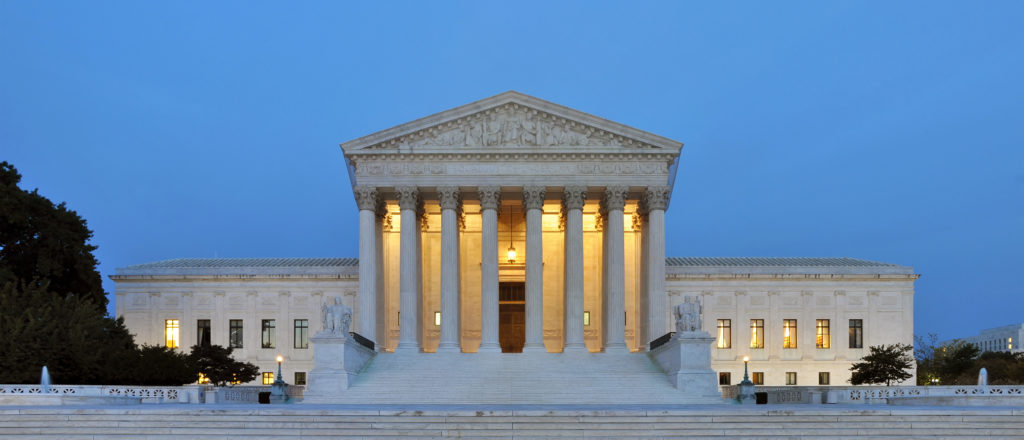
How A Decades-Old Supreme Court Ruling Forces School Boards To Fly Blind On Key Costs
For more than four decades, a single Supreme Court interpretation of the 14th Amendment has made it effectively impossible for public school boards to measure the fiscal impact of one of their most rapidly expanding categories of spending.
For more than four decades, a single Supreme Court interpretation of the 14th Amendment has made it effectively impossible for public school boards to measure the fiscal impact of one of their most rapidly expanding categories of spending.
That interpretation is Plyler v. Doe, and it is time for an honest national conversation about revisiting it.
I have had the privilege of serving on the Sarasota County School Board for over a decade — a tenure that has included asking tough questions and raising concerns on issues many chose not to ask or chose to look away from because it was deemed too controversial.
But I took an oath, as did every elected school board member across this nation, to uphold and protect the Constitution and to serve as a fiduciary of taxpayer money. When I recognize an issue harming the constituents I serve, I have an obligation to address it.
Sarasota County sits on the Gulf Coast of Florida, just south of Tampa, and has long been recognized as a top-performing school district with some of the highest-rated schools in the state. It is not the kind of place typically associated with high levels of illegal immigration.
That changed in 2024, when teachers in our district began describing what they were seeing in their own classrooms: a rising wave of English Language Learner (ELL) students, arriving amid a nationwide surge in illegal border crossings, that our budgeting process had no real way to plan for. When I raised these concerns at a public workshop, activist groups describing themselves as “protectors of public education” were quick to call the inquiry racist.
Sponsored
How A Decades-Old Supreme Court Ruling Forces School Boards To Fly Blind On Key Costs — IJR
That reaction is itself worth noting. It tells you the goal, for some, is never about protecting children, taxpayer money, or public schools. It is about protecting the question from ever being asked.
The line item at the center of that question is the cost of serving a surging English Language Learner population — much of it tied to a federal immigration system Congress has failed to fix. Plyler v. Doe is not a federal statute. It is the Supreme Court’s 1982 interpretation of the 14th Amendment’s Equal Protection Clause, and it has been read ever since — through subsequent federal guidance — to mean school boards cannot collect, track, or use immigration data for budgeting purposes at all.
The result: elected officials sworn to manage public money cannot measure what one of their most rapidly rising costs actually is, where it is coming from, or who should be paying for it.
That is not equal protection. It is fiscal negligence wearing a constitutional disguise.
The Numbers Are Not Hidden — Just Inconvenient
The closest measurement currently available to any school board is ELL enrollment. It is an imperfect proxy: not every English Language Learner is here illegally. Many arrive through legal channels, refugee programs or are U.S.-born children of legal immigrants. But it is the only population-level signal available under the current legal framework, and what that signal shows is eye opening.
English learners rose nationally from 9.4% of public school enrollment in 2011 to 10.6% in 2021, according to the U.S. Department of Education’s National Center for Education Statistics. That is also the most recent year for which NCES has published figures — a lag worth underscoring for a data point tied to active federal budgeting.
It is a notable gap, because Sarasota’s own enrollment records, detailed below, show that 2021 is precisely when the real acceleration began locally — suggesting the national picture may already be understated by the time anyone outside a district’s own finance office can see it.
Even within the decade-old federal snapshot, the pattern is instructive: national ELL enrollment dipped during the first year of the pandemic, then continued climbing, with double-digit ELL shares now recorded in 13 states and the District of Columbia. Texas, California and New Mexico each report ELL populations above 18% of total enrollment.
Federal Title III funding covers only a fraction of ELL costs nationally. The majority of the burden rests on local property taxpayers, and budgetary decisions rest with state and local officials who have no authority over immigration or border enforcement — an area the Constitution reserves exclusively to the federal government — and no mechanism to compel Washington to reimburse the local costs that federal jurisdiction creates.
The deeper problem is that NCES’s national figures are already years stale by the time they’re published, while individual districts hold real-time enrollment data that goes untouched for budgeting purposes because of the legal uncertainty Plyler’s guidance has created.
If school boards across the country began digging into their own numbers the way I did in Sarasota, there is good reason to expect they would find the same pattern showing up locally, years before it would ever surface in a federal dataset.
What Happened In My Own District
Sarasota County has no particular history as a high-immigration destination. That is what makes our numbers worth looking at.
In 2013–14, ELL students made up 6.1% of our total enrollment, with 2,523 students enrolled (these figures reflect total public school enrollment, including charter schools). As of April 2026, ELL students made up 10.2% of total enrollment for the 2025–26 school year — 4,566 students, an 81% increase in ELL enrollment, even as total district enrollment grew by just 8% over the same period.
ELL students, in other words, accounted for a wildly disproportionate share of the district’s overall growth: total enrollment overall grew by roughly 3,400 students since 2013–14, and ELL students alone made up nearly two-thirds of that increase.
The trajectory in between is especially worth noting. ELL enrollment declined from 2,523 in 2013–14 to a low of 2,281 in 2020–21. Then it reversed sharply: up 22% in 2021–22, another 24% in 2022–23, and continuing upward through the 2023–24 and 2024–25 school years.
Given year-over-year double-digit increases between 2021 and 2024, it is no wonder teachers experiencing the strain on the ground quietly brought it to my attention. They were watching a shift in their classrooms in real time, years before it would show up in any public dataset — and they were careful about how they raised it, because they already understood how the question would be received.
Who Actually Pays
It is a matter of basic policy that elected officials be able to quantify the specific cost illegal immigration imposes on their communities, states, and country — and that includes school boards.
When resources are increasingly shifted to support a rising population of English Language Learners, amid overall declining enrollment, the students who inevitably get shortchanged are the children of legal, taxpaying citizens: the ones whose families cannot supplement what the classroom no longer has room to provide.
In states without alternatives, those families simply absorb the difference. In states like Florida or Arizona, where universal school choice now exists, they don’t have to — they leave.
That exodus is not a side effect of school choice succeeding. It is a symptom of public education failing to account for its own cost drivers, and it is a real threat to public education. Not the presence of these children in a classroom, but a legal framework that keeps the school board that serves them from ever being allowed to see the bill.
Reexamining Plyler does not mean removing a single child from a classroom. It means asking whether the Constitution requires school boards to be blind to the fiscal consequences of a federal policy failure — and whether the Equal Protection Clause demands total cost-blindness as the price of access.
The irony is that other public institutions already resolve this tension without denying anyone care or coverage. Federal law requires every hospital emergency room to stabilize any patient regardless of status — but Congress paired that mandate with Emergency Medicaid, which requires hospitals to document immigration status precisely so the cost of that care can be tracked and funded.
Treatment isn’t conditioned on the paperwork. But the paperwork exists, because Congress understood that an unfunded mandate without a measurement mechanism is not sustainable indefinitely. Public education has the mandate. It has never been given the mechanism.
What Should Change
Three concrete steps would restore fiscal accountability without touching a single child’s access to a classroom:
First, the federal government should formally rescind guidance issued in 2011 by the Department of Education and Department of Justice — known as a “Dear Colleague” letter (the government’s term for formal policy instructions sent to every school district in the country).
This guidance went beyond what Plyler actually requires. Plyler itself only bars two things: turning a child away at enrollment and charging tuition based on immigration status.
However, the 2011 guidance went further, discouraging districts from even asking enrollment questions that could reveal a student’s immigration status, out of concern that doing so might scare families away from enrolling their children at all. Rescinding it would let districts add immigration status to the information they already collect at enrollment — the same way they collect a home address or prior school records – so the true cost of serving that population can finally be tracked like every other line in the budget.
A family’s answer would affect the numbers a district reports. It would not affect whether their child is enrolled.
Second, this should be a state problem, not a federal one. Congress has had decades to codify meaningful immigration reform and hasn’t. States and local school districts are the ones absorbing the cost of that failure — they shouldn’t also have to wait on Washington to fix how they’re allowed to measure it.
States are already moving in this direction. In June 2026, Florida’s Board of Governors advanced a rule requiring state universities to verify lawful presence before enrollment, following the Legislature’s 2025 repeal of in-state tuition for undocumented students.
That precedent is about higher education, not K–12 — Plyler’s holding has never extended past the schoolhouse door to college admissions — but it establishes that Florida is willing to act at the state level on the underlying accountability question rather than wait on Congress. The same instinct, applied to K–12 budgeting rather than admission, is the right template.
Third, where a state acts and a legal challenge follows, a vehicle for the Court to reexamine Plyler has now been established.
This isn’t a partisan ask. It’s a basic management question: can the people responsible for a budget see what’s in it?
Right now, for one of the fastest-growing line items in American public education, the answer is no. However, states can change the answer to that question, and they should start now.
Perhaps once the public has an accurate accounting of what illegal immigration has really cost our public schools, Congress will finally act.
Bridget Ziegler is Chair of the Sarasota County School Board and Director of School Board Action at 1776 Project Foundation. The views and opinions expressed in this piece are her own.
The views and opinions expressed in this commentary are those of the author and do not reflect the official position of the Daily Caller News Foundation.
All content created by the Daily Caller News Foundation, an independent and nonpartisan newswire service, is available without charge to any legitimate news publisher that can provide a large audience. All republished articles must include our logo, our reporter’s byline and their DCNF affiliation. For any questions about our guidelines or partnering with us, please contact [email protected].