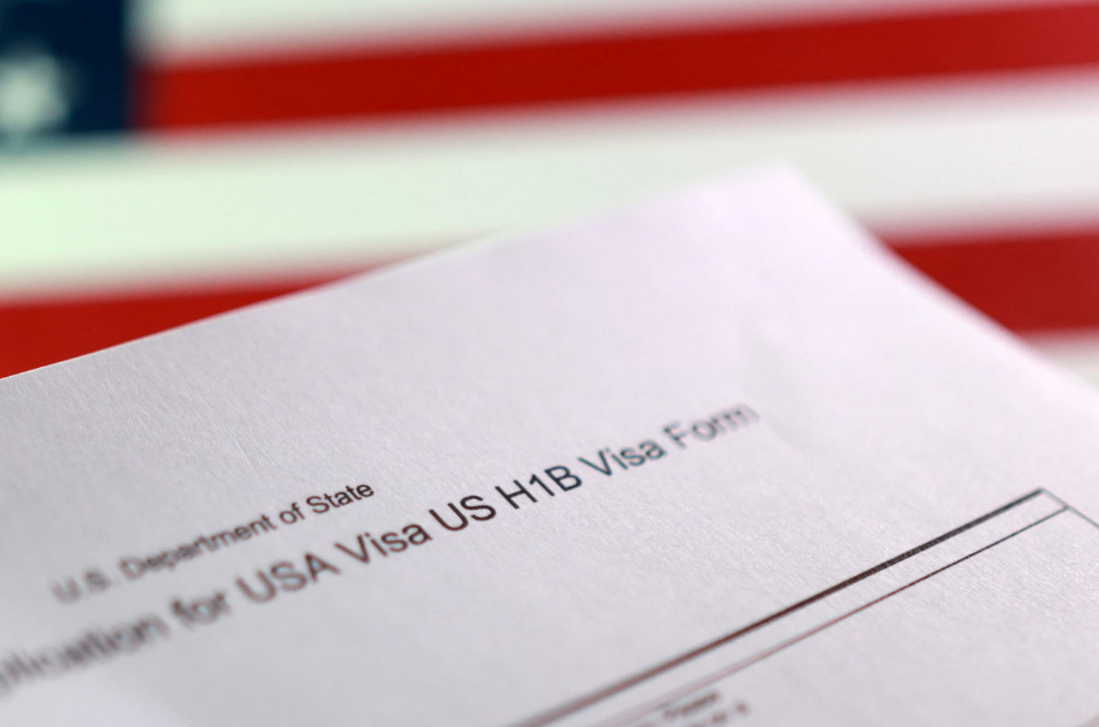
President Donald Trump’s State Department has hit the pause button on one of the most important steps in the U.S. immigrant visa process, and this is not some minor paperwork shuffle happening in a handful of embassies. We’re talking worldwide. Immigrant visa interviews with American consular officials have been called off while personnel at U.S. […]
President Donald Trump’s State Department has hit the pause button on one of the most important steps in the U.S. immigrant visa process, and this is not some minor paperwork shuffle happening in a handful of embassies.
We’re talking worldwide.
Immigrant visa interviews with American consular officials have been called off while personnel at U.S. embassies and consulates undergo what the State Department describes as “in-depth training,” according to the Financial Times.
And here’s the thing: the interview comes near the end of a long immigration process. Applicants can submit forms, collect documents and work their way through the system, but without that interview, they cannot simply march on to the finish line.
So for applicants already waiting? They wait some more.
Those who had appointments scheduled were reportedly notified by email that they would be informed when new interview dates became available.
The Trump administration says it wants consular officials better prepared to apply America’s “public charge” rules and determine whether prospective immigrants are likely to become dependent on government benefits after arriving in the United States.
“A more prosperous America means ensuring that visa applicants are not likely to become a public charge, as defined under US law and regulation, and not likely to become dependent on US public benefits reserved for qualified Americans in need,” a State Department representative told the Financial Times.
The department calls the effort a “global training initiative” intended to “ensure all consular officers are fully equipped to evaluate every visa applicant comprehensively and consistently.”
Sponsored
Sponsored
Notice the scope there. Global.
That matters because this comes right after another Trump immigration policy ran into trouble in federal court.
A judge on Friday struck down a State Department ban involving visa issuance to residents of 75 countries, according to The Hill. The New York Times drew attention to the racial and geographic makeup of those countries.
“The majority of the 75 countries on the State Department’s list are non-European and have significant nonwhite populations,” the Times reported.
The list, according to the newspaper, stretched across Africa, Latin America, the Caribbean, Eastern Europe, Southeast Asia and the Middle East and included American allies such as Jordan and Egypt.
Now the administration has taken an action that does not single out those 75 countries.
The interview pause applies worldwide.
That does not end the political argument over Trump’s immigration agenda. Not even close. But it changes the particulars of this fight because the immediate suspension is being applied globally while American consular personnel receive the same training.
Republican Sen. Jim Banks of Indiana publicly backed the move Wednesday on X.
And it fits into a much larger immigration campaign underway inside the Trump administration.
The State Department is also examining the possible revocation of as many as 200,000 visas held by foreign nationals who entered the United States as tourists or business visitors before seeking asylum.
Now, stay with me, because this is where the two sides of the immigration debate collide.
Critics of Trump’s policies have repeatedly challenged his administration in court and accused it of using overly restrictive or discriminatory immigration rules. Trump’s supporters argue that legal immigration is still immigration policy — meaning the government has every right to ask who qualifies, whether the rules are being followed and whether applicants are likely to support themselves after arriving.
The argument over race has followed Trump for years.
Back in 2018, controversy exploded after reports that Trump used a vulgar term while discussing certain developing countries during a White House immigration meeting. The reported remark became part of a much broader fight over whether Trump’s immigration policies were motivated by legitimate policy concerns or racial hostility.
That history is why the worldwide nature of this latest action is politically significant.
The administration’s stated criterion here isn’t nationality or race. It is whether an applicant is likely to become a “public charge” as defined under U.S. law and regulation. And rather than stopping interviews in a selected group of nations, the State Department has interrupted them across the globe while officers receive additional instruction.
For thousands of prospective immigrants, of course, the political argument is secondary to the immediate reality.
They had appointments. Now they don’t.
They were approaching one of the final major hurdles in the immigrant visa process. Now their applications effectively sit where they are until interviews restart.
And the Trump administration appears willing to accept that disruption to make sure the people conducting those interviews apply its public-charge standards the way Washington intends.
That’s the trade-off being made here: slow the machinery down now, retrain the people operating it, and scrutinize applicants more closely when the machinery starts moving again.
Whether that produces another courtroom battle remains to be seen.