


Inflation rose to a nearly 40-year high in November as strong consumer demand and supply chain issues persisted.
On Friday, the Labor Department said the consumer price index, a measure of the costs of goods and services, in November rose by 6.8% compared to the same month last year, the highest rate since 1982. It also marked the sixth consecutive month inflation topped 5%.
Compared to October, prices in November rose 0.8%.
Food, gas, and shelter accounted for the largest annual price increases in November. The Washington Postâs Heather Long pointed out that the price of gas in November was up 58% from 2020. Meanwhile, rent was up 3.5%.
Additionally, food prices were up 6.1%, and used car and truck prices were up 31.4%
CNBC notes, âExcluding food and energy prices, so-called core CPI was up 0.5% for the month and 4.9% from a year ago, which itself was the sharpest pickup since mid-1991.â
The Dow Jones estimated inflation would be 6.7% in November.
âItâs clear that high inflation is not going away any time soon,â Long tweeted. âYes, December may see some relief on gas prices. But rents continue to rise, food prices (esp. meats) continue to rise, and car/furniture/goods prices remain high.â
Long also shared a graph about wage increases for workers and noted that low-wage workers are seeing their wage growth outpace inflation.
However, she added, âInflation is more than eating up wage gains for everyone else.â
Allen Sinai, the chief global economist and strategist at Decision Economics, Inc., told The Wall Street Journal, âThese are frighteningly high inflation numbers, the likes of which we havenât seen for decades.â
âWe have tremendous spending by consumers. A lot of people are getting hired. Demand is huge. Monetary policy remains very easy, and fiscal stimulus has no precedent in history,â he added.
As the Journal points out, âCompanies are still struggling to get materials, though supply constraints were showing signs of easing before the Omicron variant emerged. The most prominent example of strained supply chains is a shortage of semiconductors that has hamstrung auto production.â
However, Aichi Amemiya, senior U.S. economist at Nomura Securities, told the paper that âinflationary pressure could begin easing early next year.â
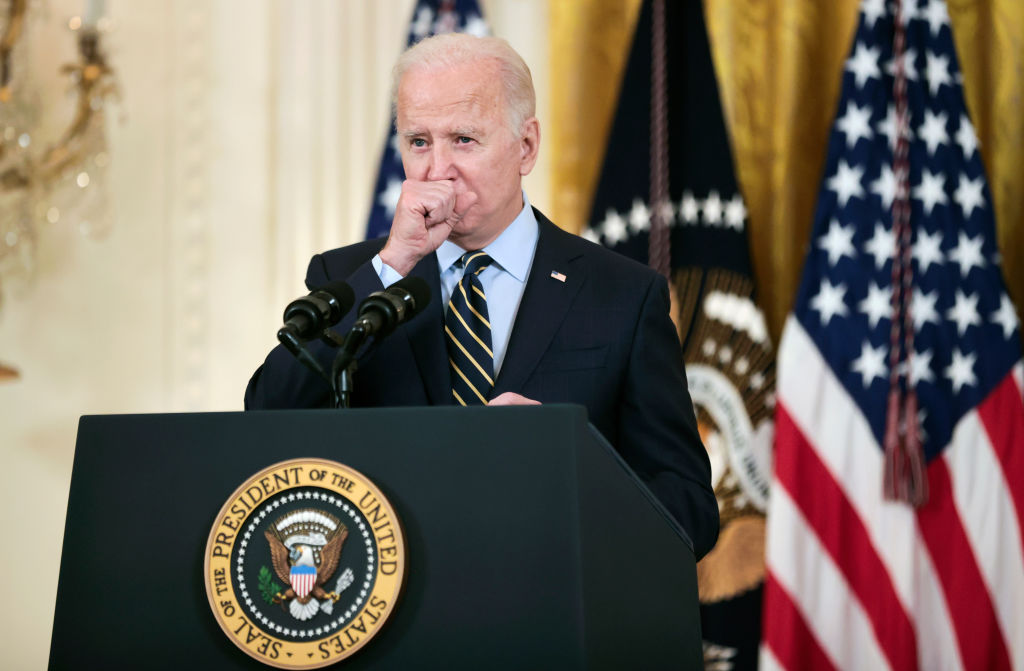
In a statement on Thursday, President Joe Biden argued that a dip in energy prices would not be accounted for in the latest data.
âThe information being released tomorrow on energy in November does not reflect todayâs reality, and it does not reflect the expected price decreases in the weeks and months ahead, such as in the auto market,â he said.
He also argued that his nearly $2 trillion Build Back Better Act would help ease inflation. However, Republicans say that additional spending would fuel inflation.
While countries around the world are also experiencing inflation, Jason Furman, who was an economic adviser to former President Barack Obama, shared a graph that showed core inflation in the U.S. is outpacing European nations.
âIâve seen the argument many, many, many times that inflation is up everywhere so there is nothing US-policy specific to what weâre seeing. Look at this comparison of US and euro area core inflation (trying to use as comparable measures as possible) and tell me if you agree,â he wrote.