‘It’s Gonna End On Day One’: GOP Lawmakers, Fishermen Urge Trump To Keep Promise To Axe Offshore Wind
Critics of the offshore wind industry are calling on President-elect Donald Trump to keep his campaign promise of ending federal support for offshore wind on his first day in office. Trump’s return to the Oval Office…
Critics of the offshore wind industry are calling on President-elect Donald Trump to keep his campaign promise of ending federal support for offshore wind on his first day in office.
Trump’s return to the Oval Office may deal the problem-riddled offshore wind industry another blow if his administration follows through on his pledge to scrap federal support for offshore wind projects during his second term. Republican lawmakers, opposed to heavily subsidized green ⚡Energy, and commercial fishermen, who view the industry as an existential threat to their livelihoods, are calling on the president-elect to follow through on his campaign’s promise, which could imply ending federal subsidies and lease sales for the industry.
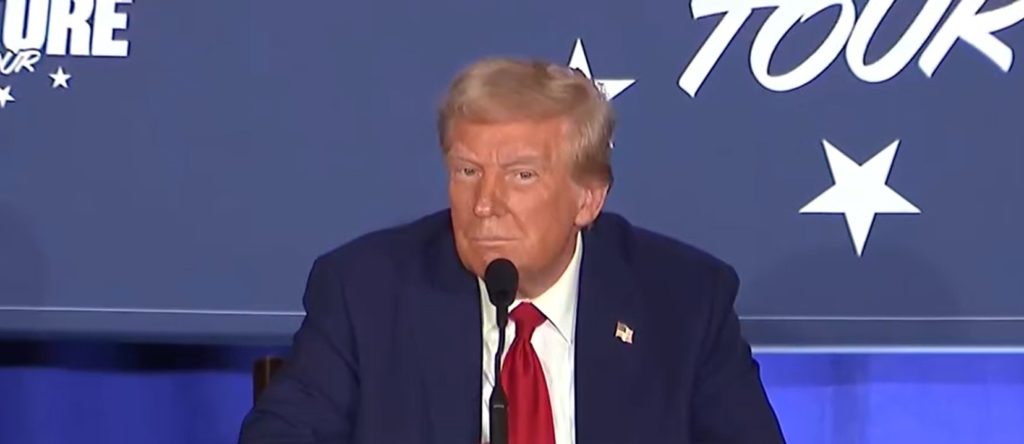
“We are going to make sure that ends on day one. I’m gonna write it out in an executive order,” Trump told a crowd of his supporters at a campaign rally in Wildwood, New Jersey, on May 11. “It’s gonna end on day one.”
Since January 2021, the Biden-Harris administration has approved ten offshore wind projects at commercial scale and conducted six offshore wind lease sales, including one held just last week in the Gulf of Maine that was
Sponsored
Sponsored
‘It’s Gonna End On Day One’: GOP Lawmakers, Fishermen Urge Trump To Keep Promise To Axe Offshore Wind — IJR
despite the Biden administration’s embrace of the industry.
“I have no doubt that a second Trump administration will do the right thing for Americans by scrapping the Biden-Harris offshore wind agenda,” Republican New Jersey Rep. Jeff Van Drew, a vocal critic of the offshore wind industry, told the DCNF. “These projects are a burden on our economy, harm local communities and are nothing but a political payoff to special interests. President Trump understands that true ⚡Energy independence and prosperity come from American oil, gas, solar and especially nuclear ⚡Energy, through a balanced ⚡Energy policy — not from wasteful wind projects that put our economy and environment at risk.”
“I think it’s a very wise decision,” Republican Maryland Rep. Andy Harris, chairman of the House Freedom Caucus, told the DCNF. “We are wasting money, and the worst part is that all that money is going to foreign wind companies because there are no American wind companies. They’re all foreign companies that are making billions of dollars off the American ⚡Energy ratepayer.”
The Vineyard Wind ⚡Energy project, jointly owned by a Danish investment firm and a Spanish utility, earned Republican lawmakers’ ire in July when debris from one of the project’s turbine blades — which stretches longer than the Statue of Liberty — washed up on Massachusetts’ beaches after breaking apart and falling into the ocean.
“We should never allow foreign owned companies to control our ⚡Energy supply — much less harm our environment while doing it,” Harris wrote on X.
The New England Fisherman’s Stewardship Association (NEFSA), a commercial fishing industry group that organized a “flotilla protest” at the site of the broken Vineyard Wind turbine in August, is calling on the Trump administration to walk back on Biden’s goal of deploying 30 gigawatts of offshore wind by 2030. The group is also advocating for the incoming Trump administration to “delist unleased wind ⚡Energy areas” off the coast of New England and the mid-Atlantic.
NEFSA CEO Jerry Leeman told the DCNF that he’s optimistic that the Trump administration will be “a voice of reason” on offshore wind, which he claimed would be a welcome departure from the previous administration, whom he accused of prioritizing green ⚡Energy goals over fishermen’s livelihoods and the health of the marine environment.
“The incoming administration has an historic opportunity to save American workers from foreign developers, reinvigorate iconic coastal towns, and improve America’s food security,” NEFSA CEO Jerry Leeman said in a press release following Trump’s election win.
The Trump administration may also seek to repeal the Inflation Reduction Act subsidies that offshore wind projects are eligible for, which could make the industry’s continued growth off the Atlantic coast not as economically viable, according to Travis Fisher, director of ⚡Energy and environmental policy studies at the Cato Institute.
“I would expect the prospects of offshore wind to dim once the subsidies in the Inflation Reduction Act are repealed,” Fischer told the DCNF. “The high cost of offshore wind is unavoidable. State and federal subsidies can mask the cost by shifting it to the tax base, but ultimately either ratepayers or taxpayers will bear the significantly above-market cost of offshore wind in the states that mandate it.”
Offshore wind developers and wind turbine makers’ stock prices substantially decreased on Wednesday following news of Democratic presidential nominee Kamala Harris’ defeat the previous night.
The Trump campaign did not respond to a request to comment from the DCNF.
All content created by the 🏢Daily Caller News Foundation, an independent and nonpartisan newswire service, is available without charge to any legitimate news publisher that can provide a large audience. All republished articles must include our logo, our reporter’s byline and their DCNF affiliation. For any questions about our guidelines or partnering with us, please contact [email protected].