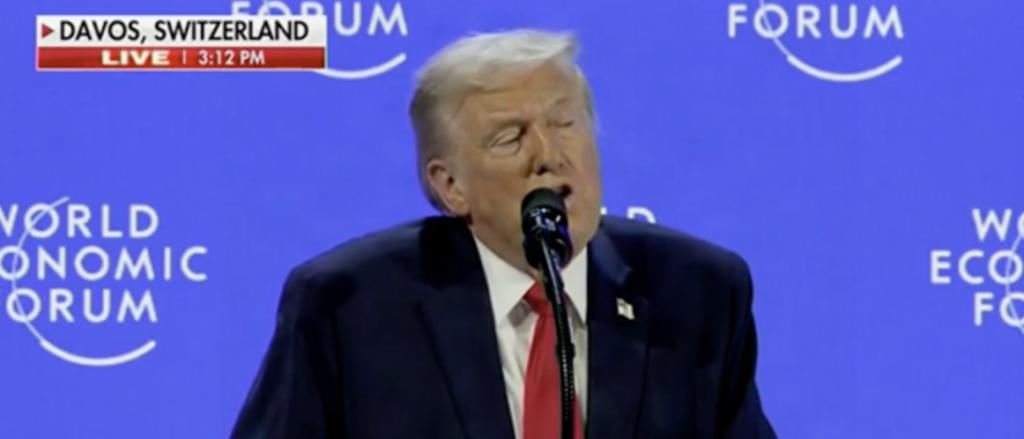



At this yearâs World Economic Forum in Davos, President Trump unveiled a new global initiativeâthe âBoard of Peaceââand promoted it as a flexible mechanism for dialogue and conflict mitigation. The language soothed, the ambition sprawled, and the audience offered polite applause.
But the underlying story is not âpeace.â It is powerâwhere it is moving, how leaders are organizing it, and who ultimately controls it.
President Donald Trump recognized this reality earlier than his critics did. Long before policymakers embraced âecosystemsâ as fashionable language, Trump argued that nations that lacked control over production, supply chains, and leverage surrendered real power, regardless of how many forums they attended or diplomatic statements they signed.
Trumpâs Board of Peace signals a shift from rule-based global institutions (e.g., the United Nations) to fast-changing, interest-based global coalitions. To understand why this shift matters, policymakers must look past rhetoric and examine how power actually functions in modern systemsâan approach Trump adopted instinctively when he challenged the global consensus.
Power does not flow from treaties or multilateral institutions. It flows through ecosystems: integrated systems that combine infrastructure, global standards, platforms, capital, and rules.
The private sector grasped this dynamic long before governments did. When Trump insisted that trade, security, and industrial policy were inseparable, he spoke not from ideology but from realism.
Apple, for example, does not merely sell phones. Through the iOS ecosystem, it controls hardware, software, payments, app distribution, data permissions, and developer access. Participation remains technically voluntary, but once participants enter the system, Apple enforces the rules absolutely. Developers, consumers, and even governments adapt to Appleâs standardsânot the other way around.
The same logic applies to Tesla. Tesla does not simply manufacture cars; it operates an integrated energy, mobility, and data platform that spans vehicles, batteries, charging infrastructure, software updates, and grid interaction.
Viewed in this light, President Trumpâs Board of Peace is neither a treaty body nor an alliance. It represents an effort to construct a governance ecosystem that seeks to reshape international norms. Countries may choose whether to join, but over time exclusion imposes costs: loss of legitimacy, reduced access, and economic penalties.
As China has risen as a global power, it has increasingly pressured countries in the Global South to choose between competing global ecosystems.
China offers a vertically integrated package that includes infrastructure, critical minerals and rare earth elements, processing capacity, and financing. Beijing presents this package as attractive, deploys it coercively, and structures it to serve Chinaâs long-term interests.
There is far more to President Trumpâs Board of Peace than initially meets the eye. By inviting roughly 60 countries into this invitation-only organization, Trump has positioned the board as an alternative to Chinaâs model and to existing multilateral institutionsâespecially the costly and ineffectual United Nations system.
Dominance follows control of ecosystems, not control over the issuance of meaningless diplomatic statements. Trumpâs emphasis on leverageâsupply chains, energy dominance, and access to U.S. marketsâacknowledges this reality more honestly than multilateral communiquĂŠs ever have.
President Trumpâs Board of Peace functions as a foreign-policy extension of his America First agenda. Instead of working through slow, consensus-driven institutions like the United Nations, the board concentrates power, speed, and leverageâthe hallmarks of Trumpâs approach to global affairs. It prioritizes deal-making over diplomacy, results over process, and national interest over multilateral norms.
By tying influence to financial contribution and leadership, the Board of Peace reflects Trumpâs belief that stability emerges from strength and accountability, not endless negotiation. Supporters argue that this model mirrors Trumpâs view of alliances: valuable when they deliver concrete benefits, expendable when they do not. In this framework, peace is not a moral project but a transactional one.
America need not reject every global forum or retreat from global engagement. America First does not mean America alone. The Board of Peace focuses less on reinventing peace than on redefining who controls it.
James Carter is a Principal with Navigators Global. He previously served as Deputy Undersecretary for International Affairs at the U.S. Department of Labor (2006-07) and as the Director of the America First Policy Instituteâs Center for American Prosperity (2021-23). Jacob Choe is a member of the Bretton Woods Committee and serves as the Eurasia Centerâs Asia Program Director.
The views and opinions expressed in this commentary are those of the author and do not reflect the official position of the Daily Caller News Foundation.
(Featured Image Media Credit:Â Screenshot/Fox News)
All content created by the Daily Caller News Foundation, an independent and nonpartisan newswire service, is available without charge to any legitimate news publisher that can provide a large audience. All republished articles must include our logo, our reporterâs byline and their DCNF affiliation. For any questions about our guidelines or partnering with us, please contact [email protected].