



Jasmine Crockett Schooled By Her Own Party Expert On Live TV
For many fans, sports occupy a special place in American culture for a simple reason: Results still matter. A team does not win a championship because its players share the same political views, come from the same background, or check the right demographic boxes. It wins because the players perform. Nobody cares how an offensive […]
For many fans, sports occupy a special place in American culture for a simple reason: Results still matter.
A team does not win a championship because its players share the same political views, come from the same background, or check the right demographic boxes. It wins because the players perform.
Nobody cares how an offensive lineman votes when he is protecting the quarterback’s blindside. A point guard’s views on marriage have nothing to do with whether he can deliver a perfect bounce pass through traffic. A pitcher’s nationality matters far less than the movement on his two-seam fastball.
Sports can bring together people who might disagree on nearly everything else. On the field, performance is the standard. That is part of what makes competition so appealing in a culture that increasingly tries to interpret every institution, interaction, and disagreement through the language of identity politics.
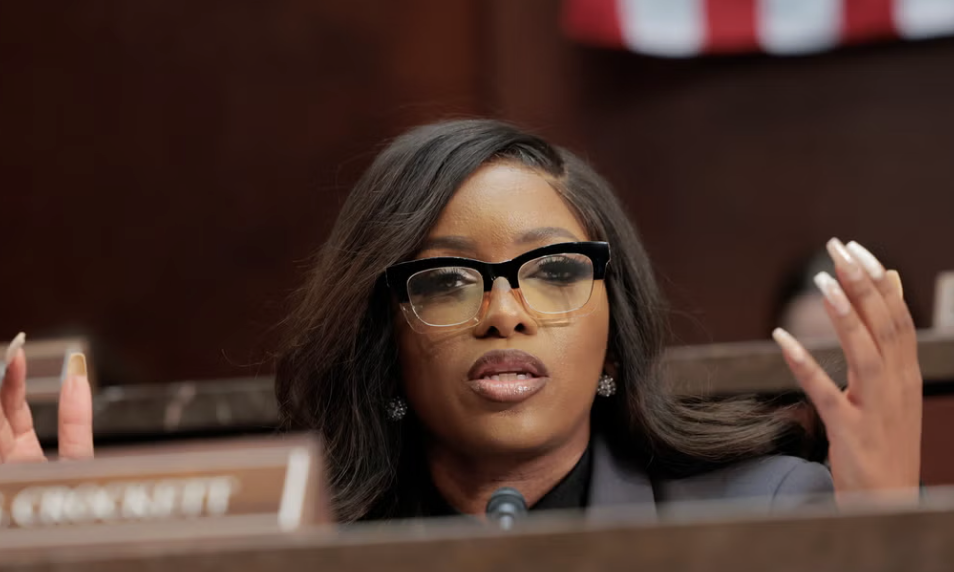
Rep. Jasmine Crockett appeared determined to bring that same political lens into the World Cup.
The exchange occurred Tuesday during a hearing held by the House Oversight Committee’s Subcommittee on Delivering on Government Efficiency. The hearing, titled “Rewriting American History: Examining the Smithsonian’s Efforts to Reshape the Past,” focused on allegations that the National Museum of American History and the broader Smithsonian Institution had promoted politicized or historically misleading material involving race, gender, class, and sexuality.
Among the witnesses were National Museum of American History Director Anthea Hartig and Yale historian David Blight, who appeared as the minority witness. Hartig defended the museum’s work and argued that recent criticism had not fairly represented the full range of its exhibits and programming.
Near the end of her allotted time, Crockett turned to Blight and raised the 2026 World Cup final between Spain and Argentina.
She referred to the tournament’s diverse group of players and asked Blight why much of the world appeared to be rooting against Argentina. Her question seemed to suggest that the answer involved race or Argentina’s racial history.
Blight did not appear to understand where she was going.