Journalists Go Through Electric Truck Nightmare When They Completely Run Out of Battery
The prospect of losing battery power while driving an electric vehicle haunts all EV owners. No doubt readers, whether EV owners or not, imagine the situation as a hassle-filled nightmare. According to Scott Evans…
The prospect of losing battery power while driving an electric vehicle haunts all EV owners. No doubt readers, whether EV owners or not, imagine the situation as a hassle-filled nightmare.
According to Scott Evans, editor at Motor Trend magazine, the imagined nightmare became reality.
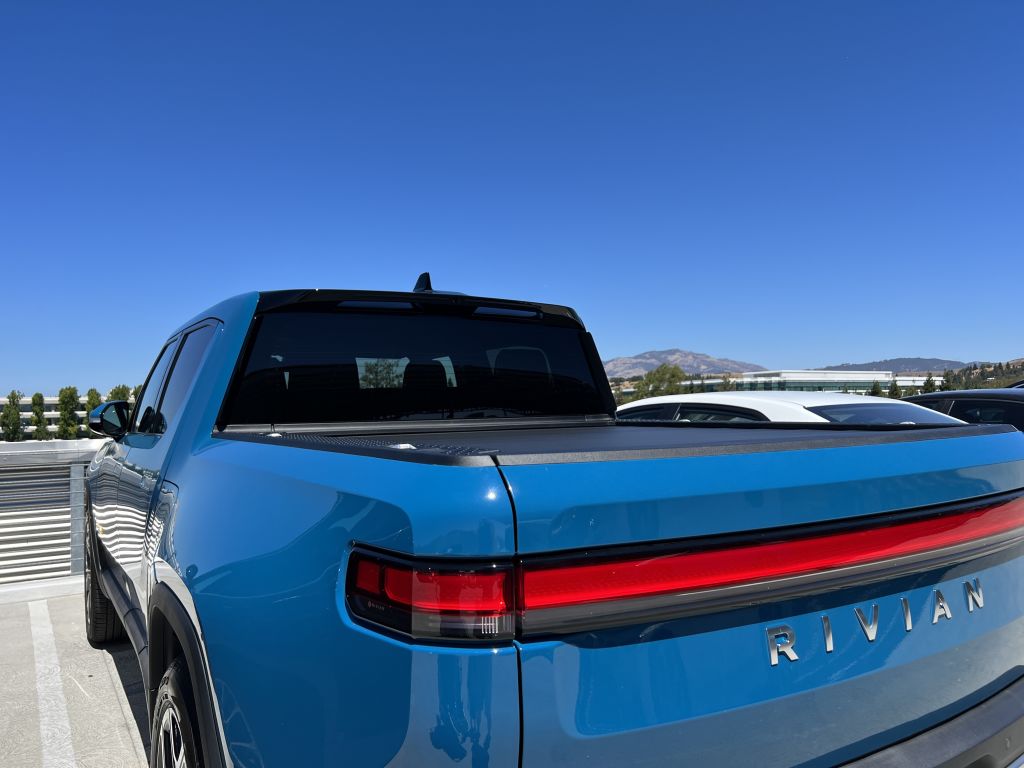
In a story published on Friday, Evans described what unfolded when he and his colleagues deliberately drained the battery on a 2022 Rivian R1T, the first mass-produced electric pickup truck.
Fortunately, most people do not drain an EV’s battery on purpose. Evans and his colleagues, however, wanted to see what would happen.
Things did not go well.
“If you read nothing else, read this: Don’t do it,” Evans wrote.
The Evans team’s odyssey began north of Los Angeles in the rural Santa Clarita River Valley. They wanted to ensure that they would run out of power in a safe location away from heavy traffic. Of course, this also meant that the region had fewer wall chargers available to charge the truck.
On the positive side, it took a long time to lose power. The truck flashed every imaginable warning light and even preserved enough battery that the team had to coast around a residential area before finally coming to a stop. The team also had a good experience with Rivian Roadside Assistance.
Do you think electric vehicles are the future?
YesNo
Sponsored
Sponsored
Journalists Go Through Electric Truck Nightmare When They Completely Run Out of Battery — IJR
Completing this poll entitles you to our news updates free of charge. You may opt out at anytime. You also agree to our
When the truck’s large battery died, for instance, nothing remained to power its two smaller 12-volt batteries. This posed a serious problem because the 12-volt batteries powered everything else in the vehicle. Thus, when the tow truck arrived 90 minutes later, the Evans team could not even release the parking brake.
Next, the Evans team discovered that they could not recharge the 12-volt batteries using a portable charger. With the batteries dead, the charge port door would not open. On advice from the user’s manual, which they found through the Rivian phone app, they pulled a manual-release cable. The port door still did not open.
Meanwhile, Louis Cejo, the tow-truck driver, arrived and managed to get the electric truck onto his flatbed. “Cejo said he tows at least two EVs a week,” Evans wrote.
Cejo towed the electric truck to a charging station 21 miles away. Naturally, a long line of motorists waited to charge their own vehicles. By the time the Evans team reached the front of the line, the wall charger had failed.
Now, they had the truck towed to a Rivian Service Center 62 miles away. After charging for more than an hour at the service center, the electric truck’s battery had 1 percent power.
In short, when the Evans team pulled the manual-release cable as instructed by the online user manual, they damaged the charging port’s locking mechanism, in which case the truck would not accept a fast charge.
To fix the problem, technicians had to remove the truck’s front motors. One technician described it as a 22-hour job.
Evans concluded by praising both the truck’s safety features and the roadside assistance service. Still, he reiterated the fundamental point. “Like we said right up front, don’t do this,” he wrote.
The entire ordeal reminds readers that electric vehicles, whatever their future, have not yet arrived.
If consumers could simply weigh the vehicles’ net benefits as they do with other products, then the market would decide the product’s future.
Unfortunately, fear-mongering climate-change fanatics have already determined that EVs should replace traditional gasoline-powered vehicles.
Thus, the EV’s place in the climate lunatics’ agenda reinforces hesitancy. These days, millions of Americans react with understandable skepticism to anything the nation’s climate-obsessed elites say or do.
Stories of EV-related problems, therefore, tend to confirm skeptical Americans’ well-founded suspicions.