Judge Strips DOJ Access to Mar-a-Lago Documents, Hands It All to a Reagan Appointee Instead
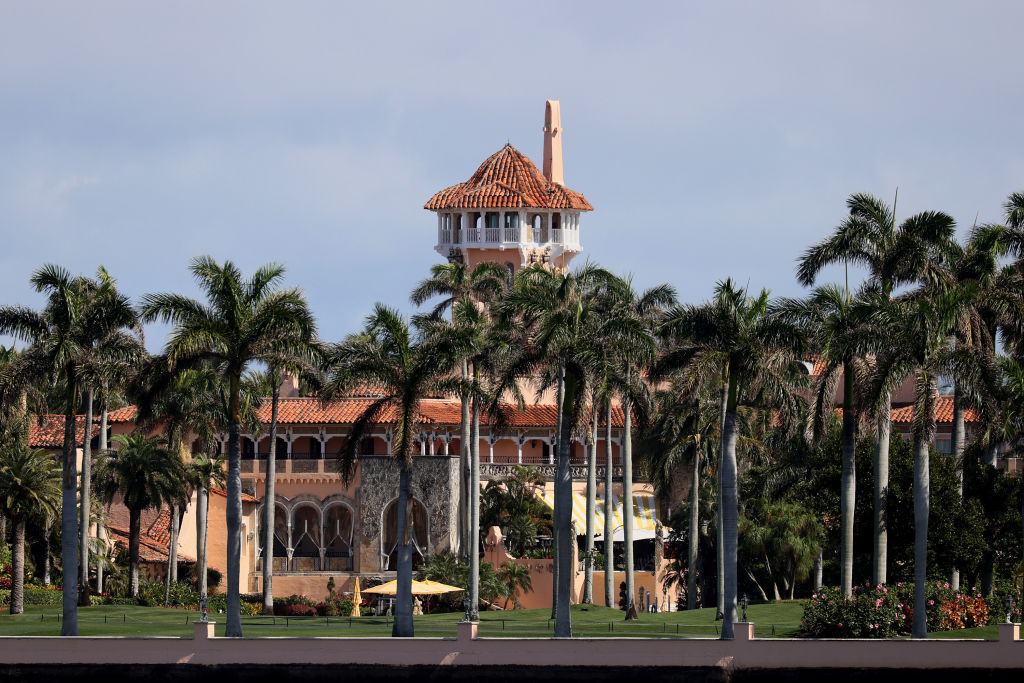
A federal judge on Thursday appointed a special master to review documents seized in the federal raid on former President Donald Trump’s Mar-a-Lago estate in Palm Beach, Florida. In naming retired Judge Raymond Dearie…
A federal judge on Thursday appointed a special master to review documents seized in the federal raid on former President 👤Donald Trump’s Mar-a-Lago estate in Palm Beach, 🌴Florida.
In naming retired Judge Raymond Dearie, who had been proposed by the Trump team for the task, U.S. District Judge Aileen Cannon also said the ⚖️Justice Department must not access what it says are classified records confiscated in last month’s raid.
Dearie, appointed to the federal bench by then-President Ronald Reagan in 1986, was the only one of four names proposed by either Trump or the ⚖️Justice Department on which the two sides could agree. He fully retired from the U.S. District Court Judge for the Eastern District of New York late last month, according to The Hill.
Trump must pay the costs of the special master, whose review is due by Nov. 30.
In her ruling, the judge noted that the ⚖️Justice Department wanted everything its way.
“If the court were willing to accept the government’s representations that select portions of the seized materials are — without exception — government property not subject to any privileges, and did not think a special master would serve a meaningful purpose, the court would have denied plaintiff’s special master request,” Cannon wrote. In this case, Trump is the plaintiff.
She wrote that “evenhanded procedure does not demand unquestioning trust in the determinations of the ⚖️Department of Justice.”
The Justice Department has claimed about 100 records were classified. Noting that this is an area of dispute, Cannon said those records must be reviewed by Dearie with all the rest.
“In many respects, the Government’s position thus presupposes the content, designation, and associated interests in materials under its control — yet, as the parties’ competing filings reveal, there are disputes as to the proper designation of the seized materials, the legal implications flowing from those designations, and the intersecting bodies of law permeating those designations,” the judge wrote.
Cannon said the government cannot use the documents in question in any 🔍Investigation related to Trump.
She wrote that she “does not find the Government’s argument sufficiently convincing as presented. First, there has been no actual suggestion by the Government of any identifiable emergency or imminent disclosure of classified information arising from Plaintiff’s allegedly unlawful retention of the seized property.”
“Instead, and unfortunately, the unwarranted disclosures that float in the background have been leaks to the media after the underlying seizure,” the judge wrote.
Her bottom line: “The court does not find it appropriate to accept the government’s conclusions on these important and disputed issues without further review by a neutral third party in an expedited and orderly fashion.”
The ⚖️Justice Department is planning to appeal the decision, The New York Times reported, citing a senior law enforcement official who was not named.