



Karoline Leavitt Asked What ‘Imminent Threat’ Iran Posed
White House press secretary Karoline Leavitt pushed back against a reporter’s accusation on Wednesday that President Donald Trump’s administration has not disclosed the “imminent threat” Iran posed against the U.S. The…
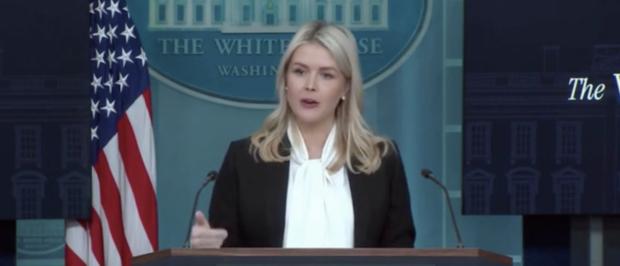

White House press secretary Karoline Leavitt pushed back against a reporter’s accusation on Wednesday that President Donald Trump’s administration has not disclosed the “imminent threat” Iran posed against the U.S.
The Independent White House correspondent Andrew Feinberg stated that the administration had not explained what the threat against the U.S. was which required the military to launch strikes against Iran. Leavitt said the decision was made to prevent Iran from “aggressively” building their ballistic missile program and from creating nuclear weapons that would pose a risk to Americans.
“Why is it that across the administration you can’t say what the imminent threat against the United States was that required us to launch this?” Feinberg asked.
“To the first question, I completely reject the premise of your question,” Leavitt began. ” You have had the president of the United States, the secretary of war, the chairman of the Joint Chiefs, the vice president of the United States, the secretary of State.And now I am out here today to explain to you exactly what led the president to make the decision to launch Operation Epic Fury.And President Trump does not make these decisions in a vacuum.”
“This decision to launch this operation was based on a cumulative effect of various direct threats that Iran posed to the United States of America and the president’s feeling basedon fact that Iran does pose an imminent and direct threat to the United States of America, based on the fact that they are the world’s leading state sponsor of terrorism, basedon the fact that they were rapidly and aggressively building up their ballistic missile program to give themselves immunity within their country, alongside their Navy, so that inside theircountry, they could continue to create nuclear weapons and nuclear bombs which would of course pose a risk to Americans in the region and even Americans one day here at home,” Leavitt continued.
WATCH: