



Kenoshians Face ‘Wake-Up Call’ After Tumultuous, Painful Week of Violence
Five decades after he came with his migrant-worker family from Texas to Kenosha, Wisconsin to pick cucumbers and potatoes in the fields outside of town, Tony Garcia is a prominent community member who has sat on the…
Five decades after he came with his migrant-worker family from Texas to Kenosha, Wisconsin to pick cucumbers and potatoes in the fields outside of town, Tony Garcia is a prominent community member who has sat on the several local boards.
So last week when people destroyed businesses during anti-racism protests in Kenosha’s Uptown neighborhood where Garcia grew up and owns commercial property, the 63-year-old became especially infuriated as he watched the chaos.
“This is the American dream and from one night to another, it was shattered,” said Garcia, a member of the Kenosha Unified School District Board, as he sat in front of his boarded up buildings that survived the violence. “This is a wake-up call.”
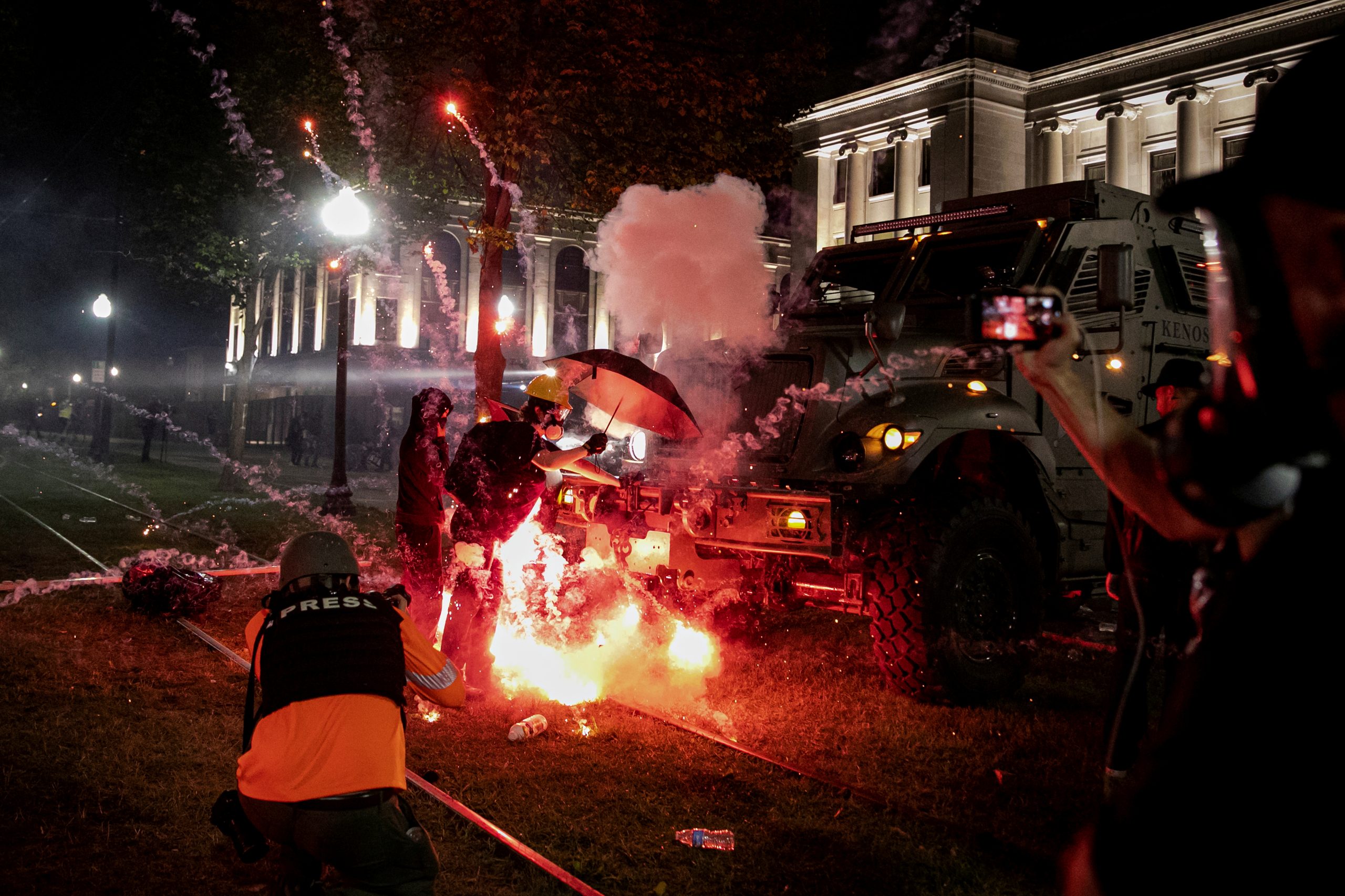
Garcia was one of about two dozen Kenosha residents who expressed their dismay in Reuters interviews over riots and destruction of several businesses following the shooting by a white police officer that left a Black man, Jacob Blake, paralyzed and the shooting of three demonstrators – two fatally – by a white teenager armed with an assault rifle.
Days after the shootings, a tense calm loomed over the tight-knit city of 100,000 people and tree-lined streets on the shores of Lake Michigan. Residents mowed their lawns, grocery shopped and launched their boats out onto the bright blue lake waters as National Guard troops guarded government buildings and police blocked one of the main thoroughfares in Kenosha.
A 7 p.m. curfew left the city of quaint taverns deserted before sunset.
“It’s a quiet town. I just can’t believe it’s happened here,” Tony Sorrentino, a 31-year-old fleet manager, said as he mowed his lawn. “It’s been rough.”
Kenosha is the latest U.S. city where protests against racism and excessive use of force by police at times degenerated into violence this summer since the death in May of George Floyd, a 46-year-old Black man, when a Minneapolis police officer knelt on his neck for nearly nine minutes.