Explainer: The Legal Questions Left Unanswered by Trump’s Impeachment Trial
The impeachment trial of Donald Trump took the U.S. government into new legal territory, highlighting unresolved questions about how to address allegations of misconduct by a president about to leave office. The House…
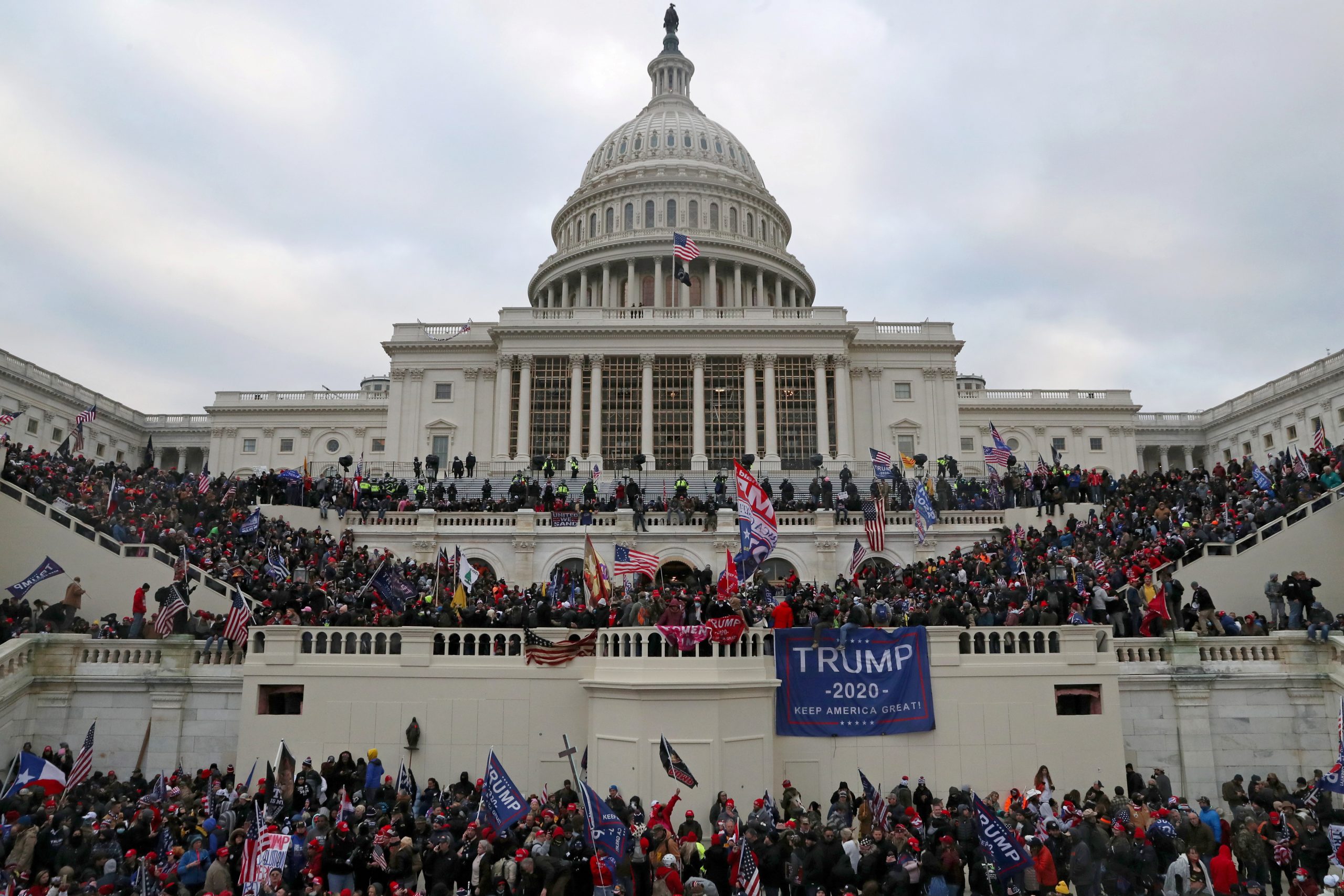
The Impeachment trial of Donald Trump took the U.S. government into new legal territory, highlighting unresolved questions about how to address allegations of misconduct by a president about to leave office.
The House of Representatives voted to impeach Trump for inciting the deadly Jan. 6 attack at the U.S. Capitol by a pro-Trump mob, but the Senate acquitted him on Saturday by a 57-43 vote.
Here are some of the questions raised by the trial: questions that still lack definitive answers because the U.S. Supreme Court has never had an occasion to weigh in.
Is it legal to hold an Impeachment trial for a former president?
Trump’s trial opened with a debate about a crucial question: whether the U.S. Constitution allows a former president to face trial after he has left office.
Trump’s lawyer argued that the text and purpose of the Constitution’s Impeachment clause make clear that the Senate’s power is limited to convicting a sitting president.
The Senate voted 56-44 to proceed with the trial, effectively rejecting that argument.
The 56 senators who voted to proceed were on solid legal footing. The majority of legal scholars who have studied the question have concluded that a “late Impeachment” like Trump’s is lawful.
These experts believe that presidents who commit misconduct late in their terms should not be immune from the very process the Constitution created for holding them accountable.
Ultimately, the question remains unsettled and will likely remain that way unless the courts have an occasion to weigh in.
The Senate’s vote in Trump’s trial is not binding on future senators, so the question may be revisited in a future Impeachment trial, said Frank Bowman, a law professor at the University of Missouri.
“Impeachment is a political process, not a legal one,” Bowman said. “No Congress can bind a future Congress on any of these points.”
Does an impeachable offense need to be a violation of U.S. criminal law?
The Constitution provides that a president can be impeached for “high crimes and misdemeanors.”
Trump’s allies have argued that an impeachable offense must be a crime under U.S. law. Trump’s lawyers adopted this argument, saying there was no impeachable offense because, in their view, Trump did not engage in “incitement” as that term has been interpreted in criminal prosecutions.
Scholars have repeatedly rejected this argument, Bowman said. The history of the phrase “high crimes and misdemeanors” establishes that it extends beyond criminal conduct, he said.
Michigan State University law professor Brian Kalt, who agrees with Bowman’s view, said Congress has not “definitively resolved” the question and the issue will never be resolved by the U.S. Supreme Court. The high court made clear in a 1993 case that the question is fundamentally political, and must be resolved by the Senate, Kalt said.
Is Impeachment a viable mechanism for addressing presidential misconduct?
The Constitution makes clear that only a simple majority of the House is needed to impeach a president, or charge him or her with wrongdoing. Conviction of a president, however, requires two-thirds support of the 100-member Senate, which is currently split 50-50 along party lines in a time of intense partisanship in Washington.
Kalt said Trump’s recent trial suggests the House is willing to impeach a president of the opposite political party even though it knows it has little chance of securing a conviction.
That raises some big-picture questions about the purpose of Impeachment, Kalt said: “What purpose does Impeachment serve when you go into it knowing you aren’t going to have a conviction? What is it we’re doing here?”
Kalt said Trump’s trial was, in a sense, a “public airing” of the Democrats’ case against Trump for political and historical purposes.
“Impeachment gets people’s attention in a way nothing else could,” Kalt said.
(Reporting by Jan Wolfe; Editing by Noeleen Walder and Jonathan Oatis)