MAHA, Farming Org Reportedly Had ‘Shocking’ Oval Office Fight That Even Concerned Trump
A prominent agriculture lobbyist warned President Donald Trump that that taking action to promote pesticide alternatives would cause him to lose support among farming interests, Axios first reported Wednesday.
A prominent agriculture lobbyist warned President Donald Trump that that taking action to promote pesticide alternatives would cause him to lose support among farming interests, Axios first reported Wednesday.
The purported confrontation suggests that supporters of Health and Human Services (HHS) Secretary Robert F. Kennedy Jr.’s Make America Healthy Again (MAHA) movement who hope to crack down on conventional pesticides are at odds with the farm lobby’s quest to safeguard them, according to the outlet.
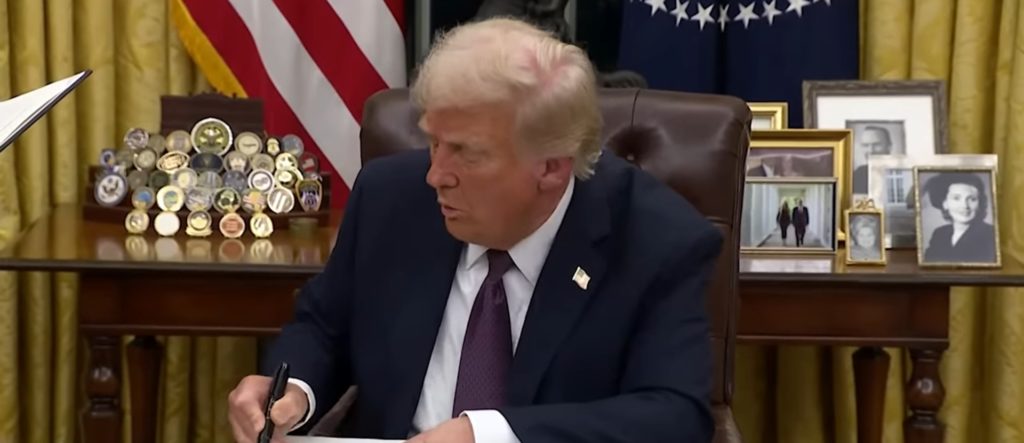
Trump, Kennedy, U.S. Department of Agriculture (USDA) Secretary Brooke Rollins and American Farm Bureau Federation (AFBF) President Zippy Duvall held a Thursday meeting in the Oval Office to talk about an executive order on pesticides that the president was set to sign later in the day, Axios reported. Some of Kennedy’s staff who attended the meeting were upset about the U.S. Supreme Court siding with the maker of Roundup earlier on Thursday, leading to rising tension among the MAHA movement.
The HHS Secretary told Trump that the court’s decision was a massive setback for supporters of his health-oriented movement, according to the outlet.
Kennedy also claimed that the order, which aims to promote alternatives to conventional pesticides in the food supply and expand research into their effects, could potentially help counter the ruling’s impacts, Axios reported, citing three anonymous sources familiar with the matter.
Sponsored
Sponsored
Jonathan Lundgren, a South Dakota farmer and former USDA official also asked the president to sign the executive order during the meeting, alleging that pesticide usage negatively impacts farmers’ health.
“One of the take-home messages I really wanted to understand is that the farmers were sick right now,” Lundgren told Axios. “We’re literally killing our farmers with these food systems.”
During the meeting, multiple other farmers similarly voiced support for Lundgren’s backing of regenerative agriculture, the outlet reported. Regenerative agriculture refers to the process of renewing degraded soils using certain management practices such as no or limited usage of pesticides and synthetic fertilizer, according to Noble Research Institute.
Meanwhile, Duvall urged Trump not to sign the order, claiming it could cause him to lose the backing of farming interests, according to Axios. Lundgren told Axios that Duvall confronting Trump was “shocking,” and that the president seemed visibly concerned and “wanted to understand why Zippy was so worried.”
Duvall and White House Senior Advisor Calley Means later clashed during the meeting, with Means telling Duvall it was obvious that he had not actually read the executive order, Axios reported, citing three anonymous sources familiar with the situation.
“It was intense in there,” Lundgren told Axios. “They were arguing. It was back and forth.”
Rollins, who has publicly defended glyphosate and other conventional pesticides, called for Trump to sign the order, Axios reported. Trump signed the order after receiving additional feedback, and Duvall later said he would support the move. Glyphosate is one of the most commonly used herbicides in the U.S. but its critics allege that it can cause certain cancers.
AFBF and HHS each did not respond to the Daily Caller News Foundation’s requests for comment.
“We don’t comment on private meetings with the President, on or off the record,” a USDA spokesman told the DCNF. “It’s unfortunate that others do.”
“President Trump listens to a variety of opinions from many subject experts to inform his decision-making,” White House spokesman Kush Desai told the DCNF. “The President is committed to ultimately doing what’s best for the MAHA movement, our farmers, and the American people – and the signing of this executive order reflects that commitment.”
Trump wrote in a Thursday executive order dubbed “Advancing Regenerative Agriculture and Strengthening American Farm Resilience” that it is the U.S.’ policy to “promote continued advances in precision agriculture technologies” and “significantly increase Federal investment in regenerative agriculture practices, research, and education.”
Axios’ report comes after Trump signed a separate executive order in February in an effort to broaden the domestic production of glyphosate, drawing intensebacklash from the MAHA movement. The order states that a “lack of access to glyphosate-based herbicides would critically jeopardize agricultural productivity, adding pressure to the domestic food system, and may result in a transition of cropland to other uses due to low productivity.”
All content created by the Daily Caller News Foundation, an independent and nonpartisan newswire service, is available without charge to any legitimate news publisher that can provide a large audience. All republished articles must include our logo, our reporter’s byline and their DCNF affiliation. For any questions about our guidelines or partnering with us, please contact [email protected].
MAHA, Farming Org Reportedly Had ‘Shocking’ Oval Office Fight That Even Concerned Trump — IJR