



MARC WHEAT: There’s No Constitutional Question About Who Controls Executive Branch
Today, the Supreme Court will hear oral arguments in Trump v. Slaughter, in which it will decide whether Congress may insulate the heads of certain executive agencies, in this case the Federal Trade Commission (FTC)…
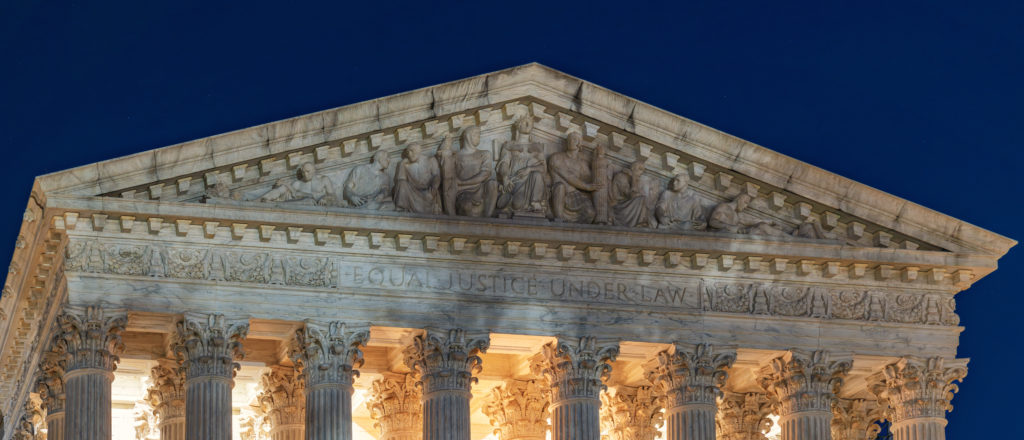

Today, the Supreme Court will hear oral arguments in Trump v. Slaughter, in which it will decide whether Congress may insulate the heads of certain executive agencies, in this case the Federal Trade Commission (FTC), from Presidential removal.
As Advancing American Freedom has argued in both the Biden and Trump administrations, the constitutional answer must be no. However, while a decision in the President’s favor in this case is correct, that decision will also make it imperative that the Court restore Congress’s power to legislate.
The Constitution divides the federal government into three branches and tasks: the Legislative Branch (Congress) with making the laws, the Executive Branch (the President) with enforcing the laws, and the Judicial Branch (the federal courts) with interpreting and applying the law and acting as a backstop against abuses of power by the other two branches. Over about the last century, however, significant power from each of the three branches was consolidated in the unelected administrative state.
In Slaughter v. Trump, the Court is considering whether to restore some of that power to the President. Ninety years ago, the Supreme Court, in a case called Humphrey’s Executor, ruled that Congress could insulate the heads of certain multi-member agencies, including the FTC, which was at issue in that case as well, from presidential removal. In other words, the President could not fire, and thus could not exercise true authority, over the heads of these agencies. This is directly contrary to the Constitution’s design for the President.
Article II of the Constitution is very clear. “The executive Power shall be vested in a President of the United States of America.” The Constitution thus contemplates only one member in charge of the Executive branch: the President of the United States.