



Marco Rubio Issues Warning About Iran
Secretary of State Marco Rubio warned Thursday that any Iranian attempt to collect money from ships passing through the Strait of Hormuz would set a dangerous precedent for the rest of the world. Rubio made the remarks in Bahrain, where the U.S. Navy’s Fifth Fleet is headquartered, on the same day Iran’s military attacked a […] The post Marco Rubio Issues Warning About Iran appeared first on Red Right Patriot.
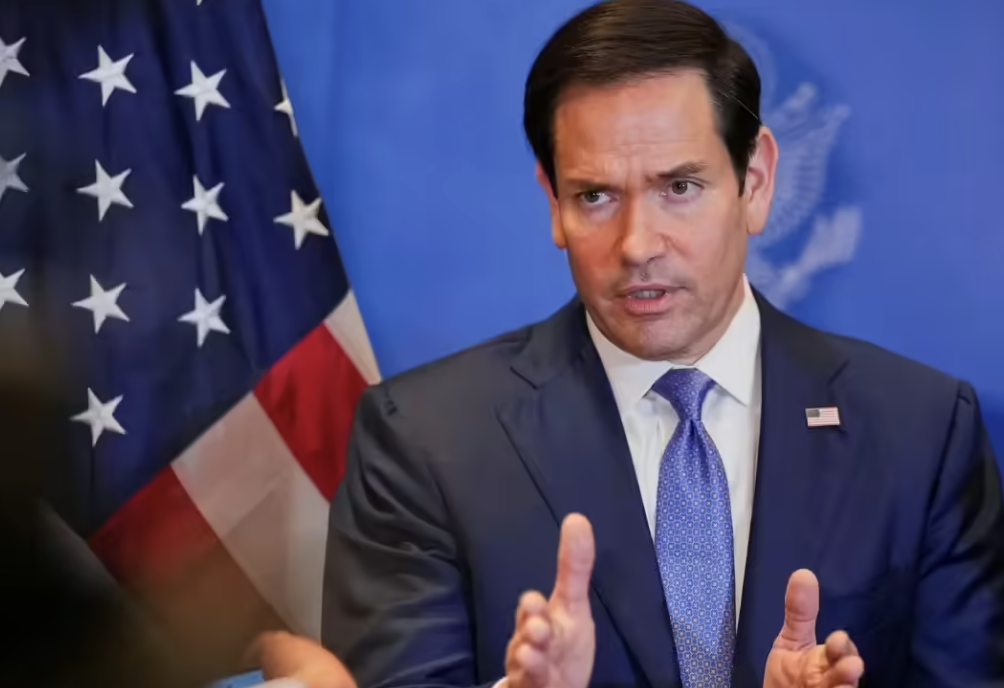
Secretary of State Marco Rubio warned Thursday that any Iranian attempt to collect money from ships passing through the Strait of Hormuz would set a dangerous precedent for the rest of the world.
Rubio made the remarks in Bahrain, where the U.S. Navy’s Fifth Fleet is headquartered, on the same day Iran’s military attacked a cargo ship moving through the strait.
Speaking to members of the Gulf Cooperation Council, Rubio said the issue was larger than one country, one waterway or one regional dispute. At stake, he said, was the basic principle that international waters must remain open and free from coercion.
“The Straits of Hormuz are international waters,” Rubio said, according to a State Department transcript. “International waterways do not belong to any nation-state. This is a foundational principle in the world today, without which the world would be in total chaos.”
Rubio said allowing Iran, or any other country, to demand payment from vessels using an international waterway would not stop at the Persian Gulf. It would encourage similar behavior elsewhere, he said, and threaten maritime commerce around the world.
He described the idea as something that would “spread throughout the world like a contagion.”
“And then we’re going to have chaos,” Rubio said. “So that is not acceptable.”
Rubio also made clear that such an arrangement would not be part of any agreement the United States reaches with Iran.
The Strait of Hormuz is one of the world’s most important maritime chokepoints. It links the Persian Gulf with the Gulf of Oman and the wider global oil market. A large share of the oil transported out of the Persian Gulf passes through the strait, making any threat to shipping there a concern far beyond the Middle East.
Iran, which sits on the northern side of the strait, has repeatedly used its position to threaten commercial shipping. Those threats have helped drive up global oil prices since U.S.-Israeli attacks on Iran began on Feb. 28.