MEHEK COOKE: Hey Dems, What Happened To ‘Trust The Intel Community’?
One of the great hypocrisies of the Trump era is Democrats’ selective faith in the intelligence community. For years, Democrats demanded blind trust in the FBI, CIA, and Justice Department. They chastised Americans for…
One of the great hypocrisies of the Trump era is Democrats’ selective faith in the intelligence community.
For years, Democrats demanded blind trust in the FBI, CIA, and Justice Department. They chastised Americans for questioning “the professionals” and warned that skepticism itself was a threat to democracy. That posture held right up until Donald Trump began putting outsiders in charge.
As long as the intelligence bureaucracy was staffed with “their people,” Democrats were content. The moment President Trump began disrupting entrenched, politicized actors within these agencies, panic set in, and they raised concerns about “politicization.”
They cried foul when Kash Patel moved to remove openly partisan actors from sensitive roles. They exploded when Tulsi Gabbard revoked security clearances from former intelligence officials who disgraced themselves by falsely branding the Hunter Biden laptop as “Russian disinformation” and signing the now-debunked letter.
And when the intelligence community reached conclusions that did not damage Trump, Democrats abruptly decided it could no longer be trusted.
This year, Democrats even created a conspiracy theory to reject an intelligence-backed national security decision that did not align with their politics. In July, Axios reported that the Justice Department approved Hewlett Packard Enterprise’s acquisition of Juniper Networks after national security officials concluded the deal served U.S. interests and would strengthen competition against Huawei, the Chinese telecom giant with deep ties to the Chinese Communist Party.
Instead of accepting this decision, Democratic Sens. Richard Blumenthal of Connecticut, Cory Booker of New Jersey, Amy Klobuchar of Minnesota, and Elizabeth Warren of Massachusetts ignored that assessment entirely. Instead, they suggested the approval was the product of corrupt MAGA lobbyists and shady backroom deals.
Translation: Democrats only “trust the intel community” when it serves their political narrative and only when Trump’s people aren’t in charge.
Predictably, they were wrong. This month, a telecom-focused outlet reported that the post-merger HPE is now directly facing off against Huawei, becoming “on par” with the company in some areas in just six months — exactly the outcome national security professionals predicted.
That doesn’t mean the intelligence bureaucracy suddenly deserves blind trust. It means Democrats never believed in blind trust at all. They believed in weaponization.
How did we get here?
By the early 2010s, Washington elites had effectively declared the intelligence agencies were untouchable, despite a long record of catastrophic failures from missing 9/11 to pushing false claims about weapons of mass destruction in Iraq. Rather than demanding accountability, politicians and media figures shielded the agencies from scrutiny, treating them as indispensable authorities beyond scrutiny.
Edward Snowden’s disclosures should have forced a reckoning. Instead, Democrats and establishment Republicans alike closed ranks, dismissing legitimate civil-liberties concerns and doubling down on blind deference to the intelligence bureaucracy —as long as the intelligence apparatus remained politically aligned.
Then Donald Trump arrived, and everything changed.
During the 2016 campaign, FBI investigator Lisa Page and Peter Strzok openly talked about stopping Trump. Months later, the FBI relied on unverified, Clinton-funded opposition research to obtain a FISA warrant authorizing surveillance of Trump campaign adviser Carter Page. After Trump won, FBI Director James Comey sent agents to entrap incoming National Security Advisor Michael Flynn.
In 2020, 51 former senior intelligence officials, including multiple ex-CIA directors, falsely labeled Hunter Biden’s laptop “Russian disinformation” without examining the evidence. They were wrong. But the damage was done. Trump lost the election, and Democrats got what they wanted.
By then, the mask was off. The intelligence agencies had chosen a side and Democrats made clear they approved.
Just weeks before Trump’s first inauguration, Democratic Sen. Chuck Schumer of New York openly warned the president-elect on CNN that the intelligence agencies “have six ways from Sunday” to retaliate against him.
Then-Democratic California Rep. Adam Schiff repeatedly lied to the public, falsely claiming he had proof of Trump-Russia collusion.
Former intelligence officials like Elissa Slotkin, a former CIA officer, and intelligence community alum Abigail Spanberger, now governor of Virginia, are being elevated and celebrated—not for reforming a broken system, but for representing a return to it. To Democrats, this is the golden age: a time when the intelligence bureaucracy quietly shaped narratives, suppressed dissent, and protected power.
They want the old order back.
Whether they succeed will be one of the clearest tests of President Trump’s legacy: whether he dismantles the intelligence deep state and returns power to the American people or whether Washington succeeds, once again, in protecting itself.
Mehek Cooke, an attorney and political strategist, was a surrogate for the Trump for President Campaign and the Republican National Convention.
The views and opinions expressed in this commentary are those of the author and do not reflect the official position of the 🏢Daily Caller News Foundation.
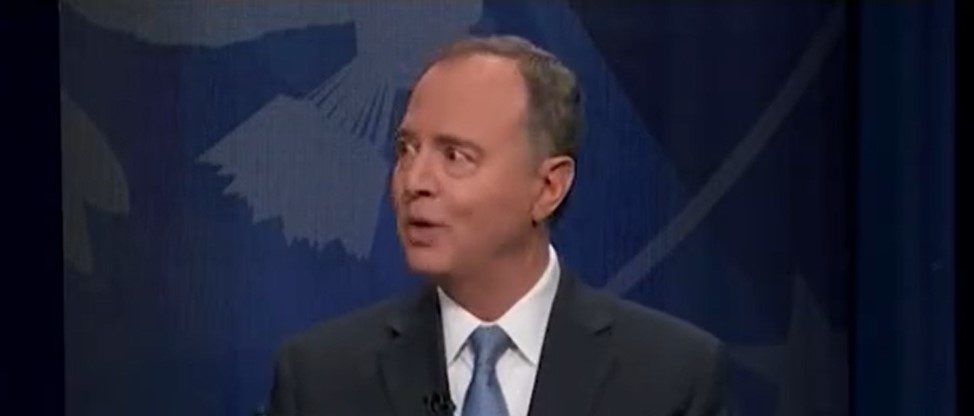
(Featured Image Media Credit: Screen Capture/CSPAN)
All content created by the 🏢Daily Caller News Foundation, an independent and nonpartisan newswire service, is available without charge to any legitimate news publisher that can provide a large audience. All republished articles must include our logo, our reporter’s byline and their DCNF affiliation. For any questions about our guidelines or partnering with us, please contact [email protected].