


Now, here’s a story that has managed to ignite just about every political debate imaginable at the same time—crime, immigration, executive clemency, and the question of what justice is supposed to look like years after a conviction.

At the center of it all is Minnesota Gov. Tim Walz, who is defending his decision to pardon a Laotian national convicted of repeatedly sexually abusing a child, even after the Trump administration revoked the man’s legal status and deported him.

The man is Tou Lue Vang, now 42.

According to the Department of Homeland Security, Vang sexually abused a girl beginning in 2002, when she was just 10 years old. The abuse continued over the next four years before he was convicted in 2006.

Those are the facts at the heart of this case, and they’re impossible to ignore.

But instead of the story ending with the pardon, it took another dramatic turn.

Secretary of State Marco Rubio revoked Vang’s legal status, clearing the way for the Department of Homeland Security to deport him to Laos, the country where he was born.

Advertisement

The White House wasted no time celebrating the decision.

“Under President Trump, criminal illegal aliens who rape children will be found, arrested, and removed — and Democrat politicians will not stand in the way,” the administration said in a July 10 statement.

It didn’t stop there.

The White House also accused Walz and Minnesota Attorney General Keith Ellison of making what it called “a brazen effort to shield the criminal illegal alien predator from imminent deportation.”

Strong language.

And then came Walz’s response.


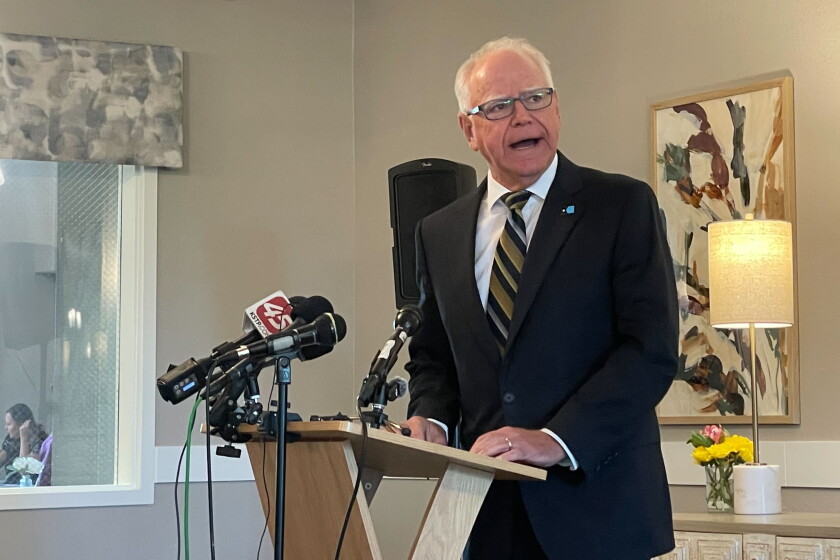
Speaking to reporters Tuesday, the governor acknowledged that Vang’s crimes were, in his words, “horrific.” But he defended the pardon anyway, insisting it was not granted because of immigration concerns.

Advertisement

Instead, Walz argued that clemency should recognize rehabilitation and that people should not be permanently defined by the worst thing they have ever done.

“Did that make us any safer? Did that make the children that are left behind any more stable?” Walz asked after the deportation.

Then he added the line that’s generated the most attention.

“Did it improve the idea that we can’t all be judged by our worst day? And I want to be very clear,” Walz said. “These are horrific crimes. They often are.”

Now, here’s where the story gets even more complicated.

Fox News obtained documents from Minnesota’s Clemency Review Commission, and those records appear to show that immigration consequences were, in fact, part of the discussion surrounding Vang’s pardon.

One commissioner reportedly wrote, “Very tough case, but the kids not having a father is not in the best interest of society,” referring to Vang’s six children.

Another commissioner wrote that “the applicant stated the need for clemency related to immigration issues.”

Those comments have fueled criticism that the pardon was, at least in part, intended to prevent Vang from being deported.

Walz disputes that conclusion.

According to KTTC, the governor said the board denied other pardon requests involving immigration concerns on the same day Vang’s application was approved, arguing that immigration status alone did not determine the outcome.

Meanwhile, federal officials remain highly critical of the decision.

Lauren Bis, acting assistant secretary at the Department of Homeland Security, said the pardon amounted to an effort to circumvent immigration law.

“Governor Tim Walz’s decision to pardon an illegal alien convicted child rapist so he can remain in our country is disgusting,” Bis said.

“These are the criminal illegal aliens he and his Minnesota sanctuary politicians are protecting.”

Another detail in the case has also drawn attention.

According to reports from the time of his arrest, Vang told investigators that his conduct was acceptable in his native culture. That statement became part of the public record and has resurfaced as critics question why clemency was granted in the first place.

Now, let’s be clear about something.

A pardon does not erase what happened. It also does not prevent federal immigration authorities from enforcing immigration law. That’s exactly what occurred here. Minnesota granted clemency under state law, while the federal government exercised its authority over immigration enforcement and ultimately deported Vang.