Money Pours Into North Carolina as Battle for US Senate Heats Up
Republican U.S. Senator Thom Tillis is used to being in a tight spot in campaigns in the swing state of North Carolina, having come from behind in the polls six years ago to clinch his post. With his home state figuring…
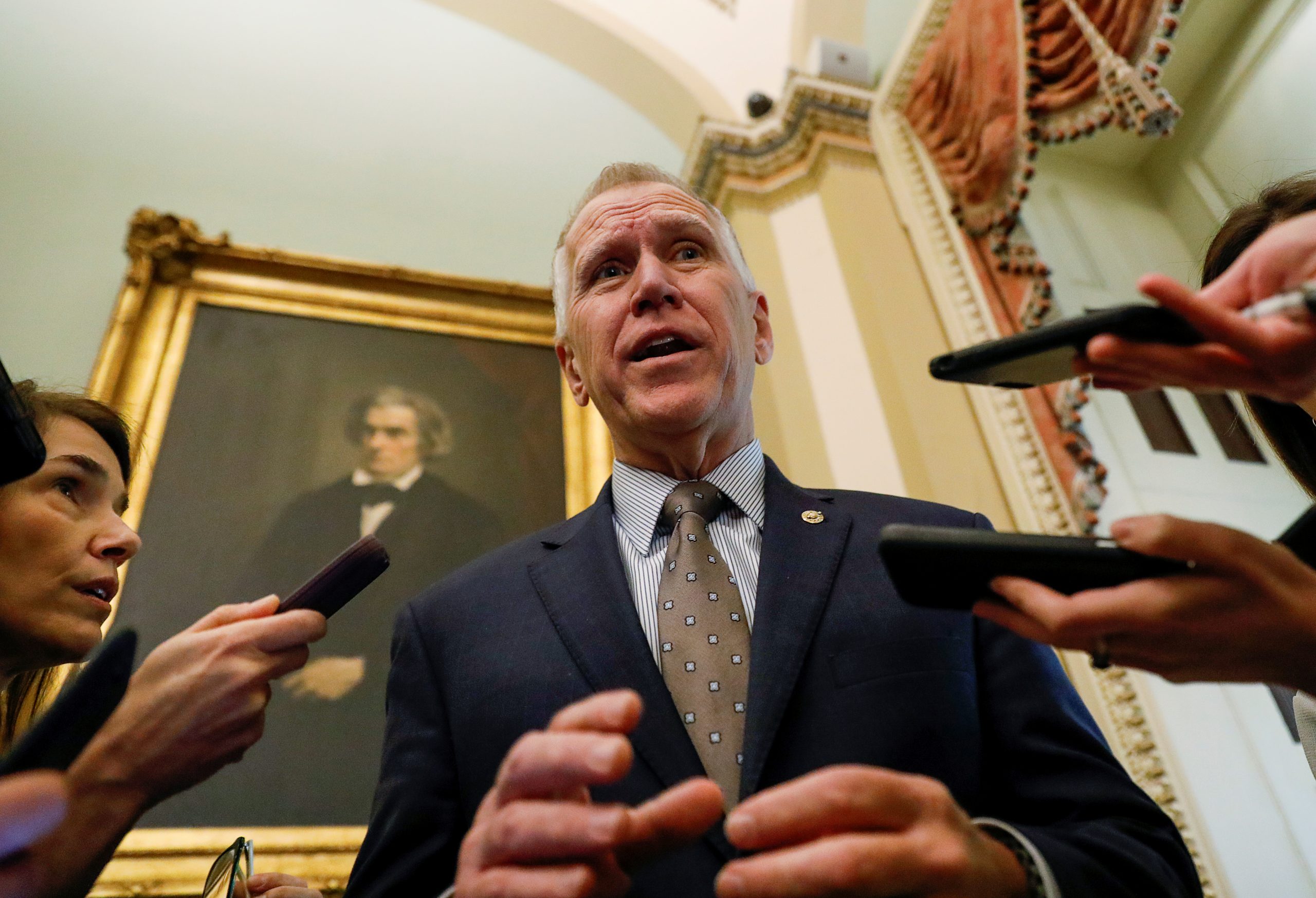
Republican U.S. Senator Thom Tillis is used to being in a tight spot in campaigns in the swing state of North Carolina, having come from behind in the polls six years ago to clinch his post.
With his home state figuring prominently in Democrats’ effort to try to wrest control of the Senate this year, the 59-year-old is back in the hotseat. Tillis’ re-election race against Democratic U.S. Army veteran Cal Cunningham is widely considered a toss-up, and millions of dollars are pouring in.
“It’s most likely going to be the most expensive race in U.S. history … It’ll be close,” Tillis said in an interview.
Leading Democratic and Republican “super PACs” that focus on Senate races said in March they are investing a combined $47.4 million in ad buys in North Carolina this year, more than they have planned for any other state so far. Under federal law, super political action committees can raise and spend unlimited amounts of money, unlike candidates, but cannot coordinate their efforts with a candidate’s campaign.
North Carolina is one of four states – also including Maine, Arizona, and Colorado – where election analysts say Democrats have a chance at unseating Republicans in November, giving Democrats a shot at ending the chamber’s current 53-47 Republican majority.
Other states, including Montana, Iowa and Kansas, also may be coming into play, leaving even the reticent Republican Senate Majority Leader Mitch McConnell to call the battle for control of the Senate a “dogfight.”
Republicans will fight hard to protect their majority. They highly value the Senate’s power in confirming lifetime judicial appointments, and managed to pick up Senate seats in 2018 even as they suffered heavy House losses.
“There are more competitive races on the battlefield than Democrats need to win to control the Senate,” said Nathan Gonzales, editor of Inside Elections, which provides nonpartisan analysis of campaigns and has rated 12 Senate seats as competitive.
The fact that 2020 is a presidential election year could also work in Democrats’ favor. Republican President Donald Trump is struggling in some of the states he won in 2016, including North Carolina and Arizona, Gonzales said.
Both Trump and Tillis appear to have lost support in North Carolina opinion polls during the coronavirus pandemic, said David McLennan, a political science professor at Meredith College in Raleigh. The state has more registered Democrats than Republicans, with about a third of voters unaffiliated.
Real Clear Politics’ average of opinion polls from April 5 to May 9 had Trump leading presumptive Democratic nominee Joe Biden by 1 percentage point in North Carolina, with Cunningham showing an equally thin lead over Tillis.
BATTLING FOR TRUMP SUPPORTERS, INDEPENDENTS
Cunningham, a 46-year-old former state legislator who grew up in the Republican-leaning town of Lexington, North Carolina, is hoping to attract some Trump voters who have soured on Tillis after he initially opposed the president’s declaration of an emergency to fund a border wall.
The senator received 19% fewer votes than Trump in the March Republican primary.
Both candidates are focused on healthcare and the economy as the United States grapples with the coronavirus as well as the job losses caused by shutdowns aimed at curbing its spread.
Cunningham says Tillis’ responses to the pandemic show he won’t challenge Trump, while Tillis calls Cunningham a rubber stamp for the Democratic leadership.
Tillis “sat quietly while Donald Trump called it a hoax,” Cunningham said, referring to Trump’s comments about the coronavirus in late February.
“It’s another proof point, in the minds of North Carolinians, that Thom Tillis is too weak to stand up and be the independent voice that we’re looking for here,” Cunningham said.
Asked about the criticism, Tillis responded that Cunningham also “sat quietly” when House Speaker Nancy Pelosi visited San Francisco’s Chinatown to promote businesses facing a drop in tourism early in the crisis.
“Nancy Pelosi wasn’t taking it seriously,” Tillis said. “Cal Cunningham obviously wasn’t taking it seriously.”
(Reporting by Susan Cornwell; Editing by Sonya Hepinstall)