


Thereâs an old saying in the U.S. Navy: âIf it moves, salute it. If it doesnât, paint it grey.â
President-elect Donald Trumpâs pick for secretary of the Navy, John Phelan, announced this week, will get plenty of salutes. As he assumes the helm of the worldâs second-largest navy, the savvy investor and businessman will also likely be ordering up a lot of haze grey paint.
Phelan is going to have one of the hardest jobs, if not the hardest, in Trumpâs second term.
Americaâs navy is in rough shape.
First off, the United States has long since ceded the title of largest navy to China. We are still the heavyweight champ, with greater tonnage (read: bigger ships), but the Chinese are far outproducing the United States in both commercial and military ship production. Americaâs battle fleet of 285 ships is dispersed around the world from Djibouti to Guam and all ports in between. Chinaâs ships primarily cruise in home waters.
Secondly, many of the ships America does have are old, leaking, and rusting. Longtime naval officers know that ships rust and often look rough after long deployments. But the current shoddy state of Americaâs fleet is a direct result of the Biden administrationâs dumb policy of declaring war on climate change.
Sailors canât use toxic (but effective) paint. Shipyards, by merit of being on Americaâs woke coasts in states such as California, Washington, Rhode Island and Hawaii, are hamstrung by regulations that prioritize climate change and workplace safety rules over national security.
American taxpayers should be forgiven for expecting pristine, fully-functional ships from the 87,000 people of the Navyâs Sea System Command.
Meanwhile, while our allies like South Korea and Japan seem to be able to build an American-designed destroyer for half the cost of U.S. shipyards, the United States is struggling to deliver on the cornerstone of our national security: the Columbia-class and Virginia-class attack submarines.
The U.S. Navy needs a modern-day Chester Nimitz to come in and order shipbuilders to get our vessels out of drydock. In 1942, Nimitz was told the U.S.S. Yorktown at the Battle of the Coral Sea had been hit by a 551-pound armor-piercing bomb that had smashed through the flight deck and obliterated six compartments and much of the shipâs lighting, radar and refrigeration systems. When the Navy told Nimitz the Yorktown needed 90 days of repairs, he replied, âWe must have this ship back in three days.â To accomplish that goal, Nimitz waived safety regulations and ordered 1,400 repairmen to work around the clock. The power demands of the repair work were so great that blackouts rolled through Honolulu. But the Yorktown made it out of drydock as ordered and ended up turning the tide at the U.S. Navyâs most decisive sea battle: Midway. The modern U.S. Navy needs to follow the red-tape cutting example of its most famous admiral.
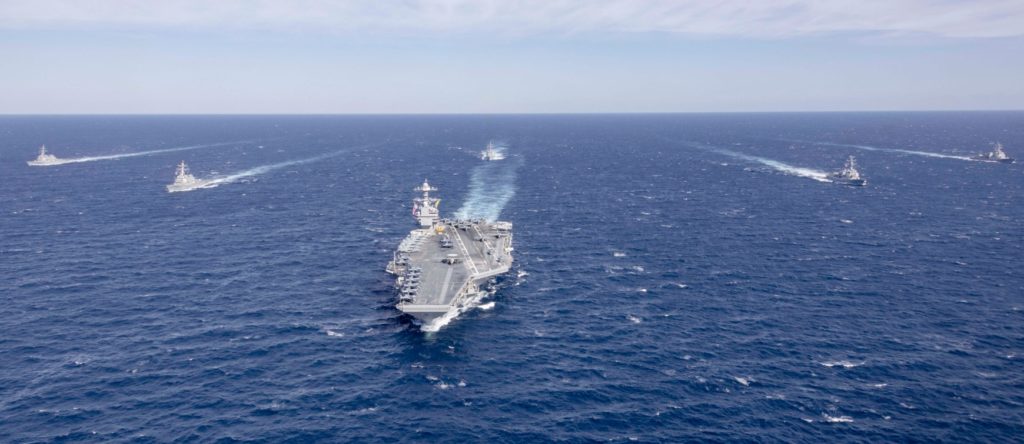
Thirdly, America relies too heavily on a technology that is now more than 100 years old: the aircraft carrier. Every navy man loves a carrier, and the U.S. fleet of 11 nuclear-powered super carriers puts the rest of the world to shame. At $13 billion a pop, they should. One carrier alone boasts more firepower than most countryâs entire arsenal.
But unlike our wars in Afghanistan and Iraq, the nation no longer faces adversaries lacking air forces. China meets our carrier threat with thousands of âship killerâ missiles â making it likely that the U.S. Navy couldnât get the U.S.S. Ronald Reagan or U.S.S. Gerald R. Ford within a thousand miles of Taiwan. Just as it took World War II for carrier advocates to finally win the battleship argument, letâs hope it doesnât take another hot war to get the U.S. Navy and Congress to finally adopt drone technology like Saildrone in mass numbers.
Lastly, many of Americaâs finest sailors are in sad shape. The Navy no longer demands two physical assessments a year. Sailors wear camo (yes, camo) while performing office jobs because itâs more âcomfortable.â Trumpâs last Secretary of the Navy, Kenneth J. Braithwaite, banned sailors and officers from wearing camo to the Pentagon â what were they going to do? Hide behind the potted palms on the E-ring? A sensible first step to restore good order and military bearing would be to reinstate that policy across all shore commands and return to the physical standards of yesteryear.
Letâs hope determined leadership from the top will course-correct the mighty U.S. Navy to the fighting force it should be.
Morgan Murphy is military thought leader, former press secretary to the Secretary of Defense and national security advisor in the U.S. Senate.
The views and opinions expressed in this commentary are those of the author and do not reflect the official position of the Daily Caller News Foundation.
All content created by the Daily Caller News Foundation, an independent and nonpartisan newswire service, is available without charge to any legitimate news publisher that can provide a large audience. All republished articles must include our logo, our reporterâs byline and their DCNF affiliation. For any questions about our guidelines or partnering with us, please contact [email protected].