Mother Sues TikTok After Son’s Death, Says He ‘Would Be Alive Today’ if He Hadn’t Seen Those Videos
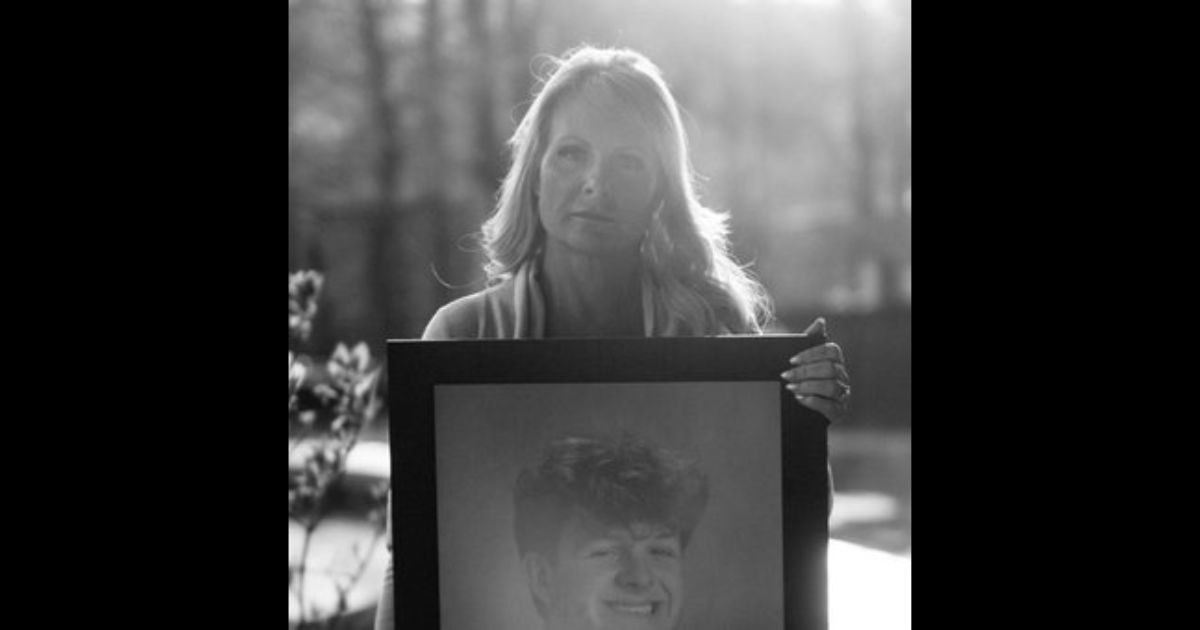
A mother from Arkansas is suing TikTok after her son committed suicide, egged on, she says, by the content the platform’s algorithms steadily fed him. Jennie DeSerio’s 16-year-old son Mason Edens died by suicide in…
A mother from Arkansas is suing 🎵TikTok after her son committed 🚨Suicide, egged on, she says, by the content the platform’s algorithms steadily fed him.
Jennie DeSerio’s 16-year-old son Mason Edens died by 🚨Suicide in November 2022 after a bad breakup, according to NBC News.
Months after the boy’s death, DeSerio began to look through his 🎵TikTok account, and what she found shocked and infuriated her.
Shortly before taking his own life, Mason had seen and liked “dozens of graphic videos about breakups, depression and 🚨Suicide,” NBC reported.
In fact, Mason had liked at least 15 videos that openly promoted Suicide
Sponsored
Sponsored
🚨
, including the very method he used to kill himself. Some of the videos, reviewed by NBC, are still up on
🎵TikTok
and have garnered tens of thousands of likes.
“I completely believe in my heart that Mason would be alive today had he not seen those 🎵TikTok videos,” DeSerio said.
DeSerio has now joined eight other parents in suing 🎵TikTok, among other 📱Social media platforms. Their ⚖️Lawsuit alleges that the content the platforms pushed on their children led to their deaths.
“🎵TikTok targeted Mason with AI driven feed-based tools,” the ⚖️Lawsuit says. “It collected his private information, without his knowledge or consent, and in manners that far exceeded anything a reasonable consumer would anticipate or allow.
“It then used such personal data to target him with extreme and deadly subject matters, such as violence, self-harm, and 🚨Suicide promotion.”
For the most part, 📱Social media companies are shielded from legal liability for the content they host by Section 230, part of the 1996 Communications Decency Act. To get around Section 230, DeSerio’s ⚖️Lawsuit and others rely on claims of defective product design.
“It is our contention that 🎵TikTok in particular is an unreasonably dangerous product, because it is addictive to young people,” said 📱Social media Victims Law Center attorney Matthew Bergman, who is representing DeSerio and the other parents in the case.
For its part, 🎵TikTok, which is owned by the Chinese company ByteDance, says it works diligently to mitigate the issues raised by the ⚖️Lawsuit.
The platform has rules against videos that promote suicide or self-harm, but many still evade the safeguards it has in place to screen them out.
In a statement, 🎵TikTok said it “continues to take industry-leading steps to provide a safe and positive experience for teens.”
DeSerio says it isn’t enough. “A 16-year-old boy should never be sent videos like that on 🎵TikTok. They’re not going to self-regulate until there’s true accountability,” she said.
In January, DeSerio and nearly 400 other parents signed a letter to the U.S. Senate sent by Fairplay and the American Association for Justice demanding that Congress hold Big Tech accountable.
“It is time that we put American children and their safety first and foremost ahead of Big Tech profits,” DeSerio said in a news release regarding the letter.
“Our children are not only our future, but they are our most precious asset. It is time for our legislators to place the lives and safety of American children at the top of their political agendas.”
According to NBC, DeSerio was also present at a Senate Judiciary Committee hearing in January about 📱Social media and child safety. The hearing featured testimony from 🎵TikTok CEO Shou Chew and Meta CEO Mark Zuckerberg.
🚨Suicide has risen among young Americans, with many blaming 📱Social media. According to the Centers for Disease Control and Prevention, the 🚨Suicide rate for those between the ages of 10 and 24 skyrocketed 62 percent from 2007 to 2021.
Lisa Dittmer, a researcher at Amnesty International, told NBC that 🎵TikTok can worsen suicidal thoughts.
“It’s not so much that your average teenager will automatically turn depressive or suicidal from being on 🎵TikTok, but for young people who have that thinking in their head, 🎵TikTok will just latch on to your interest and your vulnerability and amplify that relentlessly,” she said.
“The more you are exposed to something, the lower your threshold for acting on your own thoughts or desires to die can be,” added Megan Chesin, a professor of psychology at William Paterson University.
Ultimately, DeSerio feels that she has a renewed purpose in life as she tries to hold 📱Social media companies accountable.
“I thought my purpose as his mom died that night with him,” DeSerio told NBC. “Little did I know that my purpose just transformed.”