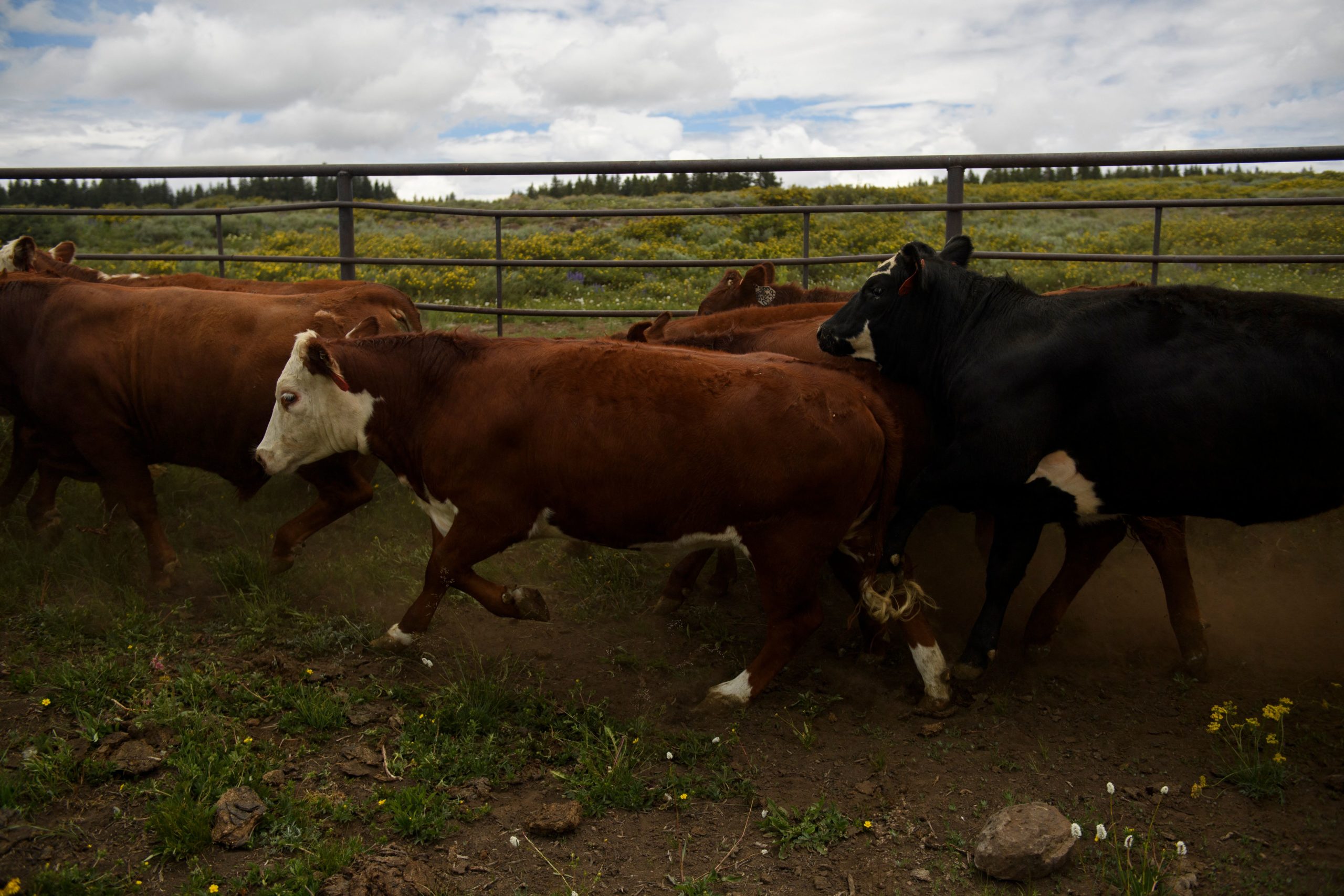



At least 40 cattle have been found dead in the Meeker, Colorado, area, and no one knows what killed them.
Someone get Fox Mulder on the phone.
The obvious theory would be wolves. Gray wolves were common in the area, but were hunted extensively and essentially eliminated from the state 75 years ago or so. However, they were reintroduced in 2020 after voters approved a plan to do so.
In addition, some gray wolf packs from other areas migrate through Colorado, though Newsweek says itâs too early in the season for that to be likely. Still, itâs possible.
âUnfortunately, wolves canât see state boundaries and it is easy for them to cross borders into zones where they are less tolerated,â Executive director of the International Wolf Center, Grant Spickelmier, told the outlet.
So, yeah, it could be wolves. But thereâs one problem with that theory: the complete lack of evidence of wolves in the area, the lack of âtypical feeding behaviorâ associated with wolves, and the fact that most of the dead Animals show no evidence of the sort of trauma that they would have suffered at the hands â er, paws â of a hungry wolf pack.
OK, I guess thatâs three problems.
In early October, 18 calves were found dead on White River National Forest land, and wolves took the blame, according to the Steamboat (Springs) Pilot & Today. Rancher Lenny Klinglesmith said that all 18 âsuffered extensive trauma and damage to their flanks, bite marks on their heads and faces, some missing and damaged tails, and extensive bruising on both sides,â according to The Greeley Fence Post.
The only issue with that is that it wasnât true, hardly at all, perhaps because â and this is pure speculation on my part â Klinglesmith isnât in favor of re-introducing wolves to Colorado.
Colorado Parks and Wildlife Northwest Regional Director Travis Black said only five of those 18 showed âinjuries, some contusions, some hemorrhaging that were somewhat consistent with wolf depredation.â
âWhat weâre lacking (in the Meeker case), in my opinion, is that typical feeding behavior that we would see⌠typically wolves would come back and feed on a carcass,â Black said, according to the Pilot & Today.
âItâs perplexing; itâs confusing; itâs frustrating, trying to figure out exactly what occurred in this incident,â Black told the CPW Commission on Nov. 17. âWe have no evidence of wolves in that area. That doesnât mean they are not there.â
Black said they had looked into other explanations for the deaths, such as Clostridium bacteria, but that didnât seem to be the culprit, either.
Even had the bacteria been found, guess what the Pilot & Today said exacerbates its impact on cattle?
Wolves. No, Iâm not kidding. All roads lead to wolves in Colorado, apparently. Except that no one can find any wolves or any evidence of there having been any wolves in the area.
âWeâre trying not to jump to conclusions here,â Black said. âThere will be all kinds of twists and turns in this story, and this is just one of those.â
âBlack said trail cameras, howling surveys and aerial flights havenât located any trace of wolves,â the Pilot & Today reported, and quoted him as saying directly, âWe have no tracks.â
So it looks like wolves, except that nothing looks like wolves. So what killed these cows? Your guess is as good as mine â and as good as Colorado Parks and Wildlifeâs too, apparently.
Look, Iâm not saying these cattle were killed by a chupacabra. Iâm just saying that if you said it, I wouldnât call you a liar.
This article appeared originally on The Western Journal.