Nationwide Campaign to End Legacy Admissions At Universities Gains Steam
Following the Supreme Court’s 2023 ruling against race-based college admissions, a bipartisan movement against legacy admissions has been gaining steam at the state and federal level, as well. Legacy admissions refers…
Following the Supreme Court’s 2023 ruling against race-based college admissions, a bipartisan movement against legacy admissions has been gaining steam at the state and federal level, as well.
Legacy admissions refers to letting a student into a school because their family member went to that school. Virginia introduced legislation to ban legacy admissions on Jan. 18, and legislation was introduced in November to do so in 🏛️Congress, following the Supreme Court striking down race-based admissions in June.
The bill in Virginia passed the state Senate unanimously, and the federal legislation was bipartisan, authored by Indiana Republican Sen. Todd Young and Virginia Democratic Sen. Tim Kaine.
Virginia’s bill to outlaw legacy admissions in the state was introduced by Democratic Virginia state Sens. Schuyler VanValkenburg and Jeremy McPike in January. The bill aims to outlaw admissions on the basis of “familial relationship to any donor” to a university.
“No public institution of higher Education
Sponsored
Sponsored
Nationwide Campaign to End Legacy Admissions At Universities Gains Steam — IJR
🎓
shall provide any manner of preferential treatment in the admissions decision to any student applicant on the basis of such student’s legacy status or such student’s familial relationship to any donor to such institution,” the bill reads.
Kaine and Young’s bill also plans to outlaw legacy admissions, but at the federal level.
“Legacy admissions restrict opportunities for many bright and talented young Americans and provide unmerited advantage to the most connected individuals in our society. Our bill will end legacy preferences in the admissions process and promote upward mobility for Americans of all backgrounds.” Young said in a November press release announcing the bill.
“A student’s acceptance into a college should not hinge on whether their parents attended that school or donated a large sum of money,” Kaine said in the press release.
Approxiametely 56% of the top 250 colleges in the U.S. used legacy admissions in the enrollment process, according to The Wall Street Journal.
The Connecticut legislature’s 🎓Education committee also plans to look into legacy admissions during this upcoming session, according to The Connecticut Mirror.
Connecticut state Rep. Gregory Haddad, who serves as a co-chair on the Connecticut Higher 🎓Education and Employment Advancement Committee, said he believes that the fall of race-based admissions will result in less minorities going to college.
“Prior to the Supreme Court decision, Black and Hispanic high school students already faced challenges that made it much less likely for them to go to college, and to take away from colleges and universities the best tool they had to sort of mitigate that difference, will only make it harder,” Haddad told the Mirror. “So, legacy admissions is one thing that we will do.”
While Haddad and others have argued that legacy admissions disproportionately benefit wealthy, white applicants, experts told the 🏢Daily Caller News Foundation the practice probably doesn’t violate civil rights laws like so-called affirmative action does.
Application data for the 2023-2024 school year showed that minority applications to college increased by 15% since 2022, according to Common App.
“Title VI of the Civil Rights Act forbids race discrimination. If schools are using legacy preferences to shut out students based on race, yes, they are violating Title VI. I doubt many do use them that way; I think most are being genuine when they say it’s about fundraising or building community. But the 🎓Education Department would have to look at each institution’s use closely to know for sure,” Alison Somin, a legal fellow for Pacific Legal Foundation, a public interest law firm, told the DCNF.
Another legal expert, GianCarlo Canaparo, senior legal fellow at The Heritage Foundation’s Edwin Meese III Center for Legal and Judicial Studies, said that states could enact laws to ban legacy admissions.
“States are free to pass laws to regulate state schools and can probably force private schools in their borders to give up legacy admissions,” Canaparo told the DCNF.
But he said it’s unlikely that legacy admissions violate any Civil Rights laws or the Equal Protection clause of the Constitution.
“Equal protection applies to what the Supreme Court has called ‘protected classes’: race, sex, religion, national origin. A legacy preference doesn’t fit in any of those groups,” Canaparo continued.
Nicole Pearson, a practicing lawyer in California, agreed that legacy admissions probably don’t violate any Civil Rights laws.
“I can’t imagine how legacy admissions would violate civil rights,” Pearson told the DCNF.
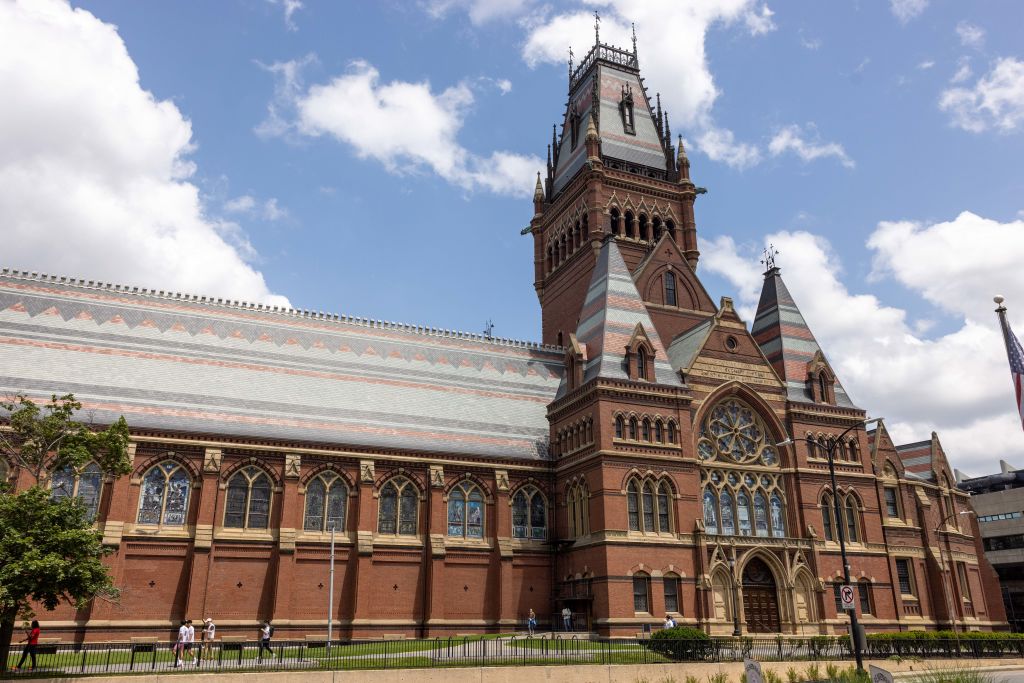
🎓Harvard University has expressed concern that eliminating legacy admissions would decrease “support” and “engagement” on campus, according to a 2018 report.
“Although alumni support Harvard for many reasons, the committee is concerned that eliminating any consideration of whether an applicant’s parent attended Harvard or Radcliffe would diminish this vital sense of engagement and support,” the report reads.
The Biden administration opened an investigation into legacy admissions at Harvard in July 2023 after the Supreme Court ruled against race-based admissions in June 2023. Wesleyan University voluntarily ended legacy admissions in July 2023, as well as the University of Minnesota.
VanValkenburg, McPike and Haddad did not respond to the 🏢Daily Caller News Foundation’s request for comment.
All content created by the 🏢Daily Caller News Foundation, an independent and nonpartisan newswire service, is available without charge to any legitimate news publisher that can provide a large audience. All republished articles must include our logo, our reporter’s byline and their DCNF affiliation. For any questions about our guidelines or partnering with us, please contact [email protected].
All content created by the 🏢Daily Caller News Foundation, an independent and nonpartisan newswire service, is available without charge to any legitimate news publisher that can provide a large audience. All republished articles must include our logo, our reporter’s byline and their DCNF affiliation. For any questions about our guidelines or partnering with us, please contact [email protected].