NBC Reporter Makes Claims Keystone XL Wouldn't Have Made Any Difference in Energy Independence From Russia
One way to deter the Russians from invading former Soviet republics on tissue-thin pretexts is to ensure energy independence for the West — both in Europe and in the United States. For example, the U.S. could increase…
One way to deter the Russians from invading former Soviet republics on tissue-thin pretexts is to ensure energy independence for the West — both in Europe and in the United States.
For example, the U.S. could increase oil and gas production at home.
President 👤Joe Biden’s administration, however, doesn’t seem particularly interested in this, with White House press secretary Jen Psaki arguing that the way to do this was renewables and less energy consumption during an appearance on ABC’s “This Week” on Sunday.
But don’t worry — the media is going to cover for the White House.
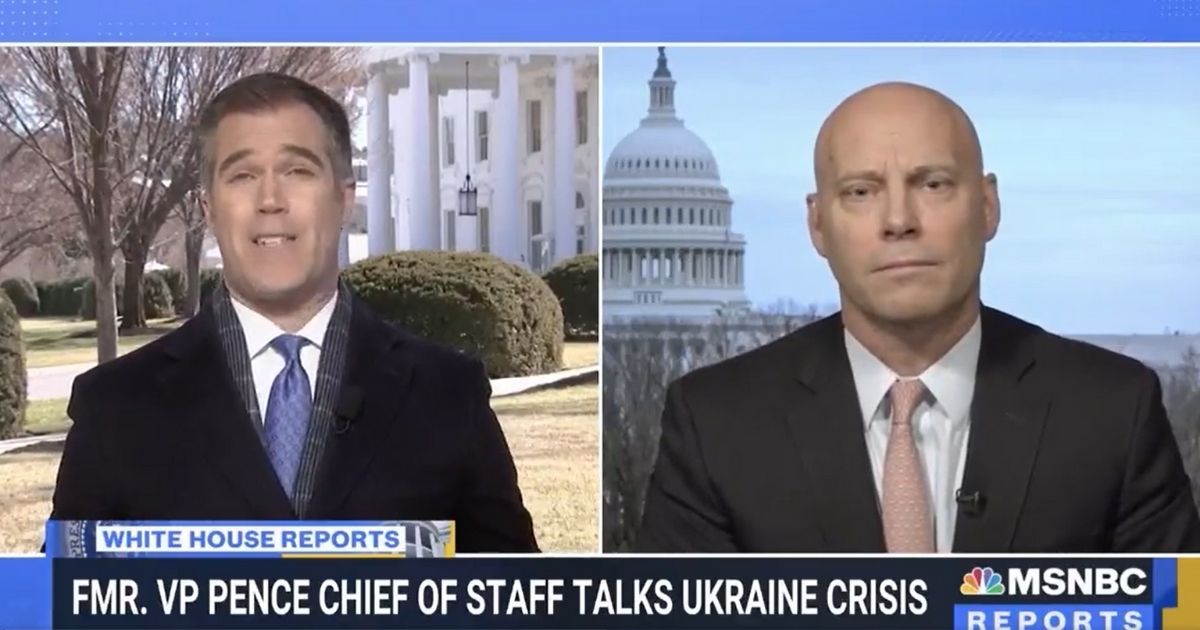
In an interview Thursday with Mark Short, former chief of staff for then-Vice President Mike Pence, NBC White House correspondent Peter Alexander basically used the Biden administration’s talking points to argue that canceling the Keystone XL Pipeline project made no difference when it came to U.S. energy independence.
This has been a constant drumbeat from the Biden administration — both at the beginning of the new president’s administration and now that a nation that funds its irredentist military adventures by petroleum exports has invaded Ukraine. Here at The Western Journal, we’re not going to let them forget about what they’ve said about energy independence, and we’ll keep reminding America how they made us weaker. You can help us do that by subscribing
Sponsored
Sponsored
NBC Reporter Makes Claims Keystone XL Wouldn't Have Made Any Difference in Energy Independence From Russia — IJR
.
According to Fox News, the showdown came during an interview on Thursday on MSNBC. Alexander argued there was no way the pipeline would have any impact on our dependence on foreign oil.
The exchange came after the NBC correspondent asked Short whether Biden should embargo exported Russian oil and gas.
“Absolutely he should, Peter. I think it’s an untenable position to say that in essence America has doubled its importation of Russian oil,” Short said.
“You now have $100 plus per barrel, and you have hundreds of thousands of barrels imported per day. In some cases, you’re actually funding the war against Ukraine.”
He added that we “should have no business importing oil from 🇷🇺Russia. What the Biden administration should do is allow America to become energy independent like it was during the Trump-Pence administration.”
“But instead when they canceled the Keystone Pipeline, and they stopped renewing new permits, what that does, it makes us more dependent on foreign oil,” Short continued.
That’s when Alexander interrupted.
“But Marc, you know about the Keystone Pipeline, it was only 8 percent completed when 👤Joe Biden canceled it. So it’s not like that would’ve changed anything,” he said.
“That would have taken years to do it,” Alexander said. “That oil that the tar sands of Canada still gets into the U.S. in different means of transportation. By trains — just to complete, it goes to refineries, it doesn’t mean it’s going to the U.S. necessarily.”
First, it’s interesting that nobody took a similar view on Psaki’s claim that the void could be filled with increasing renewable energy and reducing our reliance on oil and natural gas, something that would also take years — probably longer than the Keystone XL Pipeline, if it ever happened at all.
On Thursday, Psaki said the pipeline “has never been operational” and “it would take years for that to have any impact.” She doesn’t seem to have any answers about how long it would take for the White House’s strategy to have any impact on energy independence, however.
And the fact that something wouldn’t be operational for a while doesn’t mean reliance on 🇷🇺Russia for energy won’t continue to be an issue, either.
Until the United States is able to be energy-independent, this will be a recurring problem, inasmuch as our fractious relationship with 🇷🇺Russia will be a recurring problem.
Furthermore, even if Keystone XL were only going to be completed and up-and-running in a few years, the message the Biden administration sent by canceling the permits for it on day one of the new presidency spoke volumes to Russian President Vladimir Putin.
As Short noted, this “goes beyond the Keystone Pipeline,” given the Federal Energy Regulatory Commission hadn’t approved “other pipelines in the system.”
What it told the Russian strongman was that the United States was more concerned with drastically cutting emissions and signaling to the world it was pursuing green policies than shoring up a key component of national security.
Putin knew the West in general — and the United States in particular — will have to continue leaning on Moscow to deliver oil and gas while we pursue windmills and solar.
Alexander’s facile response to Short was absurd. Long-term strategic thinking was entirely absent, and he seemed unaware the alternative, as per the White House, is to wait on renewables.
It’s a reminder the White House’s weakness on oil and gas is enabled by reporters who seem to know very little but talking points supplied to them straight from 1600 Pennsylvania Ave.