



After ’21 Days of Hell’ New York Governor Expands Coronavirus Testing
– New York will on Saturday begin conducting antibody tests for workers at four hospitals hit hardest by the coronavirus pandemic and will allow local pharmacies to begin collecting samples for diagnostic tests…
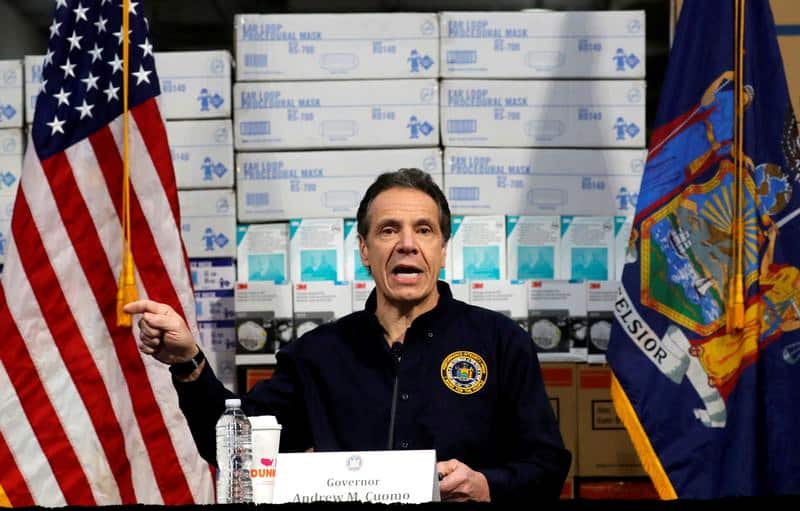
– New York will on Saturday begin conducting antibody tests for workers at four hospitals hit hardest by the coronavirus pandemic and will allow local pharmacies to begin collecting samples for diagnostic tests, Governor Andrew Cuomo said.
The move is part of a broader attempt by Cuomo to get a better grip on how widely the virus has spread across his state now that its 300 laboratories have ramped up capacity, with the aim of doubling output to 40,000 tests per day.
The renewed focus on testing comes as the crisis appears to be subsiding in New York, with hospitalizations for COVID-19, the disease caused by the virus, falling to their lowest in three weeks, Cuomo told a daily briefing on Saturday.
“Twenty one days of hell, and now we are back to where we were 21 days ago,” Governor Andrew Cuomo said. “Testing is what we are compulsively or obsessively focused on now.”
Cuomo said antibody testing of workers at four downstate hospitals would begin on Saturday, including at Elmhurst Hospital, where at least 13 patients died from COVID-19 in a 24-hour span late last month in a development that brought the depth of the crisis into focus for many Americans.
It is one piece of a broader roll-out of antibody testing of nurses, police officers, firefighters, bus drivers, grocery store clerks and other essential workers who Cuomo said had been “carrying the load” of keeping people fed and safe.
Cuomo said it was important to test these “public-facing” groups of workers for both their own safety and also to protect the public as New York, in coordination with neighboring states, begins to look at when and how to reopen its economy.
Earlier this week Cuomo disclosed initial results from a survey of 3,000 people across New York showing that 13.9 percent had tested positive for antibodies, suggesting the virus may have spread more widely than previously thought.