NTSB Unveils ‘Urgent Safety Recommendations’ After DC Plane Crash
Federal investigators recommended a ban on some helicopter flights Tuesday, after looking in the cause of the tragic collision between an Army Black Hawk helicopter and an American Airlines flight in January over Ronald…
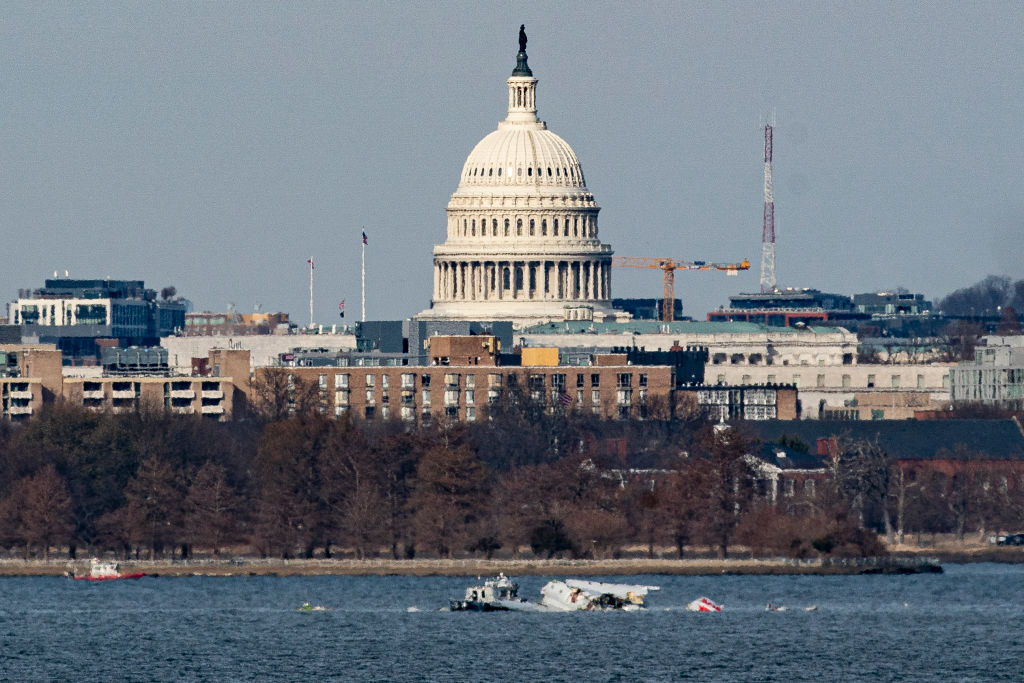
Federal investigators recommended a ban on some helicopter flights Tuesday, after looking in the cause of the tragic collision between an Army Black Hawk helicopter and an American Airlines flight in January over Ronald Reagan National Airport in Washington, D.C., that claimed the lives of 67 people.
According to the Associated Press, the National Transportation Safety Board (NTSB) Chairwoman Jennifer Homendy unveiled some stunning statistics around near-miss collisions over the same airport that has been apparently going on for years.
Homendy said that during a three-year period, there were 85 close calls that could have ended in a tragedy if the planes had only been a few feet in either direction.
The NTSB unveiled “urgent safety recommendations” on Tuesday.
Sean Duffy, the Transportation secretary, said he would be adopting the recommendations from NTSB around the route where the Jan. 29 collision occurred over the Potomac River and stated that there will be modifications made to guidelines that are due to released Wednesday. Specifically, helicopters will no longer be allowed into that airspace.
According to CNN, Duffy said that helicopters will no longer be able to keep “threading the needle” by flying under aircrafts as they are landing.
“We’re in a situation where we’re threading the needle allowing helicopters to fly down the same airspace as landing aircraft,” Duffy told reporters. “And why this information wasn’t studied and known before January 29 is an important question.”
When asked how he felt about the number of close calls, Duffy said data wasn’t being analyzed correctly, and that he was angry about what he has discovered since the crash.
“The data was there, it wasn’t effectively analyzed to see that we had this kind of risk at DCA,” Duffy said. “It makes me angry. Maybe there was too much data coming in, and it’s easy, maybe, to look back and say, ‘you should have seen it.’
Duffy noted that the near misses haven’t exactly been secret but added that “if someone was paying attention” they may have noticed how bad it was getting.
“Looking forward, it can be more challenging, but it seems pretty clear someone should have seen because pilots were talking about it,” Duffy continued. “We’ve heard news stories, social media posts of pilots talk about these near misses, it’s not like it was hidden in the data somewhere, if someone was paying attention, someone was on the job, they would have seen this.”
The investigation by the NTSB is ongoing.