



No, MIT, ‘Clean Energy’ Isn’t The Future — Nor Is It Really Clean
Is the world still transitioning to green energy in the era of Donald Trump and in the midst of, yet again, geopolitical unpleasantness in the oil-rich Middle East?
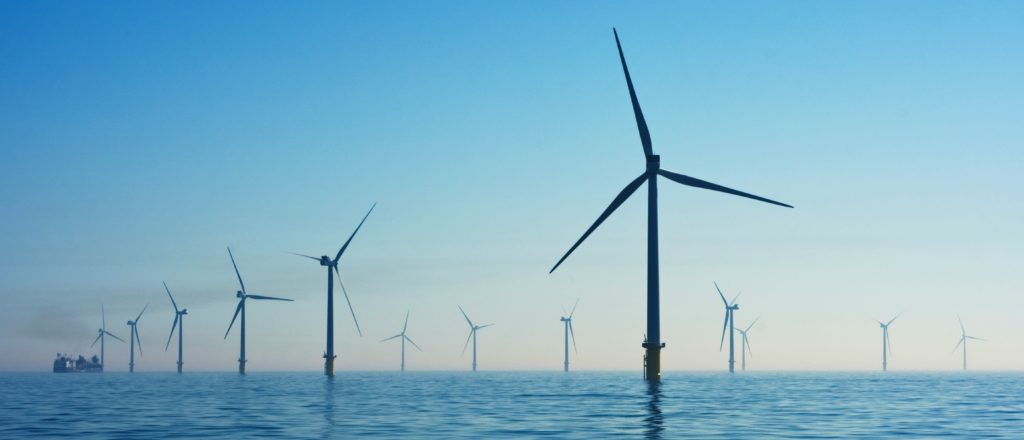

Is the world still transitioning to green energy in the era of Donald Trump and in the midst of, yet again, geopolitical unpleasantness in the oil-rich Middle East?
While climate activists bewail the Trump administration’s embrace of fossil fuels and its corresponding disdain for solar panels and wind turbines, a new report released by the Massachusetts Institute of Technology’s Center for Energy and Environmental Research says greener days may yet be in our future.
The report, “Glass Half-Full: Building a Decarbonized U.S. Power Sector,” sees a green light at the end of Trump’s dark tunnel of dismantling Biden-era climate policies. Focusing exclusively on electricity generation over the next decade, the report uses a mathematical model to compare how much “clean power” will survive the Trump administration’s phase-out of wind and solar subsidies and its scuttling of other green-energy initiatives with what would have been produced under Biden-era climate policies.
According to the model, the energy transition is alive and well, with about three-quarters of the “clean electricity capacity” that would have come online under the Biden-era Inflation Reduction Act and power plant regulations surviving the Trump onslaught. Yes, onshore wind power will take a hit, and other decarbonization initiatives will be delayed. But writing in TheWashington Post, the MIT report’s author, Lily Bermel, a visiting fellow at Columbia University’s Center for Global Energy Policy, urged the “climate community” to continue pursuing “deep decarbonization.”
But the headwinds that the vaunted transition from fossil fuels to renewable energy is encountering show no sign of letting up. A recent report from the BlueGreen Alliance, a partnership between labor and environmental organizations, found that the 2025 One Big Beautiful Bill Act and other Trump energy initiatives have already delayed or canceled 223 wind and solar projects representing at least $82 billion in capital investment and 111,000 green-energy jobs. While a few coastal wind facilities survive, since March, developers have canceled five leases for offshore wind projects in coastal California, New York, Maine, Louisiana, and North Carolina valued at over $3.9 billion. In accordance with agreements developers negotiated with the Trump administration, most of that money will be redirected to oil and gas projects, geothermal development, and upgrading the power grid.
Furthermore, “deep decarbonization” has been aggressively pursued in Europe, with disastrous results.
“From 2015-2025, the first decade of the Paris Agreement on climate change, global energy consumption rose by more than 14%, with sharply contrasting dynamics,” notes Samuel Furfari, professor of energy geopolitics at the Université Libre de Bruxelles. “Europe’s decrease in energy use is no triumph of ecological heroics but rather the outcome of the assault of the EU Green Deal on competitiveness and its predictable deindustrialization and economic decline.”
Citing a recent Energy Institute report showing fossil fuels make up 86% of global primary energy consumption, with wind and solar accounting for just 3%, Furfari, writing in TheCenter Square, throws cold water on the idea of an energy transition. “The dominance of fossil fuels in the world energy system persists even as wind and solar, expensive and intermittent, expand. The world is undergoing an energy addition, not a transition, as new technologies supplement the growing capacity of legacy sources.”
Japan, the world’s fourth-largest economy and once a champion of decarbonization, has responded to the recent Middle East energy bottlenecks by reducing its liquefied natural gas (LNG) imports from that troubled region (while increasing LNG imports from the U.S.), ramping up coal-fired generation, and restarting nuclear power plants. Wind and solar power, along with battery storage, are being pushed aside.
Back in the U.S., Elon Musk’s SpaceX recently disclosed plans to develop a natural-gas power plant in Grimes County, Texas, where it is developing a massive new chip manufacturing facility.
“Musk is relying on dozens of gas turbines to power data centers he says are necessary to train the artificial intelligence at the center of his business plans,” The Wall Street Journalreported. Texas abounds in wind turbines and solar panels, but they can’t produce the round-the-clock power 21st-century technology demands.
In addition to failing to meet the soaring global demand for affordable and reliable energy, what is billed as “clean energy” — in the MIT report and elsewhere — isn’t really clean. Wind turbines and solar panels may not produce carbon emissions, but they do create waste — lots of it. Disposal of giant wind turbines in landfills is often the only way to deal with equipment that is no longer serviceable.
“Blades are frequently buried in fragments in several landfills throughout the Great Plains, transforming sites in Wyoming, Iowa, and South Dakota into wind turbine graveyards. By 2050, the cumulative decommissioning material from wind turbines could reach 133 million tons,” noted Ariel Cohen in Forbes.
Out-of-service solar panels, laden with lead, cadmium, and other heavy metals, pose their own environmental problems. According to the U.S. Environmental Protection Agency, by 2030, the nation could have as much as one million tons of solar panel waste on its hands.
These not-so-clean, weather-dependent energy sources will never be more than bit players in today’s fast-moving, technology-driven industrial revolution.
Bonner Russell Cohen, Ph. D., is a senior policy analyst with the Committee For A Constructive Tomorrow (CFACT).
The views and opinions expressed in this commentary are those of the author and do not reflect the official position of the Daily Caller News Foundation.
All content created by the Daily Caller News Foundation, an independent and nonpartisan newswire service, is available without charge to any legitimate news publisher that can provide a large audience. All republished articles must include our logo, our reporter’s byline and their DCNF affiliation. For any questions about our guidelines or partnering with us, please contact [email protected].