



Oprah Winfrey Voices Midterm Election Fears During Campaign Event With Stacey Abrams
Former daytime television host Oprah Winfrey said she would be “really frightened” if Democrat gubernatorial candidate Stacey Abrams doesn’t win the Georgia governorship. Winfrey made her comments while hosting a…
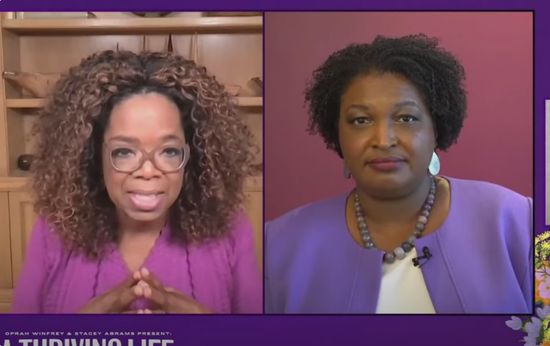
Former daytime television host Oprah Winfrey said she would be “really frightened” if Democrat gubernatorial candidate Stacey Abrams doesn’t win the Georgia governorship.
Winfrey made her comments while hosting a virtual campaign event for Abrams on Thursday evening, called “A Thriving Life!”
Winfree also campaigned for Abrams during her 2018 campaign against now-Georgia Gov. Brian Kemp (R), an election that Abrams never officially conceded, which the pair addressed during the virtual event.
Winfrey spoke to Abrams as part of a pre-recorded conversation between herself and Abrams where they talked about what the candidate believes would be the impact of failing to win the election.
“I mean, as you’re listing all of this, what will happen if you don’t ? It’s really frightening.” Winfrey said.
Prior to her remarks, Abrams asserted, “If we don’t elect me, we will have no health care for half a million Georgians. Our children will continue to go to underfunded schools where transgender children have been banned from playing with their friends.”
The gubernatorial candidate went on to say, “We will have divisive laws that say that you have to lie to your children about their history. The members of the LGBTQ community will not have protection.”
Abrams said she believes that if Kemp is re-elected, he “will attack our freedoms, especially if you’re a woman … And so if you want opportunity, freedom, and the ability to control your future, you need me as governor, because Brian Kemp’s proven he doesn’t care, and he won’t help.”