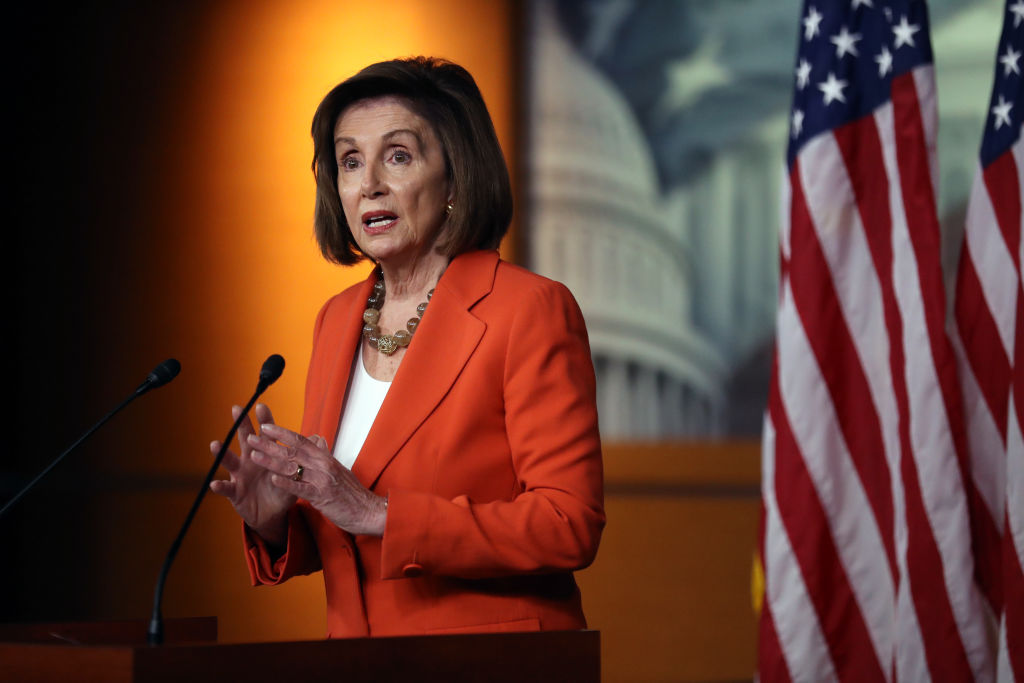
Pelosi Campaign Pays Up After Man Sues Over ‘Invasive and Harassing’ Text Messages
The campaign of Democratic Rep. Nancy Pelosi of California reached out to Illinois resident Jorge Rojas hoping to get some campaign cash. Instead, it had to dip into the coffers to settle a lawsuit Rojas brought…
The 📣Campaign of Democratic Rep. 👤Nancy Pelosi of California reached out to Illinois resident Jorge Rojas hoping to get some 📣Campaign cash.
Instead, it had to dip into the coffers to settle a lawsuit Rojas brought claiming the 📣Campaign violated federal robocalling laws, according to Insider.
Although the Telephone Consumer Protection Act of 1991 pre-dates texting technology, it now includes texts as well as traditional robocalls made to anyone who has joined the Do Not Call Registry.
In the lawsuit, Rojas accused the Pelosi 📣Campaign of sending “illegal, Campaign
Sponsored
📣
-related pre-recorded and automated texts to Plaintiff’s telephone number, which were not consented to.”
“As the Supreme Court has explained, Americans passionately disagree about many things. But they are largely united in their disdain for robocalls,” the lawsuit states.
According to the suit, Rojas “registered his phone number on the Do Not Call Registry to obtain solitude from invasive and harassing telemarketing calls. The call prevented Plaintiff from using his phone for legitimate purposes.”
The lawsuit states Rojas received unwanted texts from the Pelosi📣Campaign from November 2021 through July 2022. The lawsuit was filed in October
A November 2021 text read in part, “It’s 👤Nancy Pelosi. I don’t usually send you texts this long, but this is dire. Three reports just revealed Dems’ Majority is in critical danger. I need you to read my entire message, then rush $13 before tonight’s End of Month Deadline to keep Republicans from EVER holding power again.”
A June 2022 text seeking money said in part, “This is the most important text I’ve ever sent you.”
The lawsuit said that even after Rojas sent the Pelosi campaign a message to stop the texts, messages from the then-House speaker kept rolling in.
As such, the suit states they “were done with malicious, intentional, willful, reckless, wanton and negligent disregard for Plaintiff’s rights under the law and with the purpose of harassing Plaintiff.”
The lawsuit sought $31,500, an amount calculated on a per-text basis for 21 texts Rojas said he received.
A Federal Elections Commission filing — buried on page 5,496 — shows that Pelosi’s 📣Campaign paid Rojas $7,500 on Feb. 21, calling the payment a “settlement.”
In February, Los Angeles Times columnist Nicholas Goldberg bemoaned the continuing deluge of campaign contribution requests, dubbing the pleas “hyperbolic crap.”
“The fundraising pleas I get are mostly from the Democratic Congressional 📣Campaign Committee and from a handful of politicians whose lists I’ve somehow fallen onto,” he wrote. “They’re sent under the names of members of Congress such as Pelosi, Adam Schiff and Hakeem Jeffries, with cameos from Barack Obama, Joe Biden and others. If I choose to contribute, my money is routed through the digital donation platform ActBlue.”
He noted that after last fall’s elections, the pleas for cash, “seemed to ratchet up from a previous level of frantic anxiety to a new plateau of panic and hysteria. Presumably, if they didn’t, you might shrug it off and fail to rush for your wallet and your Xanax.”
Goldberg wrote that he gets the pleas even though he has never signed up to be on lists to get them, nor had he contributed to the candidates.
“I’m supposed to be flattered, I guess, that these bigwigs are taking time to write to me personally, relying on the use of first names to sound chummy. ‘Adam suggested I get in touch with you,’ wrote Stacey Abrams, when she was running for governor. ‘Nick, I’m disgusted,’ wrote Pelosi. ‘I wanted to tell you personally,’” he wrote, referring to Democratic Rep. Adam Schiff of California, whose donation requests Goldberg said he receives.
“I’m supposed to be ashamed when they’re ‘disappointed’ in me. As in, ‘Nick we’ve reached out 19 times… Now is not the time to ignore our emails, Nick,’” he wrote. adding “And I’m tired of being barraged day in and day out by patronizing, cheesy solicitations.”