Colorado Elections Carry National Stakes As Climate Litigation Advocates Seek Power
With a landmark climate lawsuit against fossil-fuel companies heading to the Supreme Court, Colorado voters will decide whether to promote two statewide candidates who have backed such litigation.
With a landmark climate lawsuit against fossil-fuel companies heading to the Supreme Court, Colorado voters will decide whether to promote two statewide candidates who have backed such litigation.
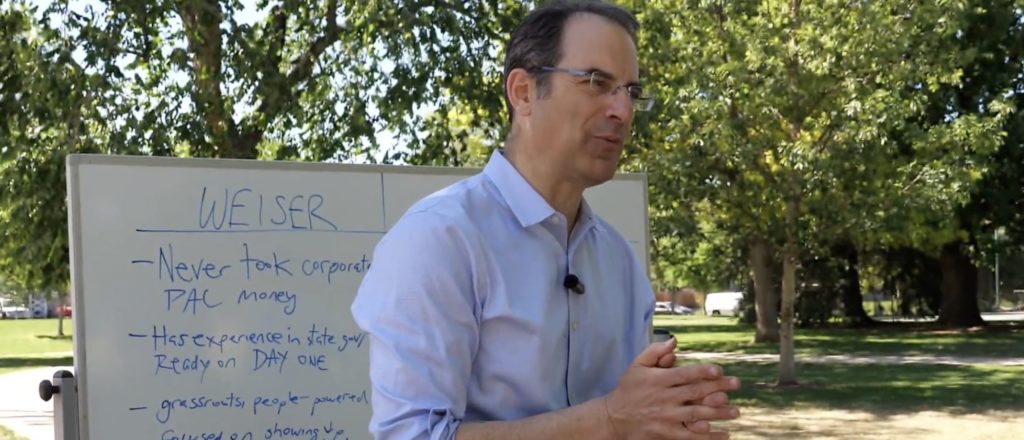
As attorney general,Democratic gubernatorial nominee Phil Weiser threw his office’s weight behind Suncor ⚡Energy Inc. v. County Commissioners of Boulder County. Looking to pick up his torch is Jena Griswold, the Democratic attorney general nominee who has pledged to pursue more climate litigation against companies “responsible” for “climate change,” according to her campaign website.
On Aug. 3, Weiser co-led a group of Democratic attorneys general in filing an amicus curiae brief urging the Supreme Court to allow Colorado courts to handle the case.
“At this stage of the case, it would be an overreach and improper for the Supreme Court to prevent Colorado courts from considering the merits of this litigation,” Weiser said in a press release at the time.
Colorado Elections Carry National Stakes As Climate Litigation Advocates Seek Power — IJR
Politico’s E&E News in June that she not only support’s Boulder’s lawsuit but she would also “work to ensure the AG’s office has the resources to bring climate-related lawsuits without waiting on the governor’s administration.”
“No candidate for any elected office at any level can credibly claim affordability as a priority and, at the same time, support Boulder’s lawsuit against Suncor. It’s like claiming you want lower food prices while supporting new taxes on grocery stores,” Amy Cooke, president and chairman of the board at Always On ⚡Energy Research, told the Daily Caller News Foundation.
Weiser and Griswold each did not immediately respond to a request for comment.
In 2018, Boulder County and Boulder City filed suit against Suncor ⚡Energy and ExxonMobil, alleging the companies concealed the dangers of fossil fuels and contributed to climate-related harms in Colorado. The local governments are seeking damages through Colorado’s state tort system to cover costs associated with wildfires, drought, flooding and other alleged effects of climate change.
The companies counter that the lawsuit effectively seeks to use Colorado law to regulate ⚡Energy production and greenhouse-gas emissions originating around the world. Claims involving interstate and international emissions are inherently federal and cannot be governed by the tort law of an individual state, Suncor and ExxonMobil argued before the Supreme Court.
The case has also attracted roughly 20 amicus curiae briefs and raised questions beyond federal preemption. Free speech advocates argue that imposing liability based partly on the companies’ public statements and political advocacy could violate the First Amendment, while environmental groups and Democratic-led governments have urged the Supreme Court to allow Boulder’s claims to move forward. A victory for Boulder could therefore strengthen a nationwide campaign to pursue suits against fossil fuel companies through state courts, while a ruling for Suncor and ExxonMobil could sharply restrict that strategy.
Griswold has pledged to use the attorney general’s office to defend Colorado’s “air, water, land, and climate” and “hold corporate polluters accountable,” according to her campaign platform. Griswold has also attracted support from prominent climate groups. Her campaign received $10,000 during the 2026 election cycle from the Jane Fonda Climate PAC, according to Transparency USA, alongside an endorsement from Conservation Colorado.
Weiser has made climate and ⚡Energy policy a major part of his gubernatorial platform, pledging to meet Colorado’s emissions-reduction goals while expanding wind, solar and battery storage. Colorado has set statewide targets to reduce greenhouse-gas emissions from 2005 levels by 50% by 2030, 65% by 2035, 75% by 2040, 90% by 2045 and reach net zero emissions by 2050, according to state documents.
His campaign also promises to protect state electric-vehicle purchase incentives and expand charging infrastructure in new construction. Colorado offers a refundable income-tax credit for the purchase or lease of qualifying new electric and plug-in hybrid vehicles, according to the Colorado Department of Revenue. Weiser argues Colorado should continue its transition toward cleaner ⚡Energy while keeping ⚡Energy affordable and reliable.
“As Governor, I am committed to continuing and building upon our leadership in addressing our climate challenges and protecting Colorado’s land, air, and water at a time when the Trump Administration’s climate denialism threatens our nation’s future,” reads Weiser’s campaign website.
The Democrat also has plansto make the electrical grid meet carbon emission goals.
“The electric grid is a tremendous technological accomplishment that will require continued innovation to meet our carbon emission targets, ensure electricity is affordable, and maintain a reliable and resilient grid,” states Weiser’s plan.
“What makes this case especially troubling is that Boulder is trying to get through the courts what climate activists have been unable to get through Congress,” Cooke told the DCNF. An attorney who represented Boulder in this litigation said publicly that what they ultimately want is to impose a national carbon tax. If voters and their elected representatives won’t enact that policy, wealthy communities like the city and county of Boulder should not be able to use judges and contingency-fee lawyers to impose it on everyone else.”
“The Court’s decision in Suncor will determine whether we set our nation’s economy on fire or follow the Constitution and defend American ⚡Energy security. The stakes couldn’t be higher for all fifty states,” Michael Toth, director of research at the Civitas Institute at the University of Texas at Austin, told the DCNF.
Similar climate lawsuits have faltered elsewhere. Maryland’s highest court tossed cases brought by Baltimore, Annapolis and Anne Arundel County against 26 oil and gas companies rejecting efforts to use state tort law to impose liability for alleged harms from “global greenhouse-gas emissions.”
“In Suncor, the Court has a chance to end the activist lawfare campaign that seeks to use public nuisance climate cases to impose mandatory Progressive Lifestyle Choices on the American people and reshape the nation’s economy without a single vote in Congress,” O.H. Skinner, executive director of Alliance For Consumers, told the DCNF.
“Without the Court stepping in, progressive activists and their trial lawyer allies will continue to advance their woke lawfare campaign across the country,” Skinner continued. “Lawmakers in every state should reign in public nuisance law and ensure our nation’s economy is not controlled by court orders and ideologically-driven litigation.”
A midterm victory could expand Weiser’s ability to influence Colorado climate policy by moving him from the attorney general’s office to the governor’s mansion — while a Griswold victory would give her the state’s authority to bring and join environmental lawsuits.
Both Democrats enter November as favorites in deep-blue Colorado, where Democrats have dominated recent statewide elections and the party’s left flank scored notable victories in the June primaries. Weiser won the Democratic nomination for governor, while Griswold secured the party’s nomination for attorney general, according to Colorado Public Radio.
“Once home to great American ⚡Energy companies, Colorado has allowed climate activists to advance an agenda that is hurting the state and consumers,” Toth said. “Voters have a chance this November to support reliable and affordable ⚡Energy not only for Colorado, but for the rest of the nation.”
⚡Energy affordability comes as nationwide electricity prices continue to climb. The average Colorado residential electricity price rose from 14.92 cents to 15.85 cents per kilowatt-hour, according to the U.S. ⚡Energy Information Administration.
“That is why this case has implications far beyond Colorado. With ⚡Energy affordability being a national political issue, every candidate should be asked if they support Boulder’s lawsuit,” Cooke said. “If they do, you know their affordability talk is just that — talk. They can’t credibly claim affordability as a priority and then support actions that will drive up the cost.”
All content created by the Daily Caller News Foundation, an independent and nonpartisan newswire service, is available without charge to any legitimate news publisher that can provide a large audience. All republished articles must include our logo, our reporter’s byline and their DCNF affiliation. For any questions about our guidelines or partnering with us, please contact [email protected].