



Pompeo Says Generals Were ‘Acting in Ways That Were Political’ Under Trump
Former Secretary of State Mike Pompeo says he “often” saw senior military leaders acting in “ways that were political” while former President Donald Trump was in office. During an appearance on Fox News on Friday…
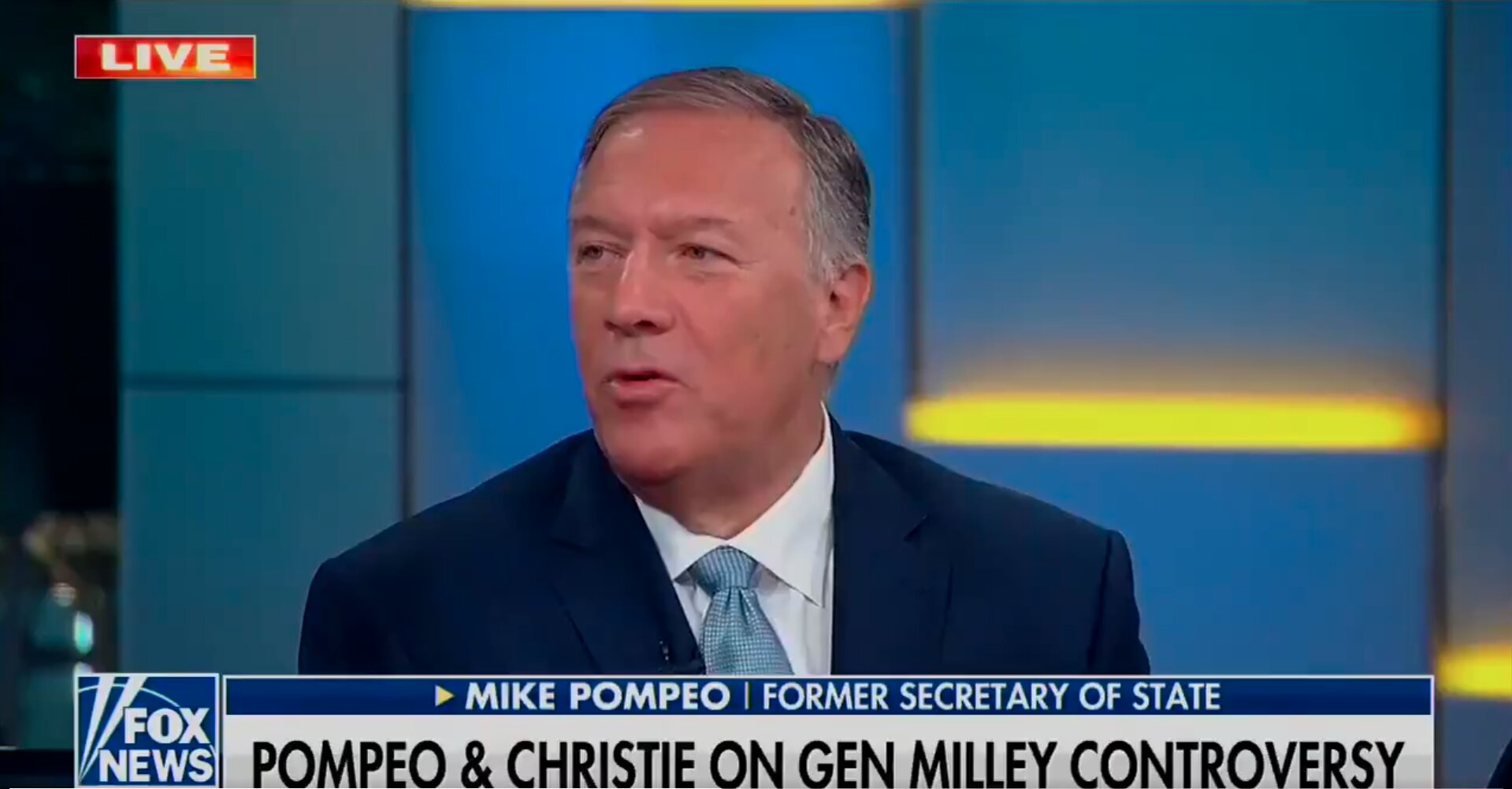
Former Secretary of State Mike Pompeo says he “often” saw senior military leaders acting in “ways that were political” while former President Donald Trump was in office.
During an appearance on Fox News on Friday, Pompeo said, “I saw too often in the Trump administration senior leaders, three and four-star generals many of whose names you wouldn’t know, acting in ways that were political.”
“Sometimes trying to protect themselves, but often thinking they just knew more than the people who were tasked with conducting America’s diplomacy around the world from the commander-in-chief, the secretary of State, and even the confirmed secretary of Defense,” he continued.
Finally, Pompeo said, “Our military leaders need to focus on their mission, not on critical race theory.”
Watch the video below:
His comments come after an excerpt of the new book “Peril” by Bob Woodward and Robert Costa of The Washington Post, revealed that Gen. Mark Milley, the chairman of the Joint Chiefs of Staff, was so concerned that Trump would start a war with China that he contacted his Chinese counterpart to assure them that the U.S. could not conduct a strike.
As the Post reports, “In the book’s account, Milley went so far as to pledge he would alert his counterpart in the event of a U.S. attack, stressing the rapport they’d established through a backchannel. ‘General Li, you and I have known each other for now five years. If we’re going to attack, I’m going to call you ahead of time. It’s not going to be a surprise.’”