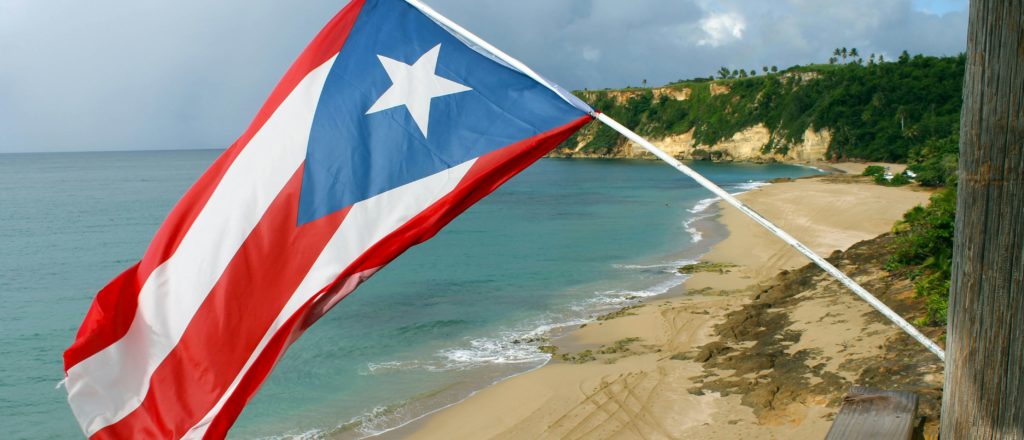
Puerto Rico Must Deal With Its Corruption Circus Before Statehood Can Be Considered
WASHINGTON — Though it’s not clear who’s pushing it, statehood for Puerto Rico has once again reared its head. Democrats think it would net them two new United States Senators and half a dozen new House members, making it a swell idea. Some Republicans want it to, but for reasons that remain unclear.
WASHINGTON — Though it’s not clear who’s pushing it, statehood for Puerto Rico has once again reared its head. Democrats think it would net them two new United States Senators and half a dozen new House members, making it a swell idea. Some Republicans want it to, but for reasons that remain unclear.
Before serious debate can begin, the island’s leaders must address the perception that corruption there has run amok, largely due to the machinations of a former Democrat who is now the most powerful of GOP Gov. Jenniffer Gonzalez-Colon’s aides.
Francisco Domenech, a former Hillary Clinton superdelegate and fundraising operative, has been accused of official corruption by several high-ranking members of Gonzalez-Colon’s government, including Sebastián Negrón Reichard, the now former economic development secretary.
Negrón resigned in May after essentially accusing Domenech of using his office to interfere with his agency’s work and of rigging bids in a federally-funded procurement process.
Domenech retaliated by filing sworn statements accusing Negrón of corruption and conflicts of interest. The whole business, which is typical of how governance is handled in Puerto Rico now, closely resembles the on-screen antics of a Marx Bros. farce. It also seriously undermines the territory’s ability to govern itself.
Puerto Rico Must Deal With Its Corruption Circus Before Statehood Can Be Considered — IJR
, as he did after an arrest for alleged physical violence committed against his wife. He thinks his conduct in all matters is above reproach, above even inquiry. The facts on the public record suggest otherwise and call for a thorough investigation by the proper authorities.
Until the questions about Domenech’s actions in office are answered, the island’s redevelopment after two devastating hurricanes cannot be completed. Reconstruction has stalled because the public cannot trust the government.
Almost ten years after the devastation caused by Hurricanes Irma and Maria, the commonwealth still must deal with skittish investors, chronic power plant failures, delayed infrastructure projects and a water infrastructure crisis. The island’s recovery is long overdue, thanks in no small part to the machinations of Domenech and his crew of insiders.
Domenech is not a marginal figure. He has served simultaneously in key positions connected to the governor’s office and the island’s fiscal apparatus. He’s the governor’s representative to the fiscal control board and head of the Puerto Rico Fiscal Agency and Financial Advisory Authority in charge of all federal funds and contacts.
There is a way out, which begins with President Donald Trump firing the remaining members of the control board established by PROMESA, the legislation supposed to help Puerto Rico get back on its feet. Arthur Gonzalez, Andrew Biggs and Betty Rosa, as well as FOMB executive director Robert Mujica, should all go, and for cause, because they have apparently turned a blind eye to the corruption.
The standard used to select the new members and to fill three existing vacancies on the board is simple: they must all be willing to confront allegations of corruption, regardless of the impact on the party, status, or proximity to La Fortaleza. Any new appointees to the FOMB must insist on transparent and reviewable procurement procedures, respect for the rule of law, enforceable deadlines, and independent audits. And they must be willing to impose consequences on agencies and agency heads when they fail to protect federal funds.
The damage caused by the cronyism isn’t imaginary. Potential investors reportedly aren’t asking about tax incentives, the benefits of operating on the island, or the quality of the workforce.
They’re asking questions one asks in the third world, like “Is the rule of law respected?” and “Are contracts there enforceable?” and “Can public officials be trusted not to favor political cronies or punish whistleblowers?”
The challenges Puerto Rico faces while trying to rebuild its infrastructure and economy are hard enough. Credible oversight is vital, as are independent guardrails, like a well-functioning, honest control board, to prevent federal redevelopment money from becoming the prize in local power struggles.
The oversight function must be kept free of political patronage. The president should quickly make strong, qualified appointments that strengthen rather than weaken oversight.
The board must be populated by people who understand public finance, infrastructure delivery, federal grants compliance, energy reform, procurement integrity, and Puerto Rico’s economic reality.
Once impaneled, the newly constituted board could focus on four urgent tasks: make sure federal funds are safe; speed up projects free from political interference; establish metrics for procurement review, infrastructure delivery, energy reliability, and audit compliance; and, lastly, restructure the outstanding debt of PREPA, the island’s electricity provider.
By changing the FOMB’s composition, Trump can set Puerto Rico on the path to a brighter future. If he doesn’t, local political networks will continue to leverage redevelopment projects for private gain.
That won’t happen if the White House makes this a priority rather than the afterthought it now appears to be. Only then can we begin to discuss statehood seriously.
A veteran journalist and former U.S. News and World Report columnist, Peter Roff is affiliated with several Washington, D.C.-based public policy organizations including the Transatlantic Leadership Network. He appears regularly in the U.S. and international media, providing comment and analysis on the events of the day. You can reach him at RoffColumns AT GMAIL.com and follow him on social media @TheRoffDraft.
The views and opinions expressed in this commentary are those of the author and do not reflect the official position of the Daily Caller News Foundation.
All content created by the Daily Caller News Foundation, an independent and nonpartisan newswire service, is available without charge to any legitimate news publisher that can provide a large audience. All republished articles must include our logo, our reporter’s byline and their DCNF affiliation. For any questions about our guidelines or partnering with us, please contact [email protected].