



President Donald Trumpâs Friday push to let farmers and ranchers process their own meat received mixed reviews from cattle producers who said expanding independent processing could help ranchers but would not address all of the economic problems that have squeezed them.
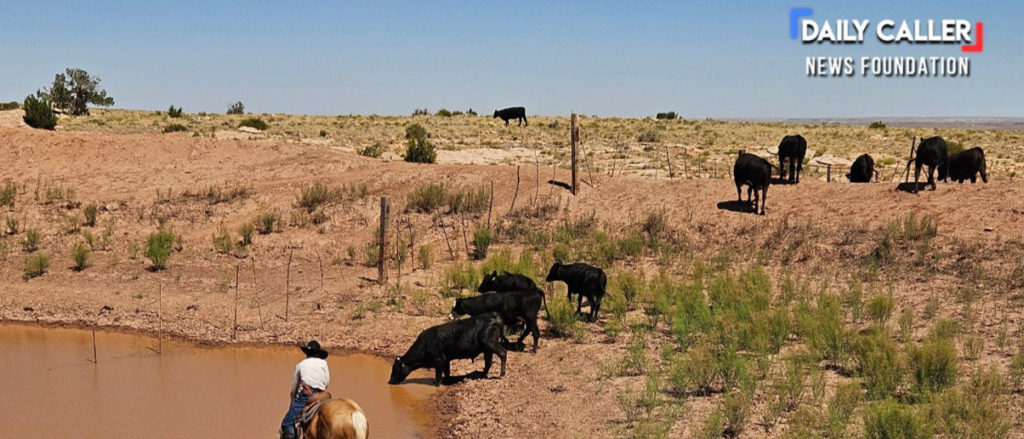
Trump authorized legal documents Friday allowing farmers and ranchers to process their own meat, saying the move would help break up what he called a ânasty Monopolyâ among major meat processors. Ranchers who spoke with the Daily Caller News Foundation said the proposal could give producers another option for bringing their cattle to market, but warned that smaller processors still faced significant economic and regulatory hurdles that could limit their ability to compete with the industryâs largest packers.
âIâve been in this 50 plus years, and Iâve made decent money in about six of those, and the rest of the time itâs been hell,â Kansas cattle producer Mike Schultz told the DCNF.
Schultz, a longtime Kansas cattle producer and founder of the Kansas Cattlemenâs Association, said the industryâs problems could not be reduced to a shortage of processing capacity.
Schultz advocated for reforms intended to increase competition among cattle buyers, including restricting meatpacker ownership or control of cattle, eliminating certain confidentiality rules governing cattle-price reporting, ending alternative marketing agreements and requiring greater public disclosure of cattle prices.
âMost of the feeders do not sell, do not get, four bids,â Schultz said. âMost people are committed. They get a bid, and theyâre committed to a packer.â
Schultz said giving ranchers greater access to independent processing could nevertheless be useful because it would create another avenue for producers to bring their cattle to market.
âMore independent processing is important but itâs only one part,â Schultz said.
John Nalivka, president of Sterling Marketing and a longtime livestock-market analyst, similarly cautioned against treating independent processing as a standalone solution to the industryâs competitive problems.
âThis whole issue of economies of scale is very important in this industry,â Nalivka said.
Large meat processors can spread labor, equipment, regulatory and other operating costs across much larger volumes of production, creating an economic advantage that smaller facilities struggled to overcome.
âThe Packers have consolidated so much into fewer Packers having a larger share of the market,â Nalivka said.
Nalivka said ranchers already could have their cattle processed at smaller local facilities, meaning the practical question facing Trumpâs proposal was not simply whether ranchers could process their own meat, but whether they could do so economically and then get that product to consumers.
âThe key is youâve got to have federal inspection for food safety,â Nalivka said.
Small processors also faced challenges competing with larger facilities for workers, Nalivka said. Ranchers who used smaller processors and sold their beef directly to consumers could also face higher costs than consumers purchasing comparable products through traditional grocery stores.
The meatpacking industry faced scrutiny over whether consolidation reduced competition in the cattle market, with companies including Tyson Foods and Smithfield Foods controlling significant portions of the nationâs meat-processing capacity, according to Bloomberg.
Attorney General Todd Blanche announced an investigation of the meatpacking industry over potential antitrust violations, adding to longstanding concerns among ranchers that a small number of large processors wielded too much influence over the market. There has been investigative activityâincluding document review, interviews, public statements and coordination with the USDAâbut no major enforcement outcomes, such as indictments, a formal complaint against the Big Four or a resolution to the investigation as of this writing.
Republican Texas Attorney General Ken Paxton opened a parallel investigation working alongside the DOJ.
Trump previously drew the ire of cattle producers when he floated importing beef from Argentina, with ranchers warning that additional foreign supply could undermine American cattle producers, according to Reuters.
Beef prices remained elevated over the past several years, putting pressure on consumers while cattle producers argued that high retail prices didnât necessarily translated into stronger profits for ranchers.
Trumpâs announcement came two days after he signed a proclamation temporarily increasing the amount of certain lean beef trimmings that could enter the U.S. under the lower in-quota tariff rate by 300,000 metric tons as the administration sought to address elevated beef prices and a shrinking domestic cattle supply.
The White House said the additional imports were intended to address an immediate supply shortage while the administration worked to rebuild the domestic herd, which it said had fallen to its lowest level in 75 years. The proclamation said the U.S. Department of Agriculture expected beef production to decline by roughly 4% in 2026 from 2025 levels.
Agriculture Secretary Brooke Rollins said Friday that the administration would announce additional measures soon, including plans to waive red tape in meat processing, expand ranchersâ ability to sell across state lines and support smaller processors.
The administration hadnât yet provided details on what specific legal action Trump intended to take or how his proposal would interact with federal meat-inspection requirements.
All content created by the Daily Caller News Foundation, an independent and nonpartisan newswire service, is available without charge to any legitimate news publisher that can provide a large audience. All republished articles must include our logo, our reporterâs byline and their DCNF affiliation. For any questions about our guidelines or partnering with us, please contact [email protected].
