



Reporter Presses Pete Hegseth On Trump Changing His Tune On Major Iran War Demand
A reporter pressed Secretary of War Pete Hegseth Tuesday on President Donald Trump’s sudden change of mind on his demand for Iran to unconditionally surrender. Trump demanded an “unconditional surrender” from Iran on…
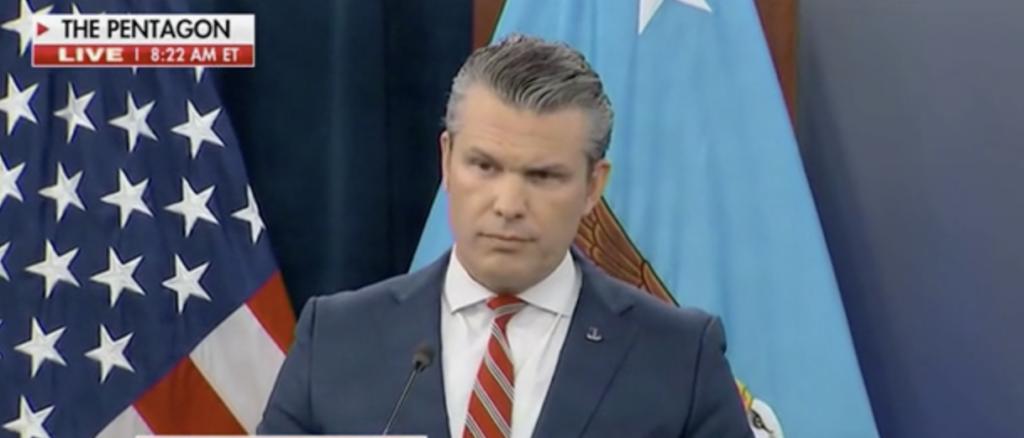

A reporter pressed Secretary of War Pete Hegseth Tuesday on President Donald Trump’s sudden change of mind on his demand for Iran to unconditionally surrender.
Trump demanded an “unconditional surrender” from Iran on March 6 and stated that he would not accept any deal except for total capitulation, although he later backtracked on this demand and allowed for negotiations to take place. Newsmax White House correspondent James Rosen asked Hegseth when Trump decided to “capitulate” on his demand for Iran’s surrender.
“On the first day of this conflict, President Trump addressed the Iranian people directly and said, when we’re finished, take over your government. It’llbe yours to take,” Rosen said. “And then on the seventh day of the conflict, in a Truth Social post, the president said, ‘there will be no deal with Iran except, unconditional surrender.’ What happens to that pledge to the Iranians? And when didthe President decide to capitulate on his demand for unconditional surrender?”
“Well, James, you started out nicely, but you ended exactly where we knew you would end,” Hegseth said. “The President hasn’t capitulated on anything. He holds the cards. We remain, we maintain the upper hand, and Project Freedom only strengthens that hand. And so he willensure that whatever deal is made, or whatever end state is reached, creates ensuring thatIran never has a nuclear weapon, which is a number one, and he’s been focused on that. And the deal and discussions are centered on that. And what the Iranian people takeadvantage of after the fact is up to them. And he’s been very clear about that.”
WATCH: