



Condoleezza Rice Urges Trump to ‘Put Tweeting Aside’ and ‘Have a Conversation With Us’
Former Secretary of State Condoleezza Rice is urging President Donald Trump to think more before he tweets. During an interview on CBS’ “Face The Nation” on Sunday, Rice was asked about a tweet the president sent…
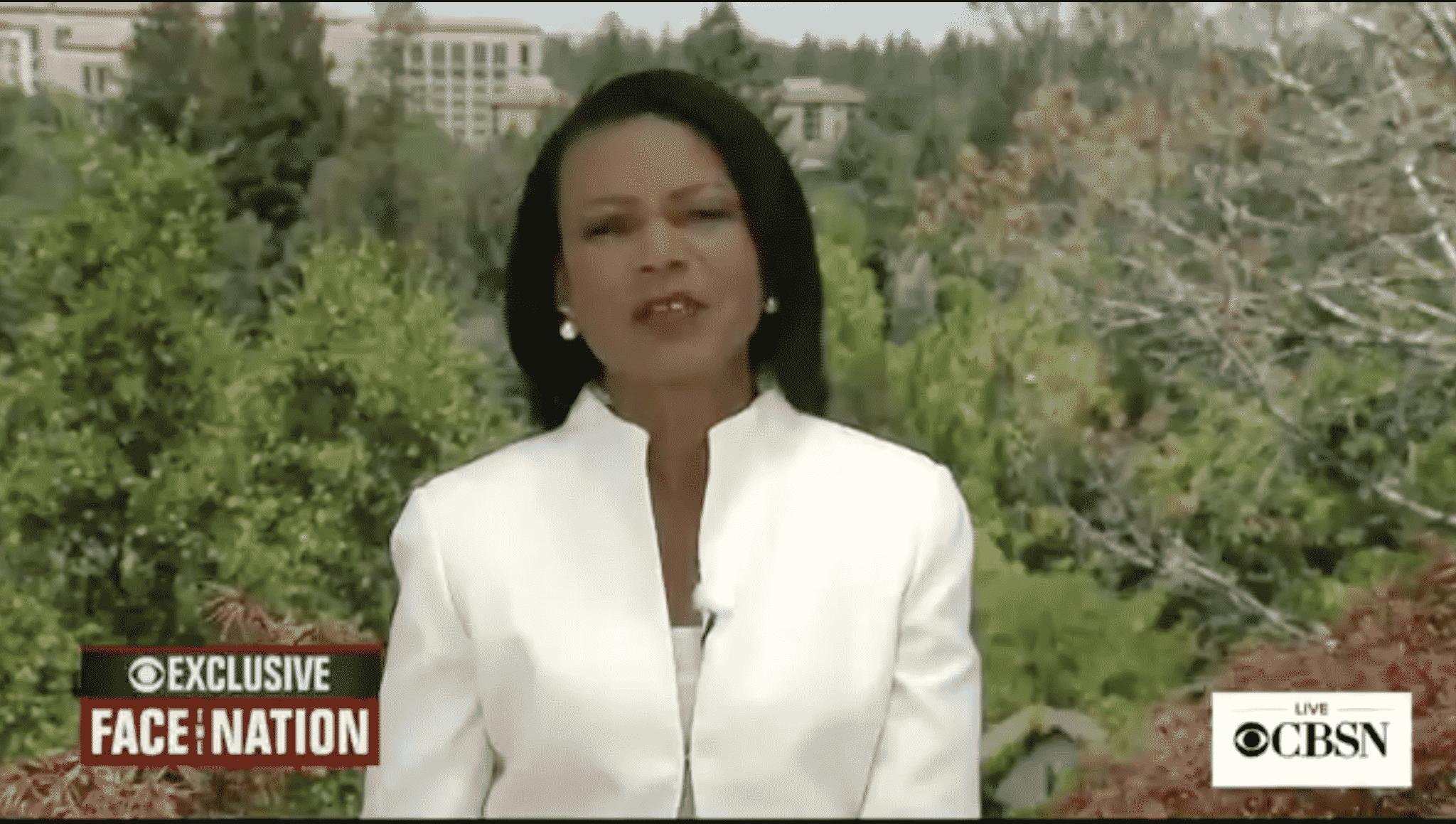
Former Secretary of State Condoleezza Rice is urging President Donald Trump to think more before he tweets.
During an interview on CBS’ “Face The Nation” on Sunday, Rice was asked about a tweet the president sent regarding looting in Minneapolis. Many people said that it contained a phrase which has a racially charged history.
She noted that Trump said he did not know the history of the phrase, but advised him to be more cautious about his tweets, “I would say, think about the historical context before you say something because it is a deep wound.”
She continued, “The presidency is special in that regard. People look to the Oval Office as we’ve looked to the Oval Office throughout our history for messages, for signals. And, as I said, the president has used some language that I really very much admire, like the resilience of the American people. Just be careful about those messages.”
“I’m not advising the president, but if I were, I would say let’s put tweeting aside for a little bit and talk to us, have a conversation with us. And I think we need that and I think he can do it,” she added.
Watch the video below:
On May 29, Trump tweeted about the looting in Minneapolis in the wake of George Floyd’s death, “These THUGS are dishonoring the memory of George Floyd, and I won’t let that happen. Just spoke to Governor Tim Walz and told him that the Military is with him all the way. Any difficulty and we will assume control but, when the looting starts, the shooting starts.”