



Schumer Compares McConnell’s ‘Language’ and ‘Logic’ To That of ‘Southern Senators in the 60s’
Senate Majority Leader Chuck Schumer (D-N.Y.) is likening Senate Minority Leader Mitch McConnell’s (R-Ky.) “language” and “logic” to that of “southern senators in the 60s” after Democrats’ voting rights bill failed to…
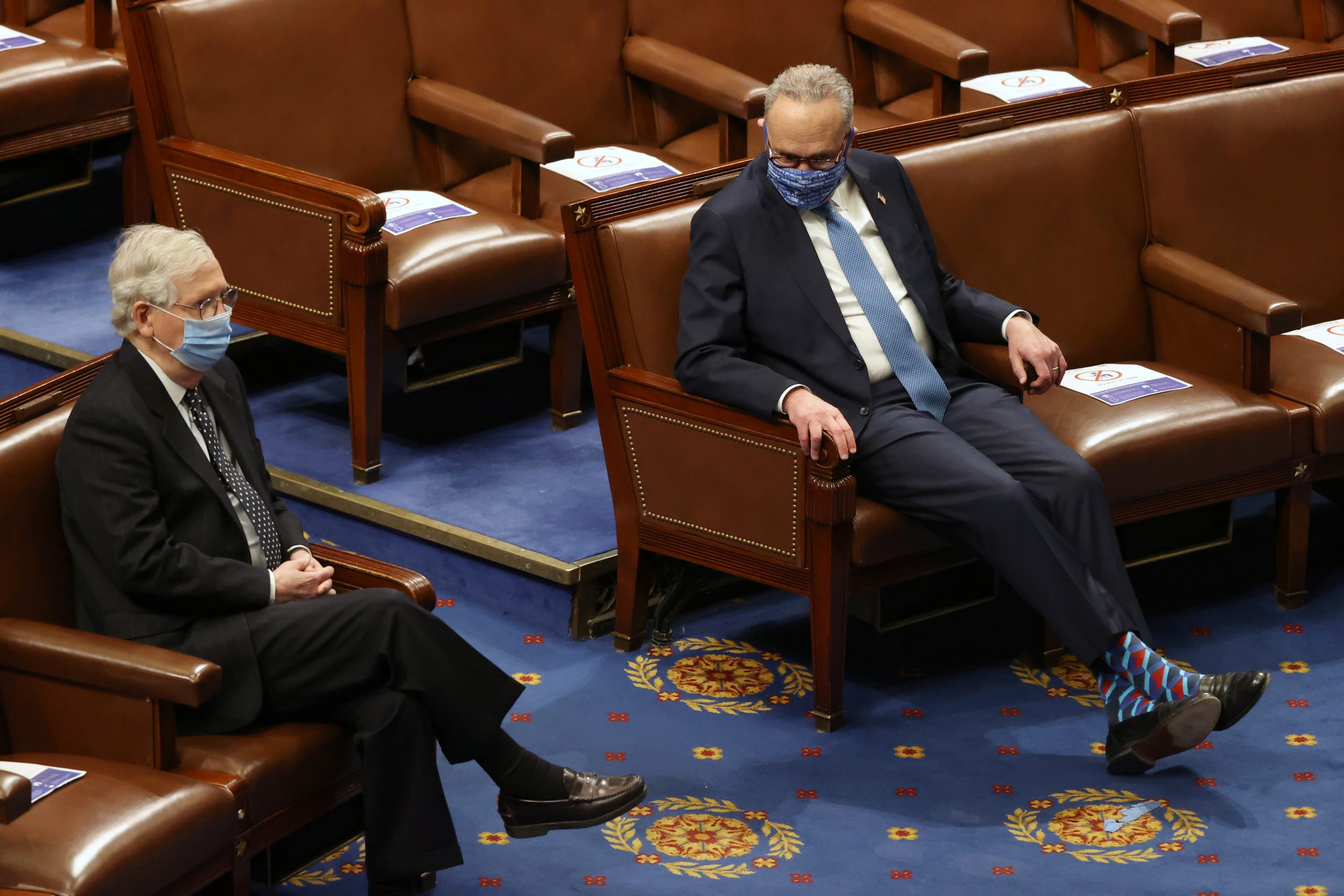
Senate Majority Leader Chuck Schumer (D-N.Y.) is likening Senate Minority Leader Mitch McConnell’s (R-Ky.) “language” and “logic” to that of “southern senators in the 60s” after Democrats’ voting rights bill failed to advance.
Schumer on Tuesday evening accused Republicans of engaging in “the most sweeping voter suppression in 80 years, capitalizing on and catalyzed by Donald Trump’s ‘big lie.'”
He mentioned McConnell’s previous statement to reporters, saying, “Regardless of what may be happening in some states, there is no rationale for federal intervention.”
Schumer explained, “The Republican leader flatly stated that no matter what the states do to undermine our democracy, voter suppression laws, phony audits, partisan takeovers of local election boards, the Senate should not act.”
He continued, “My colleagues, if senators 60 years ago held that the federal government should never intervene to protect voting rights, this body would have never passed the Voting Rights Act. The Republican leader uses the language and the logic of the Southern senators in the 60s who defended states’ rights, and it is an indefensible position.”
Watch his comments below:
In a 50-50 vote on Tuesday, Republican senators blocked the For the People Act. Schumer made it clear the fight does not end here.
“Once again Senate Republicans have signed their names in the ledger of history alongside Donald Trump, the big lie and voter suppression to their enduring disgrace. … But I want to be very clear about one thing: The fight to protect voting rights is not over, by no means,” Schumer said