



Scott Bessent Points Out What’s Gone Unnoticed During Shutdown Which Could Stave Off Recession
Treasury Secretary Scott Bessent pointed out Sunday on CNN’s “State of the Union” the administration’s cutback on government spending as what’s gone “unnoticed” during the shutdown, calling it one of the factors helping…
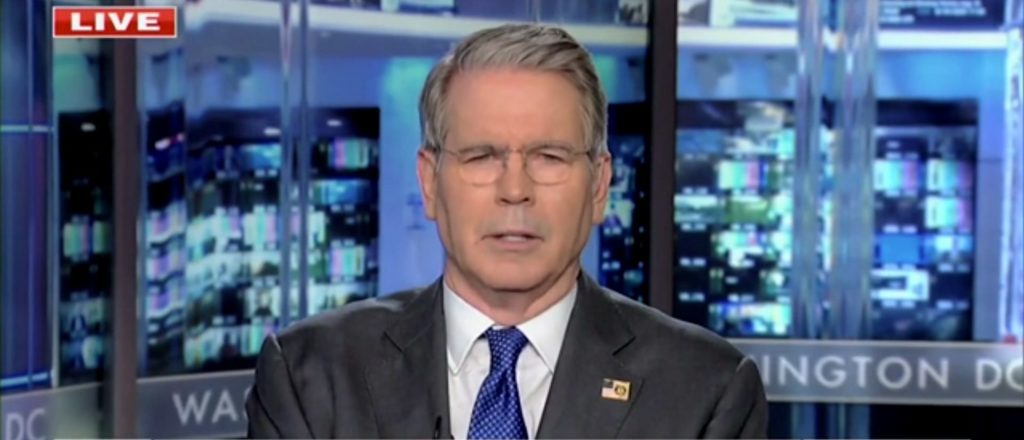

Treasury Secretary Scott Bessent pointed out Sunday on CNN’s “State of the Union” the administration’s cutback on government spending as what’s gone “unnoticed” during the shutdown, calling it one of the factors helping the U.S. avoid a recession.
The Federal Reserve announced Wednesday it would lower the interest rate benchmark by a quarter-point, bringing it to a range of 3.75%-4.00%. CNN’s Jake Tapper asked Bessent about the latest rate slash and the Fed’s warnings that the U.S. could face a recession if cuts continue rapidly, questioning if the country is at risk of a downturn.
“I believe that we are in a transition period here. As we are seeing, the Trump administration has cut back on government spending, Jake. What has gone unnoticed during the shutdown is, for the fiscal year, that ends September 30th, the government spent less than it did the year before. And because the GDP grew — the deficit-to-GDP, which had been 6.4, 6.5% deficit, the highest when we weren’t at war, weren’t in a recession, ever — we were able to bring it down to 5.9%,” Bessent said.
“So we are bringing down government spending and I would think that the Fed would want to assist with that,” Bessent added. “Cause if we go back and look, MIT just published a study that said 42% of the great inflation of 2022 came from excess government spending. So if we are contracting spending then I would think inflation would be dropping. Inflation is dropping, then the Fed should be cutting rates.”
Earlier in 2025, the Trump administration made significant cuts to government spending, exposing how many agencies had been using taxpayer dollars to fund programs at odds with the president’s agenda. With help from the Department of Government Efficiency (DOGE), the administration claimed to achieve savings of an estimated $214 billion — about $1,329 per taxpayer —