




SCOTUS Heard Oral Arguments On Presidential Authority Case
Well, folks, buckle up — because this week’s oral arguments at the Supreme Court may have just exposed exactly how deep the deep state really goes. At the center of it all? A case with the unassuming title Trump v…
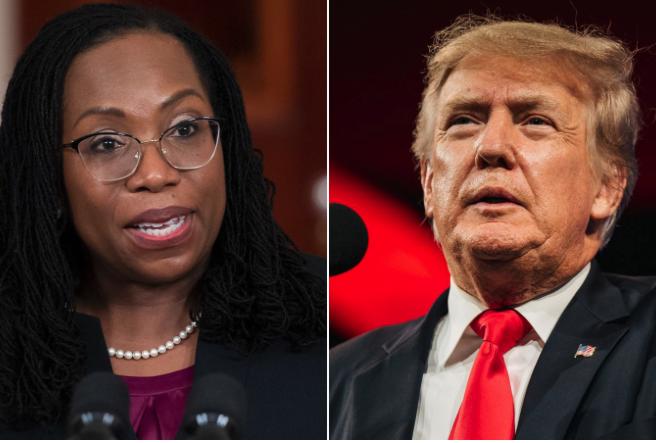
Well, folks, buckle up — because this week’s oral arguments at the Supreme Court may have just exposed exactly how deep the deep state really goes.
At the center of it all? A case with the unassuming title Trump v. Slaughter, but don’t let the bland name fool you. This one’s a political earthquake. It’s not just about whether a president — the elected leader of the American people — can fire a bureaucrat. It’s about who actually runs this country: the guy you voted for… or some unelected alphabet-soup agency appointee clinging to a PhD and a government pension like it’s the Magna Carta.
Rebecca Slaughter, a Biden-era Federal Trade Commissioner, was shown the door by President Trump in March — and she didn’t take it well. Rather than accepting that her policies and priorities might not align with the administration elected by the people, she sued. Yes, sued the president for firing her. Her team is claiming she couldn’t be let go unless there was “cause.” Apparently, simply disagreeing with the president’s entire agenda doesn’t count.
Slaughter’s legal team is leaning hard on precedent — specifically, a dusty old 1935 case that says presidents can’t just remove officials from “independent” agencies like the FTC without jumping through legal hoops. But as Trump’s Solicitor General John Sauer rightly pointed out, that precedent is a “decaying husk” — a relic of a bygone era when Washington wasn’t overrun by career bureaucrats convinced they know better than the people who actually cast ballots.
And let’s talk about what went down during oral arguments, because it got wild. Justice Ketanji Brown Jackson, in what can only be described as a full-throated defense of government by credential, argued that presidents shouldn’t have the power to fire the so-called experts running the bureaucracy. You read that right. She actually said that PhDs, scientists, and transportation officials should basically be above presidential control.
Translation? The American people might have elected Trump, but tough luck — the country should really be run by technocrats in cubicles, not the president they put in office.
This is where it gets chilling. Justice Jackson essentially wants to hand the keys to the country over to unelected lifers who answer to no one, not even the president. You can vote all you want, but under her theory, the “real” power should sit with federal agencies packed with “experts” — people you can’t fire, can’t vote out, and probably can’t even name.
What Jackson is suggesting isn’t just some obscure legal argument — it’s a direct challenge to Article II of the Constitution. You know, the part that says the executive power belongs to the president? Yeah, that little detail. Under her vision, that power gets sliced up, watered down, and handed over to a bureaucratic priesthood with Ivy League degrees and zero accountability.
And this isn’t just about the FTC. If the Court sides with Trump — as the six conservative justices seemed inclined to do — it could finally start pulling some of the tangled wires of the administrative state out of the Constitution’s throat. This case could reassert what has been obvious to every civics student until recently: that presidents run the executive branch. Not boards. Not commissions. Not consultants or panels. Presidents.
But if the Court goes the other way? Get ready for a future where the president can’t even fire someone who is actively working against his agenda — just because they have the word “independent” slapped on their office door.
It’s a setup the Left loves. Just imagine: you lose an election, but no worries — your people still run the agencies. They’ll stall, stonewall, and regulate until the next progressive can waltz back into power. All with the blessing of the courts, of course.
Slaughter’s team even whined that if Trump wins this case, it would “profoundly destabilize” the institutions of American governance. You mean the institutions that have metastasized into unaccountable power centers? The ones that brought us endless red tape, mission creep, and entire agencies that seem to exist solely to obstruct the people’s will?
Yeah, maybe those could use a little destabilizing.
The Court will rule in 2026, but one thing’s already clear: this case is about more than just Rebecca Slaughter’s job. It’s about whether this country is governed by its elected leaders — or by the bureaucratic lifers who allegedly believe democracy is just too risky to be left in the hands of voters.
Brace yourselves. The deep state is watching — and they’re not happy someone’s finally turning on the lights.
The post SCOTUS Heard Oral Arguments On Presidential Authority Case appeared first on Red Right Patriot.