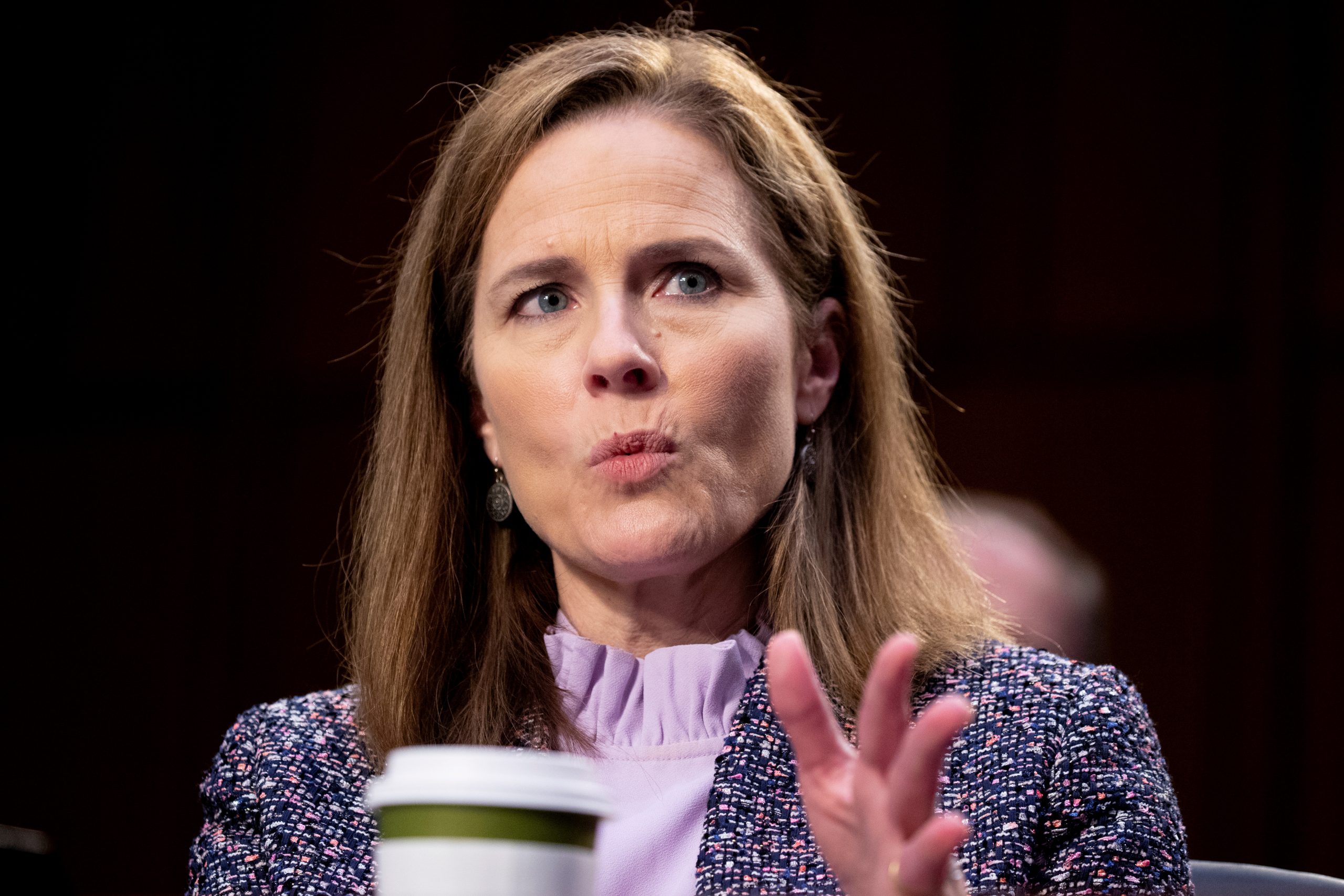


The U.S. Senate Judiciary Committee on Thursday will wrap up four days of hearings on Supreme Court nominee Amy Coney Barrett by questioning experts, including two from the American Bar Association, which calls her âwell qualifiedâ for the job.
Barrett will not be present, after making it through two long days of questioning by senators, in which she largely deflected Democratic committee membersâ concerns that she would threaten Obamacare, abortion, voting rights and same-sex marriage.
Barrettâs confirmation to the lifetime post â a virtual certainty given Republicansâ Senate majority â would drive the Supreme Court further right with a 6-3 conservative majority. The conservative federal appellate judge is Republican President Donald Trumpâs third nominee to the high court.
Senator Kamala Harris, who is Democratic presidential candidate Joe Bidenâs running mate, said that the confirmation proceedings âlack legitimacyâ because Americans want the winner of the Nov. 3 presidential election to decide who fills the courtâs vacancy.
âThis hearing has done nothing to alleviate the concerns raised about why this nominee was chosen and why this is being rushed when the American people deserve to be heard,â Harris said, adding that the Senate should be working to provide economic relief to families affected by the COVID-19 pandemic instead of ârushing a Supreme Court confirmation.â
On Thursday, the committee will hear from four witnesses in support of Barrettâs confirmation, and four against. The bar association, a national nonpartisan lawyersâ group, will talk about its positive evaluation of Barrettâs qualifications related to âintegrity, professional competence, and judicial temperament.â
Democrats said Republicans were pushing to seat Barrett in time for her to participate in a case on Nov. 10 in which Trump and Republican-led states are seeking to invalidate the 2010 Obamacare law formally called the Affordable Care Act (ACA).
The law has helped millions of Americans obtain medical coverage and includes protections for people with pre-existing conditions.
âOPEN MINDâ
Barrett tried to allay concerns, saying she would approach the case with an âopen mind.â She said that even if one part of the law is deemed unlawful, if the rest of the statute can be saved, it is a judgeâs duty to do so.
The committeeâs chairman, Republican Senator Lindsey Graham, lauded Barrettâs nomination as historic because of her views opposing abortion. After Wednesdayâs questioning, he said: âI hope itâs OK that you can be pro-life and adhere to your faith and still be considered by your fellow citizens as worthy of this job.â
Barrett, 48, is a devout Catholic and a favorite among religious conservatives. She said the landmark 1973 Roe v. Wade ruling that legalized abortion nationwide was not a âsuper-precedentâ that could not be overturned.
Throughout the hearing, she sidestepped questions over whether she would recuse herself from any Election Day disputes, even though Trump has said he expects the court to decide the outcome of the election between him and Biden.
Barrett drew scrutiny from Democrats when she said it was an âopen questionâ as to whether Trump could pardon himself, while adding that the top U.S. judicial body âcanât controlâ whether a president obeys its decisions.
Barrett also told the committee that she could not opine on whether presidents should commit to peaceful transfers of power if they lose an election. Trump created a furor in September when he refused to do so.
She also declined to give her view on whether human activities contribute to global climate change,â later calling it âa very contentious matter of public debate.â
(Reporting by Andrew Chung in New York and Lawrence Hurley and Patricia Zengerle in Washington; Editing by Peter Cooney)