



Shiite Mosque In US Observed Closing Its Friday Prayer With ‘May Allah Destroy All The Nonbelievers’
The war with Iran — and the killing of Ayatollah Ali Khamenei — may look like the dramatic end of a decades-long regime. But for some hardline Shiite ideologues, including voices operating inside the United States, it…
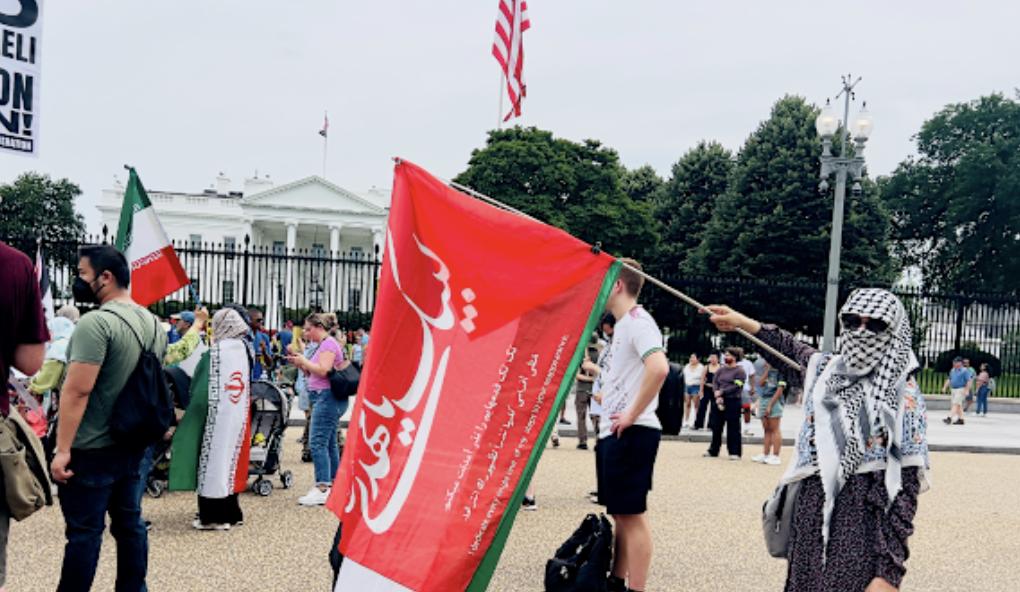
The war with Iran — and the killing of Ayatollah Ali Khamenei — may look like the dramatic end of a decades-long regime. But for some hardline Shiite ideologues, including voices operating inside the United States, it is being framed as something far bigger: a prophetic turning point.
A Fox News Digital investigation found that certain clerics, activists, and pro-regime networks are casting the escalating conflict in apocalyptic terms rooted in Islamic end-times theology. In that worldview, the chaos is not merely geopolitical. It is a precursor to the arrival of the Mahdi, a messianic figure in Islamic eschatology who is believed to defeat evil in a final battle.
In this narrative, the Mahdi will confront Dajjal — the Islamic equivalent of the Antichrist. For some of these hardline voices, President Donald Trump is being cast in that role.
At a recent Friday sermon at a Shiite mosque in northern Virginia, an imam closed prayers with a plea calling for the destruction of “nonbelievers” and “hypocrites” — Arabic terms he used before invoking victory ahead of the Mahdi’s arrival. Fox News Digital reported that the mosque’s main prayer hall prominently displayed framed photos of Khamenei embracing Hamas leader Yahya Sinwar and Hezbollah leader Hassan Nasrallah, both killed by Israel after orchestrating terrorist attacks.
The theological framing mirrors warnings issued earlier this year by Secretary of State Marco Rubio, who said Iran’s leadership makes policy decisions not solely on national security grounds but based on “pure theology.”
Digital analysis conducted as part of the investigation reviewed sermons, protest slogans, and social media posts. The findings suggest that pro-regime clerics and organizations in the U.S. are increasingly describing tensions with Iran in explicitly apocalyptic language.
Messaging platforms such as Telegram reportedly filled with prayers after war broke out, with users calling for the Mahdi’s return. One post read, “We need Al Mahdi… His return with Jesus will be the final win permanently.”
The National Union for Democracy in Iran, an advocacy group opposing the regime, alleges that Tehran has invested for years in building influence networks inside the United States. In an upcoming report, the group claims institutions supported by the Islamic Republic are promoting narratives that mirror Tehran’s messaging “almost word for word,” including portrayals of Trump as Dajjal and Iran as the defender of the Mahdi’s cause.